If you’ve come across the term “HOA,” your first question is probably a simple one: what does it even stand for? The answer is Homeowners Association, but that name only begins to tell the story of what these organizations mean for millions of residents and their community leaders. Understanding how your HOA operates is the first step for homeowners to protect their investment and for board members to lead effectively.
What Exactly Is a Homeowners Association?

Think of an HOA as your community's operating system. It’s the framework designed to keep everything running smoothly, from maintaining the pool and landscaping to preserving the neighborhood's overall character and appeal. For homeowners, it’s a vital system that protects your investment. For board members, it’s a tool for effective governance and community betterment.
The Rise of Community Living
The growth of HOAs marks a huge shift in American housing. Back in 1970, there were only about 10,000 community associations in the whole country. Today, that number has exploded to roughly 369,000 associations that are home to an estimated 77 million residents.
This means nearly one-third of all housing in the U.S. now operates under an association, and U.S. Census data shows that a staggering 67% of newly built homes are part of an HOA. This trend underscores the importance of a well-run community for both residents and their elected leaders.
A well-run HOA is far more than just a set of rules; it's a collaborative partnership between residents and their elected board. Its primary goal is to protect property values and enhance the quality of life for everyone in the community.
More Than Just Rules and Fees
At its heart, an HOA is a legal entity created to manage a planned development—whether that’s a subdivision of single-family homes or a high-rise condominium. Its existence ensures shared spaces are cared for and that a consistent standard is upheld across the entire neighborhood.
This structure benefits everyone involved:
- For Homeowners: You gain the peace of mind that comes from knowing your property values are being protected by community-wide standards and professional management of common areas.
- For Board Members: You are empowered with a legal framework to make decisions that support the community’s long-term health and financial stability.
While HOAs are the most common structure you'll see, other entities like Community Development Districts also manage neighborhoods. You can dive deeper into the key differences by exploring our guide on what a CDD is.
The Core Purpose and Power of an HOA
At its heart, an HOA exists for one primary reason: to protect, preserve, and enhance the community’s collective value. Every action, from signing a landscaping contract to enforcing a rule, is meant to safeguard the financial investment of every homeowner and improve the quality of life for everyone living there.
The power to do this isn’t just pulled out of thin air. It’s granted to the HOA through its governing documents. For board members, these powers are tools for building a better community—and they come with a serious responsibility to apply them fairly and consistently for the benefit of all homeowners.
A well-run HOA isn't just about enforcement; it's a powerful engine for community success. Its governance structure empowers residents to self-regulate their communities for the benefit of everyone.
The Foundation of HOA Authority
Most HOAs are structured as non-profit corporations, run by a volunteer board of directors elected by the homeowners. This board is tasked with managing the community and upholding the rules, covering everything from lawn care to architectural changes. This creates a predictable framework that keeps the neighborhood looking its best.
That consistency is a major driver of property values. For instance, rules that create a uniform look—like limits on fence heights or a palette of approved exterior paint colors—have a direct, positive impact. In fact, studies show that homes in well-managed communities can fetch premiums of up to 7% in competitive markets. You can find more insights on HOA governance from the National Association of REALTORS®.
This authority gives the board the power to:
- Collect Fees: Gather the funds needed to maintain common areas like pools, clubhouses, parks, and entryways.
- Enforce Rules: Address violations in a consistent way to ensure fairness and maintain community standards for all residents.
- Manage Finances: Create and stick to a budget, and build up reserve funds for major repairs and future projects.
For homeowners, regulations on landscaping or exterior modifications are there to create a cohesive, attractive neighborhood, which protects everyone's investment. For board members, it’s a significant duty to wield these powers wisely. We cover this in-depth in our guide on HOA board responsibilities. When these powers are managed correctly, they ensure the community doesn't just survive, but thrives for years to come.
Decoding HOA Fees and Financial Health
So, where does your money actually go? It’s probably the most common question homeowners have about their association, and for good reason. Those regular payments, which are officially called assessments, are the financial engine that keeps your entire community running smoothly.
Think of it like a shared investment. Every homeowner contributes a piece to a central fund that covers all the services and amenities you share. From landscaping and pool care to common area insurance and trash removal, these fees ensure the neighborhood stays safe, clean, and desirable for everyone.
For board members, the key is transparency. A clear, well-communicated budget isn't just good practice; it builds trust with your fellow homeowners. For homeowners, understanding this budget shows you exactly the value you're getting for your investment.
Where Your HOA Fees Go A Typical Breakdown
Most homeowners pay their fees without really knowing the specific breakdown. While every community's budget is unique, the money is generally allocated across a few key areas. Seeing it laid out can be an eye-opener and helps clarify why these fees are so essential.
| Expense Category | Description | Typical Allocation |
|---|---|---|
| Utilities & Services | Covers costs for shared utilities like water, electricity for streetlights, and trash/recycling services. | 20-30% |
| Landscaping & Maintenance | Pays for lawn care, gardening, snow removal, and general upkeep of all common areas and facilities. | 20-25% |
| Reserve Fund | A crucial long-term savings account for major future repairs and replacements (e.g., roofs, paving). | 15-25% |
| Management & Admin | Fees for professional management, legal services, accounting, and other administrative expenses. | 10-15% |
| Insurance | Master insurance policies that cover common areas, liability, and property damage. | 5-10% |
| Amenities | Operational costs for amenities like pools, clubhouses, fitness centers, and playgrounds. | 5-10% |
This breakdown isn't just about paying bills. Smart financial stewardship is what ultimately protects and even boosts your property value. A well-maintained community with a healthy budget is a place people want to live.
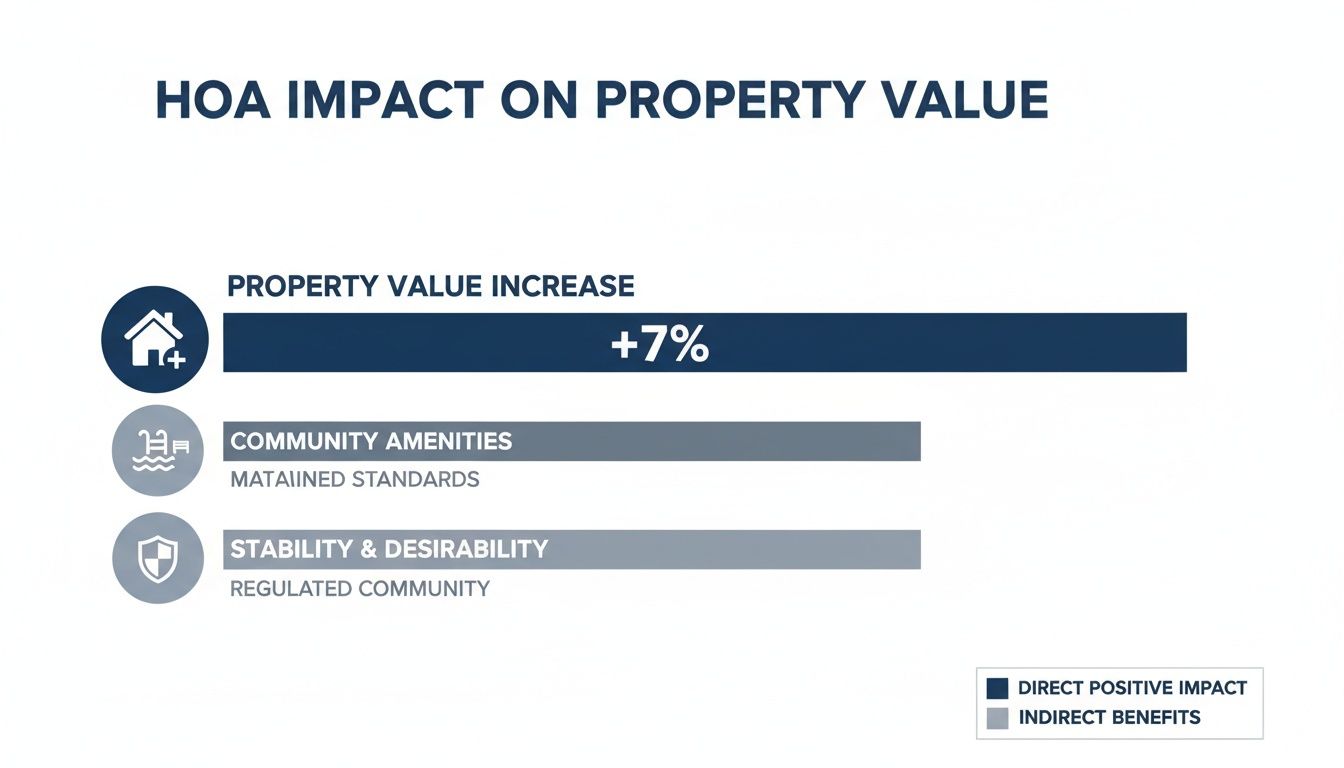
As the data shows, a well-run HOA isn't an expense—it’s a tangible investment that can pay dividends when it's time to sell.
The Importance of Reserve Funds
Beyond the day-to-day operational costs, a healthy portion of your fees should be going into a reserve fund. This is the community’s long-term savings account, and it’s one of the most important parts of an HOA’s financial health.
This money is set aside for the big-ticket items that have a predictable lifespan. We’re talking about things like:
- Repaving streets and parking lots
- Replacing the roof on the community clubhouse
- Overhauling an aging swimming pool
- Updating elevators in a condominium building
For a board, properly funding the reserves is a critical fiduciary duty. A healthy reserve fund protects every homeowner from getting hit with a massive special assessment when a major component inevitably fails.
Without a robust reserve fund, the only way to pay for a sudden, multi-thousand-dollar repair is to pass the entire cost directly to the homeowners via a special assessment. Proactive planning prevents these kinds of financial shocks and is the hallmark of a responsible, well-managed community that protects every resident's financial well-being.
Getting a Handle on Community Rules and Regulations

When most people think of an HOA, they immediately think of the rules. It's easy to see them as just a list of restrictions, but it’s much more productive to view them as shared community agreements—the promises neighbors make to each other to keep the community harmonious and protect everyone's property values.
These rules are all laid out in the community’s governing documents. They take the HOA’s mission and put it into practice, creating a consistent standard for the neighborhood. For both board members and homeowners, really understanding these agreements is the first step toward a more cooperative and pleasant living environment.
A fair and consistent enforcement process, rooted in clear communication, is the cornerstone of a thriving community. It turns rules from a source of conflict into a tool for collective improvement and stability.
The goal for any board shouldn't be to penalize residents, but to educate and guide them toward compliance. When the process is transparent, it builds trust and encourages people to comply willingly, which is always a better outcome for the entire community.
Common Rules and The Approval Process
These shared agreements typically touch on areas that directly impact the look, feel, and function of the community. While the specifics can vary, most HOAs have guidelines covering:
- Property Maintenance: This includes everything from lawn care and landscaping standards to the general upkeep of a home's exterior. It’s all about ensuring the entire neighborhood stays looking its best.
- Architectural Changes: Before you build a deck, put up a new fence, or even paint your house, you’ll usually need to get the plan approved. This process ensures all changes fit within the community's established aesthetic.
- Parking and Vehicles: Rules will often spell out where residents and their guests can park. Many communities also have limitations on storing things like RVs, boats, or commercial trucks.
- Use of Common Areas: These guidelines make sure that shared amenities like pools, clubhouses, and parks are used safely and respectfully by everyone.
If you're a homeowner planning a project, the first step is usually submitting an application to the Architectural Review Committee (ARC). A clear, detailed submission is always the fastest path to getting an approval. For board members, having a clear and straightforward ARC process is key to a positive homeowner experience.
Want a deeper dive into the documents that contain all these rules? Check out our in-depth guide on the governing documents of an HOA. By working together, homeowners and board members can make sure these agreements truly benefit the entire community.
Your Rights and Role Within the Community
Joining an HOA isn't like signing up for a subscription service; it’s becoming a partner in a neighborhood-wide venture. This partnership comes with some pretty important rights, but also a few key responsibilities that empower you to help shape your community.
For homeowners, knowing this balance is crucial for protecting your investment. For board members, your job is to ensure the governance of the community is transparent, fair, and encourages participation.
Your Fundamental Rights as a Homeowner
As a member of the association, you have a real say in how things are run. These aren't just polite suggestions; they are rights often guaranteed by state law and spelled out in your community’s governing documents.
Board members have a fiduciary duty to uphold these rights. As a homeowner, you should feel empowered to use them.
- The Right to Information: You have the right to access key records like financial statements, annual budgets, and meeting minutes. This transparency helps you understand how your money is being used to benefit the community.
- The Right to Attend Meetings: Board meetings are where the big decisions happen. You have a right to be in the room for these open sessions to observe the process and be heard during homeowner forums.
- The Right to Vote: This is your most direct way to influence the community. You have the right to vote for the board of directors and weigh in on other major issues that come up.
An informed and active homeowner is the single greatest asset a community can have. When a board operates with transparency, it builds the trust needed for homeowners to get involved and truly shape the future of their neighborhood.
Making Your Voice Heard
Of course, these rights don't mean much if you don't exercise them. The best way to have an impact on your community’s direction is to simply get involved.
Start by showing up for board meetings. Read the minutes from past meetings. Take a look at the budget. If you have a question or an idea, bring it to the board or your community manager in a respectful way. Open dialogue is what builds a stronger, more connected neighborhood for everyone.
Frequently Asked Questions for Homeowners and Boards
Once you get past what "HOA" stands for, the real, day-to-day questions start popping up. We hear them all the time from homeowners and the dedicated volunteers on the board. Here are some straightforward answers to the most common situations you’re likely to face.
What Happens if I Cannot Pay My HOA Fees?
If money gets tight and you’re worried about paying your HOA fees, the very best thing you can do is contact your board immediately. A lot of people think boards are just waiting to hand out penalties, but that’s rarely the case. Most boards would much rather work with you on a payment plan than start a collections process, which is expensive and stressful for everyone.
Hoping the problem goes away is the worst thing you can do. Unpaid assessments can lead to:
- Late fees and interest charges.
- A lien being placed on your property, which makes it tough to sell or refinance.
- In serious cases, the association could even initiate foreclosure.
Reach out to your board or property manager. Open communication shows you’re acting in good faith and opens the door to finding a solution that works for both you and the community.
How Do I Dispute a Violation Notice I Believe Is Unfair?
Getting a violation notice is never fun, especially if you think it’s a mistake. The best way to handle it is to stay professional and follow the process. First, read the notice carefully, then pull up your community’s governing documents (the CC&Rs) and find the exact rule they’re referencing.
With the facts in hand, send a formal written appeal to your HOA board. In your letter, just explain calmly and clearly why you feel the notice is incorrect or why your situation might be an exception. It can also be a big help to attend the next board meeting to talk it over. This allows for a direct, respectful conversation and is the most effective way to reach a positive resolution.
What Is the Difference Between an HOA and a COA?
You'll hear these terms thrown around, but they refer to two different kinds of communities. The difference is pretty simple:
- An HOA (Homeowners Association) is usually for a neighborhood of single-family homes. You own your house and the land it’s on.
- A COA (Condominium Owners Association) is for a condo building. You own your individual unit, but you share ownership of the common areas—hallways, pools, roofs—with all the other owners.
While their purpose is similar (maintaining common spaces and enforcing rules), their legal setups and specific duties are quite different. Both are led by a board elected by the owners.
The term "HOA" has become a catch-all for any community association, but it’s good to know which type you’re actually in. HOAs for single-family homes make up about 60% of all associations, with condo communities making up another 38%.
Can the HOA Board Really Tell Me What Color I Can Paint My House?
Yes, they almost certainly can. Rules about paint colors and other architectural details are a standard—and legally binding—part of most association's CC&Rs.
The goal isn't to cramp your style, but to keep a consistent look and feel throughout the neighborhood, which helps protect property values for every single owner. That’s why, before you start any exterior painting project, you almost always need to send your color choices to the Architectural Review Committee (ARC) for approval. This protects both you and the community from unapproved changes that could negatively impact neighborhood aesthetics and value.
At Access Management Group, we partner with associations to help them navigate these questions with confidence and clarity. If your board is looking for expert guidance to protect, preserve, and enhance your community, we invite you to learn more about our services at https://accessmgt.com.