When you step onto an HOA board, your role boils down to a fundamental legal and ethical promise: to act in the absolute best interest of the community you serve. This means you’re now entrusted with managing finances, upholding the rules, overseeing maintenance, and making the tough calls that protect and boost property values for every single homeowner.
Understanding Your Role as a Community Guardian

Serving on a board isn’t about gaining a position of power—it’s about accepting a serious commitment to stewardship. Think of yourself as a guardian for your neighborhood. Every decision, from approving the annual budget to picking a new landscaping company, has a real impact on your neighbors' lives and the long-term value of their biggest investment.
Your main job is to bring the vision laid out in your community’s governing documents to life. This guide is your roadmap, built to give you a clear understanding of how your duties fit together to create a thriving, well-run community where people feel secure and respected.
The Foundation of Trust and Purpose
The responsibilities of an HOA board member have gotten a lot more complicated over the years. What used to be a simple volunteer gig is now a role that requires real diligence, fairness, and a solid grasp of your legal obligations.
The world of HOA governance has shifted, with state-level regulations increasing by an estimated 35-40% since 2000. This is exactly why so many associations now lean on formal training and professional support. You’re not just winging it anymore. You can learn more about the growing scope of these duties and see why expert guidance has become so valuable.
Serving on a board means you are entrusted with the community's assets, finances, and future. This is a fiduciary duty—a legal and ethical obligation to act with the utmost good faith and loyalty on behalf of all homeowners.
This duty is the bedrock of your role. It’s what separates a healthy, functional association from one that’s tied up in conflict and financial trouble. In fact, roughly 40% of HOA-related litigation comes from claims that a board breached this very duty, usually because of messy financial management or inconsistent rule enforcement.
The Four Pillars of Your Responsibility
To get a handle on your duties without getting overwhelmed, it helps to break them down into four key areas. Think of these as the main pillars holding up everything you do.
To keep things clear, here’s a high-level look at the core duties every board member needs to own.
The Four Pillars of HOA Board Responsibility
| Pillar of Responsibility | Core Objective |
|---|---|
| Governance & Legal | Uphold the community's governing documents (CC&Rs, bylaws) and comply with all local, state, and federal laws. |
| Financial Stewardship | Create and manage a transparent budget, collect assessments, and build and maintain a healthy reserve fund for the future. |
| Asset & Property Management | Protect and maintain all common areas—from landscaping and pools to roofs and roads—to keep them safe, functional, and valuable. |
| Community & Communication | Foster a positive community atmosphere through clear communication, fair processes, and transparent meetings to build trust. |
While this guide will dig deep into each of these, understanding this basic framework gives you a solid foundation for every action you take. By embracing these pillars, you’re not just holding a title—you're actively building a stronger, more valuable community for everyone who calls it home.
The Three Duties That Guide Every Board Decision
When you join an HOA board, you'll hear the term fiduciary duty thrown around a lot. It sounds like dense legal jargon, but it’s actually the simple, powerful principle that guides every decision you make. At its core, it means you’re legally obligated to act in the best interest of the entire community, not yourself or any single homeowner.
Think of it this way: you’ve been entrusted with protecting and enhancing the community's most significant assets—its finances, its property, and the quality of life for everyone who lives there. This responsibility isn't just a suggestion; it's a legal standard built on three core duties: Care, Loyalty, and Obedience.
Getting these right isn't just about avoiding legal trouble. It's about building a foundation of trust and effective governance that makes your community a place people are proud to call home.
The Duty of Care
First up is the Duty of Care. This simply means you have to make decisions in a reasonably informed way. The law doesn't expect you to be a psychic or an expert in everything, but it does expect you to do your homework before you vote. It’s all about diligence, not perfection.
Let's say the community pool's pump system fails. The Duty of Care doesn't mean you just hire the first company you find on Google. It means you follow a sound process:
- Get multiple bids from insured, reputable pool contractors.
- Check their references. Have they done this kind of work for other HOAs?
- Review the proposals as a board, weighing the costs, warranties, and long-term value.
- Document the decision-making process in your meeting minutes.
Even if the new pump unexpectedly breaks a year later, you fulfilled your duty by making a thoughtful, well-researched decision. It’s the process that counts.
The Duty of Loyalty
Next is the Duty of Loyalty. This one’s straightforward: your loyalty is to the association, period. All your actions must be for the community’s collective good, completely separate from your own personal interests, financial or otherwise.
This is where conflicts of interest come into play. Imagine a board member runs a pressure washing business, and the board is seeking bids to clean the community's sidewalks.
A conflict of interest isn't automatically a problem, but hiding it is. The key is total transparency. The board member must immediately disclose their business connection, remove themselves from the discussion, and absolutely abstain from the vote.
The rest of the board then has to judge that bid on its own merits, just like any other. Anything less—like steering the contract to that board member’s company without a fair process—is a serious breach of loyalty that puts the community’s funds and trust at risk.
The Duty of Obedience
Finally, there’s the Duty of Obedience. This requires the board to act within the power granted to it by the association’s governing documents (the CC&Rs, bylaws) and to follow all applicable local, state, and federal laws.
You can't invent new rules on a whim or choose to ignore existing ones you don't like. If your CC&Rs clearly prohibit above-ground pools, the board can't grant a special exception for a resident, no matter how much you like them. Doing so would violate this duty and invite claims of arbitrary enforcement.
This duty ensures the rules are applied fairly and consistently to everyone. When homeowners see that the board itself is bound by the same rulebook, it reinforces the board's legitimacy and builds the trust needed to lead effectively.
Mastering Your Community's Financial Health
Taking the reins of your community’s finances is one of the most important responsibilities a board member has. For homeowners and the board alike, sound financial stewardship is the cornerstone of a thriving community. It’s not about being an accountant; it's about exercising good judgment, maintaining transparency, and securing the community's long-term financial health for everyone’s benefit.
This role is absolutely critical. Poor financial planning is a major reason why an estimated 25-30% of HOAs eventually hit a funding crisis. With community budgets running anywhere from $50,000 to over $1 million, your careful oversight is what stands between financial stability and a future filled with painful special assessments.
Building the Annual Operating Budget
Think of the annual budget as your community’s day-to-day checkbook. It covers all the predictable, year-in, year-out costs needed to keep the lights on and the grass cut. The goal here is to build a budget that’s realistic and easy for every homeowner to understand, so there are no mysteries about where their dues are going.
This budget handles the routine stuff:
- Landscaping and Groundskeeping: Mowing, trimming, seasonal flowers.
- Utility Bills: Water for the pool and sprinklers, electricity for common area lights.
- Insurance Premiums: Policies that protect the board and the association's assets.
- Administrative Costs: Management company fees, legal advice, printing, and postage.
- Minor Repairs: Things like fixing a leaky sprinkler head or a burned-out lightbulb in the clubhouse.
Putting this together means looking at what you spent last year, getting fresh quotes from your vendors, and making educated guesses about any cost increases. When you present this clearly at the annual meeting, it builds a massive amount of trust. Of course, to truly get a handle on the numbers, board members need a basic grasp of financial statements, starting with understanding balance sheets.
The Critical Role of the Reserve Fund
If the operating budget is your checkbook, the reserve fund is your community’s long-term savings account. This is the money set aside specifically for the big-ticket repair and replacement projects that you know are coming down the road. Honestly, neglecting the reserve fund is one of the biggest and most common mistakes a board can make.
A healthy reserve fund isn't a luxury; it's a non-negotiable component of responsible governance. It’s the difference between a planned, budgeted roof replacement and a sudden, massive special assessment that blindsides every homeowner.
Just imagine the asphalt roads in your community have a 20-year lifespan. Instead of scrambling to find a few hundred thousand dollars in year 20, the board contributes a small, manageable amount to the reserves every single year. When it’s finally time to repave, the money is just sitting there, ready to go. No drama, no panic.
To help clarify the distinction, think about it this way: the operating budget pays for routine maintenance, while the reserve fund pays for eventual replacements.
| Expense Type | Annual Operating Budget Examples | Reserve Fund Project Examples |
|---|---|---|
| Pavement | Patching potholes, filling cracks | Repaving all community roads |
| Roofing | Replacing a few missing shingles | Replacing the entire clubhouse roof |
| Amenities | Pool chemical service, tennis court net repairs | Resurfacing the pool, repainting the tennis courts |
| Painting | Touch-up painting on a fence | Repainting all community buildings |
| Fencing | Repairing a broken gate latch | Replacing the entire perimeter fence |
As you can see, one covers the "keep it running" tasks, while the other prepares for the "end of life" projects. Both are essential for a well-managed community.
Why a Professional Reserve Study is Essential
So, how do you know exactly how much to put into that savings account? You’re not expected to guess. The answer is a professional reserve study. This is where an expert comes in to do a full inventory of all your community's major assets—like roofs, roads, and pools. They assess their current condition, estimate how much life they have left, and calculate the future replacement cost.
This is where your core duties as a board member come directly into play. The decisions you make about funding are a direct reflection of your commitment to the community.
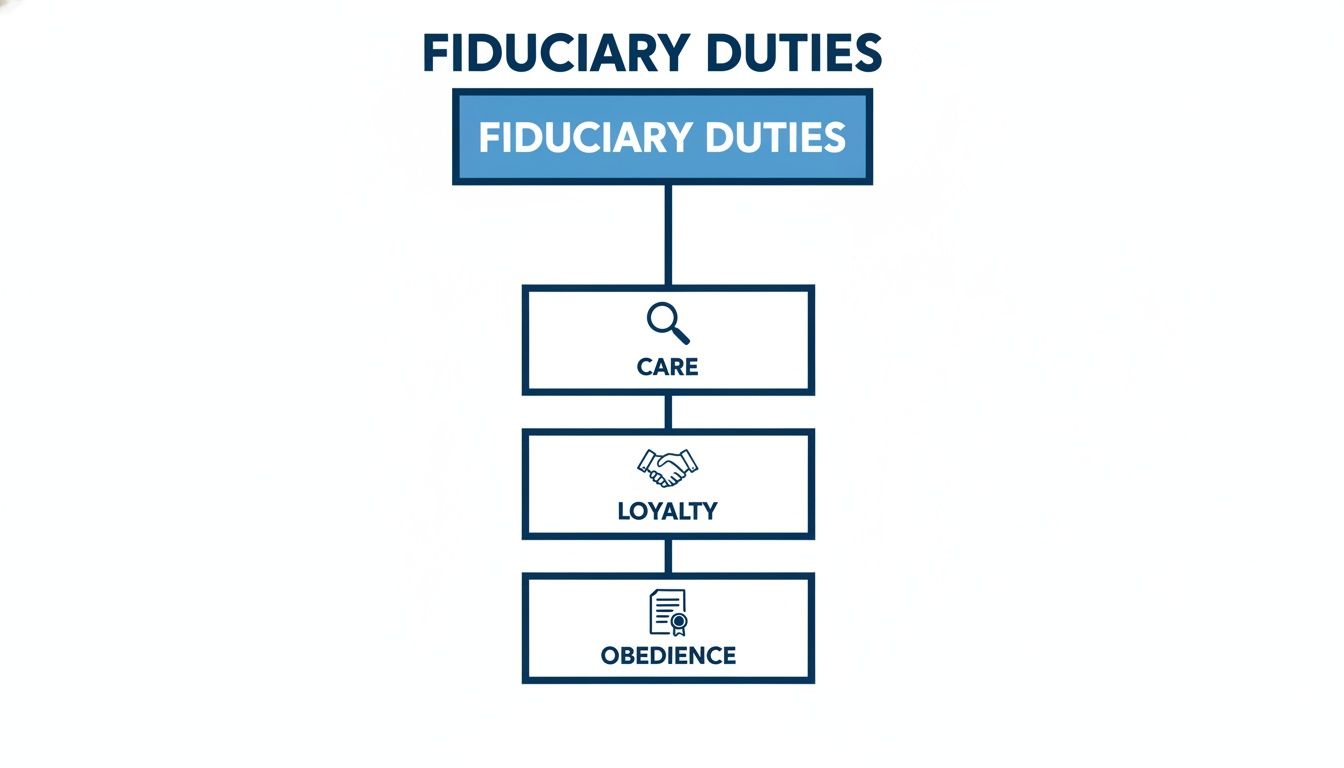
These duties compel you to act diligently (Care), put the association's interests first (Loyalty), and follow your governing documents (Obedience). Commissioning a reserve study is a perfect example of the Duty of Care. You're using expert data to make informed, responsible decisions for the community's financial future. Without that data, you're just flying blind, and that’s a risk no board should be willing to take. The study gives you a roadmap and a funding plan, ensuring your community is on solid ground for years to come.
Applying Community Rules Fairly and Consistently
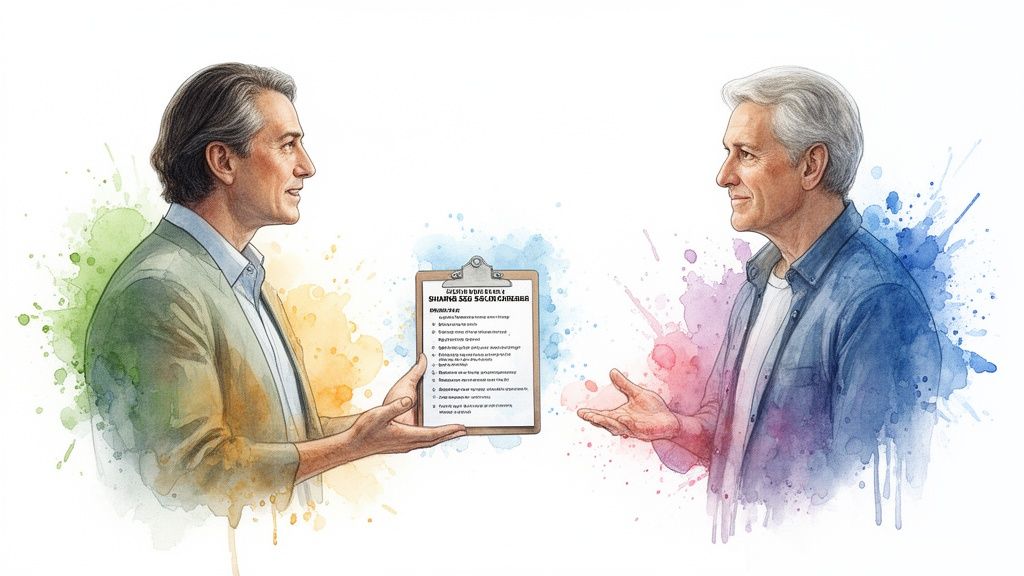
Nobody joins a board to be the "neighborhood police." Let’s get that out of the way. But enforcing your community’s rules is one of the most critical hoa board member responsibilities there is. Think of it less as policing and more as protecting every homeowner's investment while creating a peaceful place for everyone to live.
Your real job is to apply the rules consistently and fairly. That’s how you build trust. When residents see that the rules apply to everyone—no exceptions—they're far more likely to comply and respect the board's role. This consistency is the bedrock of a healthy, functional community.
Creating a Clear Violation Process
To avoid any claims of favoritism or random enforcement, you need a standardized, step-by-step process for handling violations. This framework removes emotion from the equation, ensures every case gets the same treatment, and gives the board solid legal footing.
A good process escalates gradually, giving homeowners plenty of chances to fix the problem. We’ve found this homeowner-centric approach works best:
Step 1: The Friendly Reminder. Always start here. A polite email or a simple door hanger pointing out the issue (like a trash can left at the curb) is often all it takes. It assumes the best and resolves things without friction.
Step 2: The Formal Written Notice. If the gentle nudge doesn’t work, it's time for an official letter. This notice needs to be specific: state the violation, cite the rule from the governing documents, give a clear deadline to fix it, and explain what happens next if it isn't resolved.
Step 3: The Hearing and Fines. If the violation persists, the next step is inviting the homeowner to a board hearing. This is their opportunity to explain their side. If the board determines the violation is still valid, it can then issue fines as laid out in the CC&Rs.
Following a structured path like this proves the board is acting with due diligence, not out of personal feelings.
The Power of Meticulous Documentation
Throughout this entire process, your single most powerful tool is documentation. Log everything—every phone call, email, letter, and conversation about a violation. This creates an objective timeline that shows the board has acted fairly and followed its own procedures.
Accurate and consistent records aren't just for your own files; they are your primary defense if a dispute escalates. A well-documented history proves a pattern of good-faith efforts to resolve the issue, which is invaluable in protecting the board from legal challenges.
Keep your notes factual and free of emotion. Just stick to dates, times, the specific violation, and the actions taken. If you need a refresher on the documents that form the basis of these rules, our guide to understanding governing documents is an essential read. It’s what gives you the confidence to enforce rules from a solid legal foundation.
Handling Common Issues with Grace
As a board member, you’ll run into the same issues time and again—parking squabbles, unapproved fences, or landscaping that’s gone wild. The trick is to address them proactively, before they turn into a feud between neighbors.
Take a parking violation, for example. Instead of immediately calling a tow truck, start with that friendly reminder. If someone puts up a new deck without approval, your first communication should explain the architectural review process and guide them on how to submit an application.
When you approach these situations as a helpful partner rather than an adversary, you can often turn a potential conflict into a simple fix. It reinforces the board’s role as a steward of the community, not just a punitive authority.
Managing Vendors and Protecting Community Assets
As a board member, one of your biggest jobs is overseeing the vendors who keep your community running and protect its physical assets. This goes for everyone from the landscaping crew that keeps your curb appeal sharp to the roofer who’s tackling a major replacement.
Smart vendor management isn’t just about hiring help; it’s about building strategic partnerships. Getting this right is crucial. It ensures you’re getting quality work at a fair price, which protects the association's money and keeps your community safe, attractive, and functional. Ultimately, it reinforces the trust your homeowners have placed in you.
Starting with a Clear Request for Proposal
Any significant project should always kick off with a detailed Request for Proposal (RFP). Think of the RFP as the project's official blueprint. It needs to clearly spell out the scope of work, material specifications, required timelines, and insurance minimums.
This is how you make sure every contractor is bidding on the exact same job. A vague request like "we need a new fence" will get you a pile of bids that are impossible to compare. A strong RFP, on the other hand, specifies the fence height, material type, total length, and gate requirements. This disciplined approach leads to clear, apples-to-apples proposals and prevents major headaches down the road.
Vetting Contractors and Verifying Credentials
Once the bids are in, the real homework begins. Your duty of care requires you to thoroughly vet every potential vendor. Simply picking the lowest price is one of the most common—and dangerous—mistakes a board can make.
The cheapest bid can quickly become the most expensive problem. Due diligence is your best defense against shoddy work, project delays, and potential liability that can cost the community dearly in the long run.
A proper vetting process is absolutely non-negotiable. Here's a simple checklist to follow for every significant contract:
- Get at least three competitive bids to establish a fair market price.
- Check their references, and make sure you prioritize work they’ve done for other HOAs.
- Verify their insurance by requesting a Certificate of Insurance (COI) that names the association as an additional insured party.
- Confirm they are properly licensed for the specific work they’ll be performing.
Following these steps protects the association from uninsured accidents and ensures you’re bringing in a qualified, reputable professional.
Essential Contract Clauses and Project Oversight
Before a single hammer swings, you must have a signed contract in place that protects the association. Your attorney should review it, but at a minimum, it must clearly define payment schedules, lien waivers, warranties, and clauses that allow the board to terminate the agreement for poor performance.
It's also critical to know the difference between routine maintenance and a large-scale capital improvement. Mowing the lawn requires minimal oversight. Replacing every roof in the community is a major capital project that demands frequent check-ins and quality control inspections.
This is where organization becomes key. Tools like community association management software can help your board track every contract, maintenance schedule, and project timeline in one place, making oversight far more manageable and effective. By managing vendors proactively, your board fulfills its duty to protect and enhance the community’s most valuable assets for every single homeowner.
Choosing a Management Partner for Board Success
Let's be honest: serving on an HOA board is a serious commitment. While the work can be incredibly rewarding, the sheer volume of HOA board member responsibilities is a fast track to burnout. That’s why bringing in a professional community management company isn't about giving up control—it's about gaining an expert ally.
Think of a management partner as the operational arm of your board. They take on the heavy administrative lifting that so often bogs down volunteer leaders. From managing the financials and ensuring fair rule enforcement to navigating the maze of legal requirements, they handle the day-to-day grind. This frees your board to focus on what you signed up for: big-picture governance and building a better community.
Elevating Governance and Reducing Burnout
Board member turnover is one of the biggest challenges HOAs face today. When good volunteers get overwhelmed, they step down, leaving positions that are tough to fill. It's a huge problem. National surveys show a staggering 35-40% of board positions can go unfilled each year, with burnout cited as a top reason.
Here’s the good news: there's a proven way to fight this fatigue. Research shows that boards partnering with professional management companies experience 20-25% lower turnover rates. Providing that expert support structure makes a real, measurable difference in keeping dedicated leaders engaged.
A dedicated community association manager acts as your guide, bringing the expertise and structure needed to govern effectively. They provide the framework for running efficient meetings, keeping clean records, and communicating clearly with all your homeowners.
A professional management company doesn’t replace the board; it empowers it. By handling administrative tasks and providing expert guidance, they allow board members to focus their energy on leadership and strategic decision-making, which is the true purpose of board service.
This partnership creates a more sustainable and productive environment for everyone. Board members feel supported instead of overwhelmed, which encourages longer tenures and builds a stronger, more experienced leadership team over time.
Ultimately, the entire community reaps the rewards. That stability translates directly into more thoughtful long-term planning, better-protected property values, and a higher quality of life for every single resident. When you invest in professional management, you’re really investing in the long-term health and success of your community.
Common Questions About Board Member Responsibilities
Jumping into an HOA board member role always brings up a ton of practical, real-world questions. We’ve been there. This section tackles the most common concerns we hear from new and seasoned members alike, giving you straightforward answers to help you lead with confidence.
Am I Personally Liable for Board Decisions?
For the most part, no—as long as you’re acting in good faith. Board members are generally protected by two things: the "business judgment rule" and your association's Directors & Officers (D&O) insurance policy. This protection kicks in when you make decisions with care, loyalty, and in line with your governing documents.
But that shield isn't bulletproof. You can absolutely be held personally liable for things like fraud, gross negligence, or blatant conflicts of interest where you put your own gain ahead of the community's. This is exactly why truly understanding your fiduciary duties is the single best way to protect yourself.
What Is the Most Common Mistake New Board Members Make?
The number one pitfall we see is new members trying to do way too much, way too fast. They’re eager to make a difference, which is great, but they often propose massive changes without first getting a feel for the community’s history, what projects are already in the works, or the processes that are in place.
One of the most damaging mistakes a board can make is inconsistent rule enforcement. When you enforce a rule for one homeowner but let it slide for another, you're practically inviting accusations of favoritism and torpedoing the board's credibility.
On the flip side, being too passive is also a problem. Your neighbors elected you to be an active voice. The real key is finding that sweet spot between listening, learning, and then taking decisive action. That's how you become a leader who truly serves the entire community.
How Much Time Does Serving on an HOA Board Take?
The time commitment really depends on your specific role (the President will spend more time than a member-at-large), how large your community is, and whether you have a professional management company to lean on. On average, you should probably plan to set aside 5-10 hours per month.
That time is usually filled with:
- Attending monthly or quarterly board meetings.
- Reviewing financial reports, vendor contracts, and meeting minutes ahead of time.
- Handling emails and other board-related communication.
- Pitching in on committee work or special projects.
And just be ready for that number to climb during busier seasons, like when you're hashing out the annual budget or overseeing a big capital improvement project.
What if a Homeowner Is Hostile or Disrespectful?
First thing's first: stay professional. It is absolutely essential that you don't take the hostility personally or get defensive. That will only pour gasoline on the fire.
Make a point to listen to the homeowner’s concerns so they feel heard, but then firmly bring the conversation back to the facts and the community's established procedures. You can acknowledge their frustration without validating disrespectful behavior. Afterwards, document the interaction factually and, if the situation calls for it, bring it to the full board or your management company to handle formally.
Managing these complex responsibilities is far easier with an expert partner. Access Management Group provides the professional support and guidance Georgia HOA boards need to govern effectively, reduce burnout, and protect community assets. Learn how our elite Community Association Managers can empower your board.