When homeowners hear "HOA management," they often think of rule enforcement and fee collection. While that’s part of it, great homeowners association management is so much more. For board members and homeowners alike, it's the professional partnership that ensures your community thrives, your lifestyle is protected, and your property values are enhanced.
Think of it this way: your board sets the vision for the community, and a professional management partner provides the expertise and operational power to bring that vision to life, benefiting everyone who lives there.
What Does Great HOA Management Actually Look Like?
Let's move past the outdated idea that management is just about sending violation letters. A better way to look at it is to imagine your community as its own small city, designed to serve its residents.
In this city, the elected Board of Directors is the city council, made up of your neighbors who have volunteered to set policies and make strategic decisions for the community's future. The homeowners are the valued citizens who live there and invest in its success. And the professional management company? They're the city manager—an experienced professional hired by the board to handle the day-to-day operations that keep everything running smoothly for the residents.
This partnership is designed to do two things: safeguard your investment as a homeowner and free up the volunteer board to focus on governance, not grunt work. The manager takes on the complex administrative, financial, and physical tasks, ensuring everything from resident services to budget reports is handled efficiently, ethically, and in the best interest of the community.
The Core Structure Of Your Community
This relationship between the board, manager, and homeowners creates a clear and effective structure for success. The board, elected by the homeowners, holds the ultimate decision-making authority. The manager implements those decisions, and the homeowners are the foundation and beneficiaries of this collaborative leadership.
This diagram shows how everyone works together for the community's benefit.
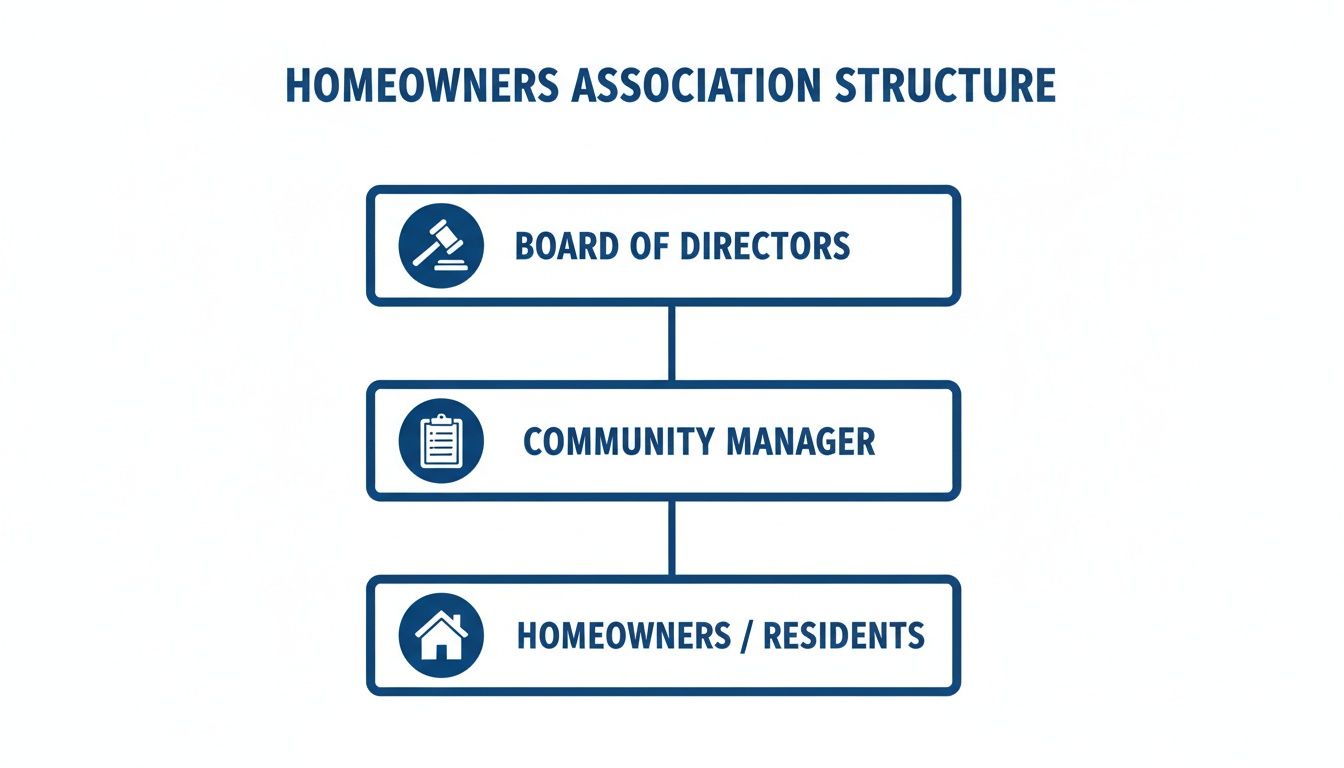
This division of labor is what allows a community association to run effectively. The board provides direction, and the manager executes—all for the good of the homeowners.
Board Of Directors vs. Management Company Roles
It's crucial for both board members and homeowners to understand where the board's responsibilities end and the manager's begin. This separation of duties prevents board burnout and ensures the community benefits from both dedicated volunteer leadership and professional operational expertise. The board makes the 'what' and 'why' decisions, while the management company handles the 'how' and 'when'.
Here’s a clear breakdown of who does what to serve the community:
| Area of Responsibility | HOA Board of Directors (Decision Makers) | Management Company (Implementers) |
|---|---|---|
| Budgeting | Sets budget priorities based on community needs, reviews drafts, and gives final approval. | Prepares draft budgets, presents clear financial reports, and implements the approved budget. |
| Rule Enforcement | Establishes community rules and fine/violation policies to protect property values and quality of life. | Conducts inspections, issues violation notices fairly, and manages the hearing process as a neutral party. |
| Vendor Management | Approves large contracts and sets the scope of work for major projects that benefit the community. | Solicits bids from vetted vendors, manages contracts, and oversees daily work to ensure quality. |
| Homeowner Communication | Sets the communication policy and tone for the community, focusing on transparency and engagement. | Drafts and sends newsletters, manages the HOA website, and serves as the primary, responsive contact for homeowner inquiries. |
| Legal & Governance | Works with legal counsel on policy, interprets governing documents, and makes final policy decisions. | Ensures day-to-day operations comply with governing documents and applicable laws, protecting the association. |
This table is a guide, but the core principle is clear: the board governs and sets policy to serve the homeowners, and the management company manages and executes that policy to support the board and the community.
The Growing Importance Of Professional Management
As more Americans choose to live in planned communities, the need for professional management has never been greater. This isn't just a business service; it's an essential component for creating a well-run, desirable place to live.
In fact, the United States is projected to have approximately 373,000 community associations in 2026, which will house over 77 million residents. This means that professionally managed communities account for roughly 33% of all U.S. housing stock.
With homeowners associations making up about 58-63% of that total, the demand for skilled, professional management is at an all-time high. You can explore more detailed 2025 HOA facts and figures to see just how significant this trend is.
For board members and homeowners, these numbers highlight the incredible value of a strong management partner. A great manager doesn't just check tasks off a list; they help you build a resilient, financially sound, and harmonious community. They bring expertise that directly benefits everyone:
- Financial Stability for Homeowners: Implementing solid budgeting and collection processes to build healthy reserves, which helps avoid dreaded special assessments.
- Enhanced Property Values: Proactively managing maintenance and vendor relationships to keep common areas beautiful and functional, directly impacting every home's value.
- Risk Mitigation for the Board: Ensuring the association stays compliant with its governing documents and all local and state laws, protecting the volunteer board and the association from costly legal issues.
- Improved Community Harmony: Acting as a neutral, third-party buffer to handle enforcement and communications fairly, consistently, and without personal bias, which reduces neighbor-to-neighbor friction.
Ultimately, great management empowers a volunteer board to lead with confidence and allows homeowners to enjoy their community, knowing the day-to-day details are in the hands of capable experts.
The Three Pillars of Professional HOA Management
So, what should a board president or homeowner really expect when they partner with a professional management company? It’s not just one single service. Great homeowners association management is a true partnership built on three core pillars that work together to support your community: Administrative, Financial, and Physical Site Management.
Think of it like a three-legged stool. If one leg is weak or wobbly, the entire community's stability is at risk. A top-tier management firm excels in all three areas to create the balanced, supportive foundation your board needs and your homeowners deserve.

This comprehensive approach ensures that every aspect of the community is cared for, from the board meeting minutes to the maintenance of the front entrance landscaping. Let’s break down what each of these pillars means for you, your board, and your fellow homeowners.
Pillar 1: Administrative Services
This is the organizational engine that keeps your community running smoothly, legally, and fairly. For board members, this is where a manager’s expertise can save you countless hours and help you avoid major headaches. For homeowners, this means having a responsive, professional point of contact for your needs.
Administrative management isn’t just filing papers; it's about creating an efficient and transparent system for the whole community. This includes:
- Meeting Management: Preparing and sending out board meeting agendas, attending meetings to take official minutes, and ensuring all actions align with your governing documents and Georgia law. This helps the board run efficient, productive meetings.
- Record Keeping: Securely maintaining all official records for the association, from meeting minutes and vendor contracts to homeowner letters and architectural change requests, ensuring transparency and continuity.
- Rule Enforcement: Consistently and fairly enforcing the community’s covenants and rules. This means conducting property inspections, issuing violation notices, and managing the hearing process as a neutral third party, which protects property values for everyone.
- Homeowner Communication: Acting as the main point of contact for residents. This gives homeowners a reliable resource for their questions and frees up the volunteer board from fielding daily calls and emails.
By handling the day-to-day administrative load, a professional manager gives the board the freedom to focus on big-picture decisions. Instead of getting tangled up in enforcement disputes or meeting logistics, your board can concentrate on long-term goals that enhance your community.
Pillar 2: Financial Management
The financial health of your association is directly tied to its long-term stability and your property values. This pillar is where a management company brings in the expertise to protect and grow your community’s money, giving both the board and homeowners peace of mind.
This goes way beyond just cashing dues checks. Expert financial management is all about strategic planning, careful accounting, and total transparency. A great partner will handle:
- Budgeting and Reporting: Preparing a draft annual budget based on historical data and future needs. They’ll also provide the board with clear, easy-to-read monthly financial statements so everyone knows where the money is going.
- Assessment Collection: Managing the entire dues collection process—from invoicing and processing payments to handling delinquent accounts professionally and legally, ensuring a fair process for all.
- Accounts Payable: Processing and paying all association bills and vendor invoices on time, maintaining good relationships with service providers and preventing service disruptions.
- Reserve Fund Guidance: Working with the board and reserve study specialists to ensure the association is setting aside enough money for future repairs and replacements. This proactive planning is the key to protecting homeowners from painful special assessments down the road.
A huge piece of modern financial management is using specialized software. To get a feel for how these platforms benefit residents, you can learn more about how community association management software streamlines everything from online payments to accessing documents.
Pillar 3: Physical Site Management
This pillar covers all the tangible things in your community—the common areas, amenities, and infrastructure that homeowners see and use every single day. Proactive site management is what keeps curb appeal high, amenities enjoyable, and property values strong.
A management company’s job here is to be the board's eyes and ears on the ground, overseeing all maintenance and vendor work to protect the community's assets. This includes:
- Vendor Coordination: Sourcing bids from qualified and insured vendors for services like landscaping, pool maintenance, and repairs. The manager vets these companies and oversees their work to make sure it meets the community's standards.
- Regular Inspections: Routinely walking the property to spot maintenance needs, potential safety hazards, and compliance issues before they become bigger, more expensive problems for homeowners.
- Project Oversight: For larger projects, like a roof replacement or paving project, the manager coordinates the entire process from getting bids to final inspection, ensuring the project is done right, on time, and on budget.
By professionally managing these three pillars, a homeowners association management company provides a complete solution. It’s a partnership that protects your community’s assets, improves the quality of life for residents, and supports the board in its important leadership role.
Navigating Your Financial and Legal Duties as a Board
For most volunteer board members, the financial and legal side of running a homeowners association can feel like the most intimidating part of the job. This is where your fiduciary duty—your legal obligation to act in the community's best financial interests—really comes into play.
With an experienced management partner, these duties become powerful tools for building a secure and stable community that benefits every homeowner. Think of it this way: your finances and governing documents are the foundation of your community. Getting them right, with expert guidance, ensures your community is built to last and that your investment as a homeowner is protected.
Mastering Your Financial Best Practices
Strong financial stewardship is the single most important job of an HOA board, as it directly impacts property values, homeowner satisfaction, and the long-term health of the entire community. This isn’t just about collecting dues; it's about smart, strategic planning that safeguards everyone's investment.
A management partner brings the expertise to guide the board through three critical financial areas:
- Data-Driven Budgeting: A budget should be a forward-looking plan, not just a repeat of last year. A professional manager helps you build a budget based on real historical spending, current vendor costs, and future needs, creating a realistic financial roadmap that serves the community well.
- Effective and Fair Collections: A consistent, well-documented collections process is essential for fairness and for protecting the association's cash flow. Your manager can handle the difficult task of pursuing delinquencies professionally and according to your established policies, removing the burden from the board.
- The Crucial Role of Reserve Studies: Your reserve study is your long-term financial blueprint. It identifies all major community assets (like roofs, roads, and pools), estimates their remaining lifespan, and calculates how much you need to set aside each year for their eventual replacement.
Proactive reserve funding is the single best way to protect homeowners from surprise special assessments. When you treat reserves as a non-negotiable operating expense, you ensure the money is there when you need it, preventing sudden, massive bills for residents.
This strategic approach is more critical now than ever. The financial stability of HOAs is being tested by inflation, with 91% of community associations reporting unexpected cost increases. In response, 71% of HOA boards are planning to raise fees in 2026. Smart boards, supported by their managers, are getting ahead of these pressures with data-driven budgeting and robust reserve planning. The tragic collapse of Florida's Champlain Towers has also reinforced this trend, prompting stricter reserve funding mandates across the country. You can read more about these industry financial trends and their impact on HOAs.
Untangling the Hierarchy of Governing Documents
Your association’s governing documents aren't just a rulebook—they are a legally binding contract between the HOA and every single homeowner, designed to protect the community's character and value. Understanding and enforcing them correctly is your best defense against liability and ensures fairness for all residents.
These documents exist in a clear hierarchy, and a management company helps the board interpret and apply them properly. Think of it as a legal pyramid, from top to bottom:
- Federal, State, and Local Laws: Laws like the Georgia Condominium Act or the Georgia Property Owners' Association Act always take precedence over everything else.
- Declaration of Covenants, Conditions & Restrictions (CC&Rs): This is the core document that established the association. It spells out the rights and obligations for both the homeowners and the HOA.
- Bylaws: These are the rules for how the association itself is run—how meetings are conducted, how directors are elected, and the specific duties of the board.
- Rules and Regulations: These are the day-to-day community rules adopted by the board, covering things like pool hours, parking, and trash can storage, which help maintain a pleasant living environment for everyone.
A professional manager’s job is to ensure every action the board takes is consistent with this hierarchy, from sending violation notices to approving architectural changes. For a deeper look into these duties, check out our guide on what every HOA board member should know.
Ultimately, consistent and fair enforcement is the cornerstone of a well-run community. When rules are applied equally to everyone, it demonstrates that the board is acting in good faith. Having a neutral, third-party manager handle enforcement is the best way to prevent claims of favoritism and foster a greater sense of fairness among all homeowners.
Transforming Your HOA into a Thriving Community
Let's be honest. Well-kept common areas and a healthy reserve fund are fantastic, but they don't automatically create a great place to live. That's the difference between a housing development and a true community. The ultimate goal of homeowners association management is not just to maintain the property, but to foster a place where people feel connected, safe, and genuinely proud to call home.
For board members, this is where you can make the most meaningful impact. It’s about building trust, preventing conflicts before they start, and creating an atmosphere that turns a street full of houses into a neighborhood of friends. A good management partner acts as your primary ally in this mission, helping you implement strategies that create real engagement and benefit every resident.

Fostering Genuine Communication
Nothing sours a community faster than feeling like you're being kept in the dark. Open, transparent communication is the absolute bedrock of a healthy HOA. It’s not about just blasting out announcements; it's about creating a genuine, two-way dialogue that makes every single homeowner feel seen, heard, and respected.
A professional management company can help your board build a communication plan that reaches everyone, ensuring vital information is always accessible.
- Resident Portals: Think of this as the community's digital town square. It’s a secure, central hub where homeowners can find documents, see their account status, and get official news. It empowers residents by giving them a single, reliable source for all community business.
- Email Newsletters: These should be more than just dry meeting reminders. A great newsletter can spotlight community projects, welcome new families, and share helpful tips, giving it a personal touch that helps people feel connected.
- Text Alerts: For truly urgent news—a water main break, a gate malfunction, or severe weather—a text alert is the fastest way to get critical information to every resident instantly.
The real purpose of a solid communication plan is to build a foundation of transparency. When homeowners understand what's happening and why, they are far more likely to trust the board's leadership and support its decisions.
Running Meetings That Encourage Participation
Let's face it: HOA meetings can have a bad reputation. Too often, they can feel unproductive or contentious. They don’t have to be that way. With proper structure and a firm, fair hand guiding the process, they can become genuinely productive forums for collaboration that benefit the entire community.
A skilled manager can help a board president run meetings that invite participation, not arguments. Simple techniques like setting a clear agenda, using basic parliamentary procedure to keep order, and enforcing time limits for speakers can make a world of difference. The meeting stays on track, feels respectful, and becomes a place for solving problems. Your manager acts as a neutral facilitator, ensuring rules are followed and discussions remain productive.
Building Community Beyond the Boardroom
While meetings and financials are necessary, the real heart of a community beats in the spaces between official business. The most effective homeowners association management strategies include creating opportunities for neighbors to simply connect as people.
A few well-organized, low-key events can have an enormous impact on community spirit.
- Social Gatherings: Think simple and fun. A holiday decorating contest, a community-wide yard sale, or even just setting up coffee and donuts in a common area can do wonders to break the ice and build friendships between neighbors.
- Volunteer Committees: Why should the board do all the work? Empower residents by creating committees for landscaping, social events, or welcoming new neighbors. This channels their energy productively, fosters a sense of ownership, and lightens the board's load.
- Community Projects: Nothing builds shared purpose like working together. A community garden, a neighborhood watch program, or a "yard of the month" award all create a tangible sense of pride and a shared investment in the neighborhood.
Ultimately, turning a subdivision into a community is an intentional act that puts people first. By partnering with a management company that understands this, your board can put strategies in place that build lasting bonds and make your neighborhood a place everyone is thrilled to call home.
How to Choose the Right Management Partner
Choosing a homeowners association management company is one of the most important decisions your board will ever make on behalf of the community. This isn't just about hiring a vendor to pay bills and send notices. It's about finding a true partner who will help your board execute its vision, protect the community's assets, and enhance the quality of life for every resident.
The right partner lifts the heavy administrative weight off your volunteer board, freeing you up to focus on what really matters: strategic leadership and big-picture decisions. A rushed choice can lead to years of headaches for the board and homeowners, but a careful, deliberate one can set your community up for success for decades to come.
First, Define Your Community’s Needs
Before you even look at proposals, the first step is for the board to look inward and understand what the community truly needs. Every community has its own personality and unique challenges. The "perfect" management company for a high-rise condo in Midtown Atlanta will have a different skillset than one for a sprawling single-family home development in the suburbs.
Start by having an honest discussion as a board. Ask the tough questions:
- What are our biggest challenges right now? Are they financial, a lack of communication with residents, or overdue maintenance projects?
- Where do we want our community to be in five years? Are we planning a major pool renovation, trying to add new amenities, or focused on maintaining stability for our homeowners?
- What level of support do we, as a board, actually need? Do we need a full-service partner to handle everything, or just expert help with financial management?
Getting clear on these answers first prevents you from being distracted by a flashy sales pitch. It ensures you’re selecting a partner based on the genuine needs of your board and homeowners.
The goal is to create a detailed "job description" for your ideal management partner. This becomes your North Star, guiding the entire selection process and keeping every board member aligned.
The Interview and Evaluation Process
Once you have a clear picture of your needs, it's time to solicit proposals and start interviewing. This is where you get to see which companies have the experience and professionalism to serve your community effectively. To do this right, use a checklist to compare every potential partner on an apples-to-apples basis.
Your questions should dig deep into their experience, their people, their technology, and their service philosophy. You're trying to build a complete picture of how they operate and if their style is a good fit for your board and community culture. A huge part of this is understanding the specific manager who would be assigned to you. It’s worth understanding what a community association manager does and the qualifications that set the great ones apart.
A structured evaluation is the key to making a confident, objective choice. Use the checklist below during your interviews to ensure you cover all the critical areas.
Management Company Evaluation Checklist
| Evaluation Category | Questions to Ask | Notes/Rating |
|---|---|---|
| Local Expertise | How many other communities do you manage in our area? What is your experience with Georgia-specific laws like the POA Act? | |
| Manager Qualifications | What certifications (CMCA, AMS, PCAM) do your managers have? What is the average workload for a portfolio manager? How do you support your managers to prevent burnout? | |
| Technology & Communication | What software do you use for accounting and homeowner communication? Can residents pay dues and submit requests online? How do you handle emergency communications? | |
| Financial Controls | How are association funds kept separate and secure? Who is authorized to sign checks? Can the board access real-time financial data to ensure transparency? | |
| Fee Structure | What is included in the base management fee? What services are charged extra (e.g., copying, mailings, meeting attendance)? Please provide a full schedule of all possible fees for full transparency. | |
| Contract Terms | What is the length of the contract? What are the termination clauses and any associated penalties? Is there a clause allowing termination for non-performance? |
This checklist isn't just a list of questions; it's a framework for your decision. By filling it out for each company you interview, you'll have a powerful tool to compare your options and justify your final choice to the community.
Checking References and Decoding the Contract
The proposal and interview tell you what a company wants you to know. Checking references tells you what it's actually like to work with them. Don't be shy here. Ask for a list of current clients—specifically, board presidents from communities that are similar in size and type to your own.
When you call, get specific to understand the client experience:
- "Can you tell me about a time the management company helped you solve a really difficult problem?"
- "How responsive is the manager assigned to you, and how do they interact with homeowners?"
- "Have you ever been surprised by hidden fees or unexpected billing issues?"
Finally, before you sign anything, review the management contract with a fine-tooth comb. Better yet, have your association's attorney review it, too. Pay extremely close attention to the termination clause, any automatic renewal provisions, and language that seems vague or one-sided. A transparent, fair contract is the mark of a company that is confident in its service and ready to build a true partnership that serves your board and community.
A Few Common Questions We Hear from HOA Board Members
When you volunteer to serve on your HOA board, you're taking on an important role for your community. You're suddenly dealing with financial puzzles, neighborly disputes, and legal questions you never expected. We've been partnering with boards for decades, and a few questions come up time and time again. Here are some straightforward answers from our team to help you lead your community with confidence.
How Do We Handle a Homeowner Who Refuses to Pay Their Dues?
This is, without a doubt, one of the most critical and uncomfortable issues a board can face. The financial health of your entire community—and the fairness to all paying homeowners—depends on a consistent collections process.
The most important thing is to follow your established collection policy to the letter, every single time. This policy must be legally sound and applied equally to every homeowner, with no exceptions.
This is where having a professional management company provides immense value. We act as a neutral third party, which removes the personal conflict of a board member having to chase down their own neighbor for money. The process we follow is firm, fair, and effective:
- Friendly Reminders: It almost always starts with automated reminder letters. We'll send them at specific intervals—say, 30, 60, and 90 days past due.
- Formal Notice of Intent to Lien: If the reminders don't work, the next step is a formal notice sent via certified mail. This clearly states the association's intent to place a lien on the property if the debt isn't settled.
- Lien Filing: If there's still no payment, the association's attorney steps in to file a lien. This is a serious step that secures the debt against the property itself, protecting the association's financial interests.
- Foreclosure as a Final Option: In the most extreme cases, and only as a last resort outlined in the governing documents, the association may have to initiate foreclosure to recover the delinquent funds.
The goal is always compliance, not punishment. A firm, consistent, and legally compliant process protects the association’s finances while ensuring every homeowner is treated fairly under the exact same rules.
What Is the Board’s Liability If Someone Gets Hurt on Common Property?
Board members understandably worry about their personal liability. What happens if someone is injured at the community pool or on the playground? The good news is, there are several layers of protection built-in for volunteer board members who act in good faith.
First and foremost, your association absolutely must have adequate Directors and Officers (D&O) insurance. This specific policy is designed to shield board members from personal liability for decisions they make while serving the community.
Second, a legal principle called the "business judgment rule" generally protects you. As long as you act prudently, in good faith, and in a way you reasonably believe is in the best interest of the association, you're typically protected from personal liability.
Finally, a lot comes down to foreseeability. The association has a legal duty to keep common areas in a reasonably safe condition. Under Georgia law, all property owners have to exercise ordinary care. Liability usually arises from negligence. For example, if the board knew a staircase step was broken but did nothing to fix it, and someone then tripped and got hurt, that could be a problem.
On the other hand, if an accident is truly unforeseeable, or if a trespasser gets hurt in an area with proper safety measures (like a fenced-in pool), liability is much less likely. The courts have consistently found that some risks, like those with swimming pools, are "open and obvious," which limits liability, especially when safety fences and gates are in place and working correctly.
How Can We Get More People to Volunteer?
Board burnout is real. When the same few people do all the work, it's exhausting. Getting more residents involved not only lightens the load but also builds a much stronger, more connected community for everyone.
Often, people don't get involved because they feel disconnected or like it's too big of a commitment. The key is to create easy, low-pressure ways for people to contribute their time and talents.
- Create Task-Specific Committees: Instead of asking someone for a multi-year board term, form a small committee with one clear, short-term goal. Think "Holiday Decorating Committee" or a "Playground Upgrade Task Force."
- Host Community Work Days: Organize a single-day event to tackle a visible project, like planting new flowers at the entrance or painting a common area fence. It’s a great way for people to help out, meet their neighbors, and see an immediate, positive result.
- Survey the Community: Just ask! Send out a simple survey asking what residents care about and what skills they might be willing to share. You might discover a graphic designer who can help with the newsletter or an accountant perfect for the finance committee.
- Show Your Appreciation: Publicly thank your volunteers. A shout-out in the community newsletter or at the annual meeting goes a long way in making people feel that their time and effort are valued and making others want to join in.
By making it easy, specific, and rewarding to volunteer, your board can tap into the hidden talents within your community and turn a collection of houses into a neighborhood where people are proud to live and participate.
At Access Management Group, we partner with HOA boards to navigate these challenges and so many more. Our expert team provides the guidance and support you need to protect your community's assets and foster a thriving environment for your residents. Find out how we can help your association.