For any condominium board, the real goal is simple: to cultivate a community where people love to live, property values are secure, and life is simply easier for everyone. But achieving that vision? It's a tremendous amount of work for volunteer board members. This is where a professional condominium association management company becomes an invaluable partner. They are the experts who step in to handle the heavy lifting, turning the board's vision into a smoothly-run reality that benefits every single homeowner.
What Is the Role of a Condominium Management Company?

Think of a management company as the Chief Operating Officer (COO) for your entire community. Your volunteer board acts as the Board of Directors—setting the vision, creating policies, and making the big-picture strategic decisions on behalf of all homeowners. The management company is the hands-on executive team that implements those decisions and gets it all done.
Their job is to translate the board's high-level goals into real, day-to-day action that residents can see and feel. This partnership frees your board from the overwhelming grind of administrative busywork, financial complexities, and constant property maintenance. It allows you, the board members, to focus on what you were elected to do: govern effectively and plan for the community’s bright future.
A Partnership Built to Serve Your Community
Condo management firms bring a level of specialized skill that most volunteer boards simply don't have the time or specific background to develop. After all, board members have their own careers and families to manage.
A great management partner builds their support around three core pillars, each designed to directly benefit the board and its homeowners:
- Financial Management: This is far more than just collecting dues. They handle everything from drafting responsible annual budgets and managing delinquencies with fairness to generating transparent financial reports that give homeowners peace of mind.
- Administrative Support: Think of them as your community's central support system. They streamline homeowner communications, ensure bylaw enforcement is fair and consistent for everyone, and keep all the association's official records organized and accessible.
- Property and Vendor Management: They are the guardians of your physical property. They oversee routine maintenance, coordinate emergency repairs, and manage a network of vetted, trusted contractors—from landscapers to roofers—to ensure you get quality work at a fair price, protecting everyone's investment.
To give you a clearer picture, here’s a quick breakdown of what these companies handle on your behalf.
Core Responsibilities of a Condominium Management Company
| Management Area | Key Tasks and Responsibilities |
|---|---|
| Financial Services | Budgeting, assessment collection, accounts payable/receivable, financial reporting, and reserve study coordination. |
| Administrative Tasks | Meeting coordination, record keeping, homeowner communications, rule enforcement, and onboarding new residents. |
| Physical Maintenance | Scheduling routine upkeep, managing repair requests, conducting property inspections, and overseeing vendor contracts. |
| Vendor Management | Sourcing and vetting contractors, negotiating service agreements, and ensuring vendor insurance and licensing are up-to-date. |
| Board Support | Providing expert advice on governance, helping with long-range planning, and ensuring compliance with state and local laws. |
This table is just a snapshot, but it illustrates how a professional team ensures your community runs like a well-oiled machine for the benefit of all.
This structured approach is essential for a healthy community. A key part of their role involves following modern facility management best practices to keep the property pristine and protect its value. The right management partner doesn't just follow orders; they act as a trusted advisor, proactively guiding the board toward decisions that ensure the community’s long-term financial health and harmony for all residents.
A professional management company translates the board's strategic goals into a smoothly running reality. Their expertise ensures transparency, efficiency, and long-term stability for the entire association and its homeowners.
Ultimately, their work is all about protecting and enhancing the investment of every single person who owns a home in the community. By ensuring the grounds look great, the finances are sound, and the rules are applied fairly, they help create a place people are proud to call home. This entire system relies on the specific duties of a dedicated manager, which is a crucial role to understand. You can learn more about https://accessmgt.com/what-is-a-community-association-manager/ in our detailed guide.
Core Services That Ensure a Thriving Community
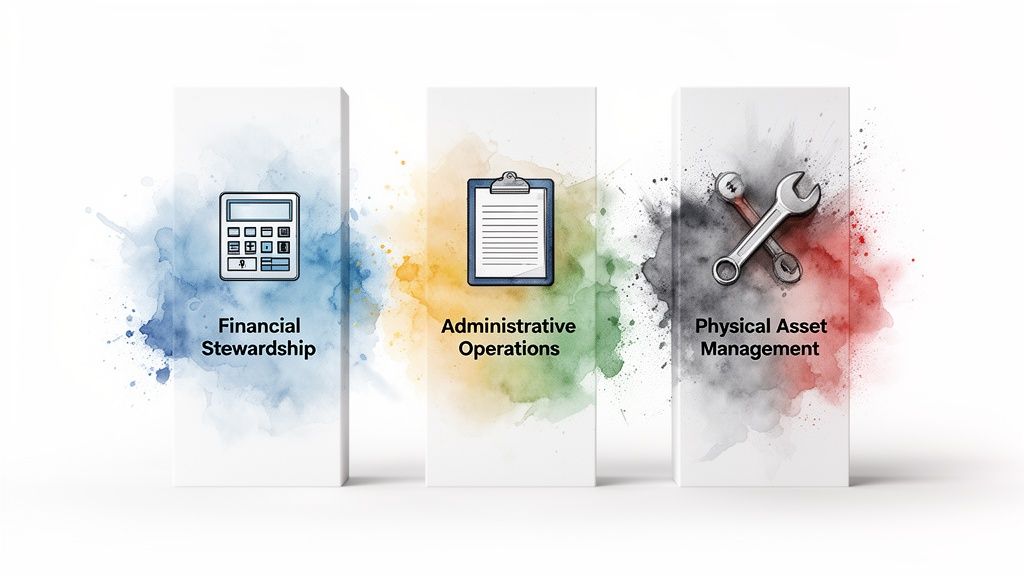
When a board brings on a professional firm, you're doing more than just outsourcing tasks. You're adopting a proven system for community success. The best condominium association management companies build their work around three essential pillars, each designed to support the board, protect homeowner investments, and foster a positive living experience for everyone.
Think of these pillars as the three legs of a sturdy stool. If even one is weak, the entire structure becomes unstable. A great management partner ensures all three are solid, providing a reliable foundation for your community's long-term health and stability.
The Pillar of Financial Stewardship
A condominium's financial health is the bedrock of its success. Without it, property values can slip, surprise special assessments become likely, and the trust between residents and the board can erode. This is why meticulous financial stewardship is a non-negotiable service that protects every homeowner.
It all starts with creating a responsible budget. A skilled manager partners with the board to draft a realistic annual budget that covers day-to-day operating costs while also planning for the future with a properly funded reserve account. This isn't guesswork; it's a data-driven process based on historical spending, existing contracts, and predictable cost increases, designed to prevent financial strain on residents.
A management company's role is to give the board a crystal-clear window into the association's finances. This transparency empowers you to make confident, strategic decisions on behalf of every homeowner.
This financial oversight also covers several other critical functions that benefit everyone:
- Consistent Assessment Collection: They manage the timely collection of homeowner dues through professional, convenient systems, which is the lifeblood of the association's cash flow.
- Proactive Delinquency Management: When payments are late, the management company handles the sensitive follow-up, enforcing the association's policies fairly and consistently. This relieves volunteer board members of the uncomfortable task of pursuing payments from their neighbors.
- Transparent Financial Reporting: Your board receives regular, easy-to-understand financial statements. These reports show exactly where money is coming from and where it's going, ensuring total accountability and peace of mind for all homeowners.
The Pillar of Administrative Operations
Smooth day-to-day operations are what residents notice most. When administration is handled well, community living feels seamless and organized. When it's not, it creates constant friction and frustration for everyone. Professional management brings order and consistency to these essential tasks.
Key administrative services you and your neighbors can expect include:
- Clear and Timely Communications: The manager acts as a central hub for information, ensuring all homeowners get important updates—from maintenance notices to meeting agendas—through newsletters, emails, and resident portals.
- Fair Bylaw Enforcement: This is one of the toughest jobs for a volunteer board. A management company serves as an impartial third party, addressing violations professionally and applying the rules equally to everyone, which is crucial for maintaining community harmony.
- Organized Board Meetings: They prepare the meeting agenda, distribute board packets well in advance, take official minutes, and help ensure meetings run efficiently. This respects the valuable time of every volunteer board member and interested homeowner.
- Secure Record Keeping: All of the association’s official documents, from contracts to meeting minutes, are securely stored and organized, ensuring compliance and easy access when your board needs them.
The Pillar of Physical Asset Management
Your condominium building and its common areas are the community's most valuable physical assets. Maintaining them isn't just about keeping up appearances; it's about protecting the long-term value of every single owner's investment.
This pillar is all about being proactive, not reactive. It involves vetting and overseeing vendors to ensure any work done on the property is high-quality and competitively priced. Good management firms have a deep network of trusted, insured contractors, saving the board from the risky guesswork of finding reliable help.
On top of that, they implement proactive maintenance schedules for everything from landscaping and pool care to HVAC systems and roof inspections. This preventative approach catches small problems before they balloon into expensive, disruptive emergencies that could impact residents. For true compliance, sound budgeting, and proper maintenance, effective managing a building is simply impossible without this expertise.
Finally, when it’s time for large-scale capital improvement projects—like repaving the parking lot or replacing a roof—a management company’s experience is invaluable. They help the board with project specifications, solicit competitive bids, and oversee the work from start to finish, ensuring the project stays on schedule and on budget, protecting homeowners' funds.
Meeting the Challenges of Modern Community Management
Serving on a condominium board has never been more complex. Each year, the list of responsibilities grows, and volunteer board members find themselves dealing with intricate issues that can feel overwhelming. That’s why a professional management partner is less of a luxury and more of a necessity for a well-functioning community.
A good management team doesn’t just put out fires—they see the smoke long before a blaze starts. They help your board anticipate where the industry is headed, turning potential headaches into smart, proactive decisions that protect the association's financial health and enhance the living experience for residents.
The biggest pressure point for most associations right now is rising operational costs. It’s a major concern across the industry, with recent data showing 93% of management firms are reporting higher expenses. This is driven by everything from skyrocketing insurance premiums to increased vendor charges. In response, 92% are focusing on smarter growth and using technology to work more efficiently. You can read more about these 2026 property management trends and how firms are adapting.
This puts boards in a tough spot. No one wants to be the bearer of bad news by simply hiking up dues, which can create friction with homeowners. A forward-thinking management company understands this and brings a much more strategic approach to the table.
Navigating Rising Costs Without Overburdening Homeowners
Instead of a knee-jerk reaction to raise assessments, an experienced management partner treats cost control as a constant, ongoing effort. This is where their professional know-how really pays off for the board and every single resident.
Their strategy to protect the community's budget often involves:
- Strategic Vendor Negotiations: Management companies leverage relationships with a whole network of vendors. Their collective buying power allows them to negotiate better rates for landscaping, sanitation, insurance, and more—often securing discounts a single association could never get on its own.
- Operational Efficiency Audits: They analyze the community’s operations to find and eliminate waste. This could be as simple as adjusting sprinkler schedules to cut the water bill or as involved as recommending an energy-efficient lighting upgrade that pays for itself over time, saving everyone money.
- Technological Integration: Modern condominium association management companies use powerful software to handle routine administrative work. This frees up your community manager to focus on what truly matters—like financial analysis, strategic planning with the board, and resident support—getting more done for the community without bloating the payroll.
A great management partner uses their relationships, technology, and operational expertise to absorb rising costs through smart efficiencies. This protects homeowners from the cycle of endless assessment increases.
Turning Challenges into Strategic Advantages
Beyond just keeping costs in check, a professional partner helps the board tackle other modern challenges head-on. They provide the framework and expertise needed to manage issues that can quickly overwhelm a volunteer-run community.
Take the increase in absentee owners and short-term rentals, for example. This can put a strain on community resources and affect the residential feel of the community. A management company helps the board create and consistently enforce clear rental policies, track compliance, and communicate with off-site owners to maintain the community's unique character.
They are also invaluable for long-term capital planning. Instead of being blindsided by a failing roof or an elevator needing a complete overhaul, a management firm helps the board create and maintain a detailed reserve study. This data-driven forecast ensures money is set aside methodically, turning what would have been a massive, unexpected expense for homeowners into a manageable, planned project.
At the end of the day, the right management company acts as the board’s operational engine and strategic shield. They handle the tough, time-consuming work so your board can focus on what it does best: governance and leadership that benefits the entire community. This partnership ensures your community not only survives today’s challenges but is set up to thrive for years to come.
How to Choose the Right Management Partner for Your Community
Picking one of the many condominium association management companies is easily one of the most important decisions your board will ever make. This choice will shape your community’s financial stability, resident happiness, and property values for years to come. You aren't just hiring a vendor; you're finding a long-term partner dedicated to your community's success.
Think of it like hiring a general contractor for a major home renovation. You wouldn’t just go with the cheapest bid. You'd check their credentials, speak to past clients, and ensure they have the skill to bring your vision to life. A management company deserves that same rigorous evaluation to ensure they are the right fit for your homeowners.
Start With a Comprehensive Evaluation Checklist
Before you begin interviewing firms, your board needs a clear, objective way to compare them. A standardized checklist is your best tool. It helps you look past a slick sales pitch and focus on what truly matters to your community's specific needs.
This simple step removes personal bias and keeps the board's conversation grounded. It's the only way to compare apples to apples, especially when every company structures their proposals a little differently.
To help you get organized, use this simple checklist. This tool allows your board to score each potential partner systematically across the most important categories for homeowners and the board.
Management Company Evaluation Checklist
| Evaluation Criteria | Company A Score (1-5) | Company B Score (1-5) | Notes |
|---|---|---|---|
| Local Experience & Reputation | Years in our area? Vendor relationships? | ||
| Manager Credentials (CMCA, AMS, PCAM) | What % of staff is certified? | ||
| Relevant Client References | Can we talk to a similar-sized community? | ||
| Technology & Online Portal Quality | Is it user-friendly for residents? | ||
| Financial Reporting & Software | Can the board access real-time data? | ||
| Dedicated Manager & Portfolio Size | How many other communities do they handle? | ||
| Board Training & Education Support | Do they help empower our board? | ||
| Transition/Offboarding Process | How do they ensure a smooth handoff? | ||
| Fee Structure Transparency | Are there hidden 'a la carte' fees? |
Using a scorecard like this gives you a tangible, data-driven foundation for your final decision, ensuring you select a partner truly equipped to serve your community.
Ask Insightful Interview Questions
Once you’ve used your checklist to narrow the field, the interview is where you go beyond the proposal. This is your chance to understand a company’s service philosophy, its culture, and how it handles pressure. Move beyond basic questions about services and fees.
Your real goal is to get them to share real-world examples. That’s how you uncover their actual problem-solving skills and commitment to residents.
Questions to Uncover Their True Approach
“Describe your process for handling a sensitive homeowner dispute.” A great partner will outline a documented, respectful process that emphasizes consistent rule enforcement and de-escalation. A weak answer is simply, "we handle it."
“Walk us through how you helped a community navigate a major, unexpected capital repair.” This tests everything: crisis management, financial planning, communication with homeowners, and their vendor network. Look for details on how they kept owners informed, secured funds, and oversaw the project.
“How do you support new board members who may not have a background in finance or property management?” The best partners are also educators. Their answer should show a real commitment to empowering your board to make smart, informed decisions on behalf of the community.
“What happens if our association decides to switch management companies in the future?” This is a critical question that’s often missed. A professional firm will have a clear, smooth offboarding process to transition all your data, financials, and resident information without holding it hostage.
Identify Red Flags Before You Sign
Finally, knowing how to spot trouble is key to protecting your association from a bad partnership. A hasty decision can lock you into a multi-year contract with an underperforming company, creating headaches for the board and frustration for every resident.
A transparent fee structure is the hallmark of a trustworthy management partner. If a proposal is confusing or filled with vague 'a la carte' fees for basic services, consider it a major red flag.
Keep an eye out for these other warning signs:
- Vague or Complicated Fee Structures: Top-tier firms provide clear, all-inclusive pricing. Be wary of a low base fee that comes with a long menu of extra charges for postage, copies, or after-hours calls. These add up quickly and affect the budget.
- Poor Communication During the Vetting Process: If a company is slow to respond or gives you evasive answers before you’ve signed anything, imagine what their service will be like once they have your business.
- Lack of Specificity: When you ask about their experience, do they share concrete examples and success stories from communities like yours? Or do they just speak in generic marketing fluff? A seasoned firm will have plenty of real-world situations to discuss.
- High Staff Turnover: You can ask about the average tenure of their community managers. Constant turnover is a sign of internal issues and almost always leads to inconsistent service and a frustrating experience for the board and residents.
By following this structured approach, your board can cut through the noise and make a confident, well-informed decision that will serve your community well. To help with your search, our detailed guide on condominium association management companies offers even more insight into what separates a great partner from the rest.
Leveraging Technology for a Better Homeowner Experience
Great community management isn't just about people anymore—it’s also about having the right technology. For both board members and homeowners, the right digital tools are what separate a frustrating experience from an efficient, transparent, and responsive one. This isn't about chasing trends; it's about using smart software to make life better for everyone in the community.
Think of it like this: you could still navigate with a paper map, but a GPS gives you real-time updates and helps you avoid roadblocks. The right management software does the same for your association, simplifying everything from paying dues to checking on a maintenance request.
Empowering Homeowners and Boards with Digital Tools
The heart of a modern, well-run community is a simple-to-use resident portal. This secure online space becomes a homeowner's command center for everything related to their property. From there, they can easily:
- Pay monthly assessments without digging for a checkbook or a stamp.
- Submit a maintenance request and see its status in real time, so they know it's being handled.
- Access important documents like bylaws, meeting minutes, or the community newsletter whenever they need them.
- Receive instant community-wide announcements and alerts from the board or management.
For board members, the benefits are just as significant. Good software provides a real-time financial dashboard, offering a clear, at-a-glance view of the association's fiscal health. This empowers you to oversee the budget confidently and make sound, data-backed decisions as stewards of your neighbors' money.
This flowchart helps visualize how a company's approach to technology fits into the larger picture of selecting the right partner for your community.
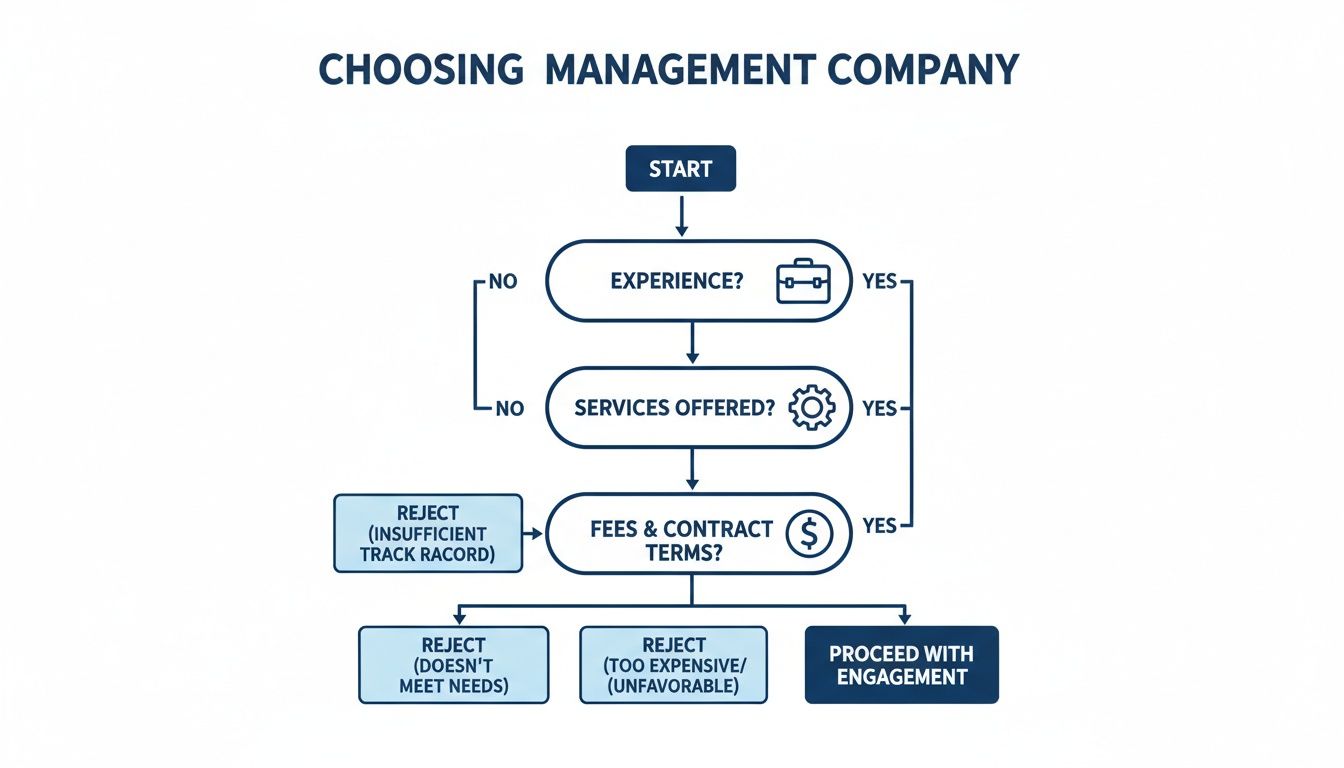
As you can see, a company's investment in technology often signals a deeper commitment to professionalism, transparency, and quality service for everyone.
Automation That Frees Up Human Connection
With community associations now representing nearly one-third of the U.S. housing stock, doing things the old-fashioned way just doesn’t scale. The industry has taken notice. The adoption of AI in property management has jumped to 58%, a huge leap from just 20% last year. This isn't a fad; it's a necessary evolution to provide better service. You can dive deeper into industry trends like this at the Foundation for Community Association Research.
A commitment to modern technology translates directly into superior service and a better living experience for every resident.
The best tools automate routine, administrative tasks—like sending payment reminders or processing architectural review requests. This is a game-changer for your community because it frees up your manager. Instead of getting bogged down in paperwork, they can focus on what really matters: strategic planning with the board, building relationships with residents, and providing the human touch that technology can't replace. To see how this works in practice, explore the benefits of modern community association management software.
Frequently Asked Questions About Condominium Management
When your board starts looking for a management partner, it's natural for you and your fellow homeowners to have questions. This process can feel complex, so we've put together straightforward answers to the questions we hear most often.
What Is the Difference Between the Board and a Management Company?
It’s a vital partnership. The Board of Directors, made up of elected volunteer homeowners, serves as the community's leadership. They set the vision, establish policies, and make key decisions on behalf of all residents.
The management company is the professional team you hire to execute that vision. We handle the daily operations, administrative tasks, and financial management, and provide expert guidance to the board. Think of it this way: the board decides what needs to be done for the community, and we figure out how to get it done efficiently and professionally.
This partnership frees up the board to focus on big-picture governance and long-term planning, rather than the time-consuming details of day-to-day management.
How Does a Management Company Handle Resident Communications?
A professional management company acts as a central, reliable point of contact for all community communications. We use tools like online resident portals, email newsletters, and property notices to keep homeowners informed about everything from maintenance schedules to upcoming events.
Just as importantly, we manage all incoming communication. When a resident reports a maintenance issue or has a question for the board, it's logged, tracked, and directed to the right person. This organized system ensures every request is addressed and that board members aren't fielding calls and emails 24/7 from their neighbors.
Can Our Association Really Afford a Management Company?
This is a common concern, but a good management company is an investment that often pays for itself, benefiting every homeowner. While there is a management fee, the right partner frequently saves the association significant money in the long run.
Here's how:
- Smarter Budgeting: We help create realistic, data-backed budgets and properly fund reserve accounts to avoid those dreaded special assessments that impact every owner.
- Vendor Leverage: Thanks to our industry relationships and volume of business, we can often negotiate better pricing on services like landscaping, insurance, and major repairs than a single association could get on its own.
- Proactive Maintenance: Our experience helps us spot and fix small problems before they become expensive emergencies that disrupt the community.
- Consistent Dues Collection: A professional and consistent approach to collections ensures a steady cash flow, which is vital for the association's financial health and stability.
When you weigh these cost savings against the fee, and factor in the protection of your property values, the benefit to the community becomes clear.
What Should We Look for in the Management Contract?
Your contract is the blueprint for the entire partnership, so clarity is essential. Pay close attention to two key areas: the fee structure and the detailed list of included services. Your board needs to know exactly what’s covered in your monthly fee and what, if anything, might be billed as an extra charge.
Be wary of vague contracts, long lists of "a la carte" fees for what should be standard services, or overly restrictive cancellation clauses. A trustworthy partner will provide a simple, easy-to-understand agreement that clearly outlines their responsibilities and offers a fair exit path if the partnership isn't the right fit for your community.
Choosing the right management company is one of the most impactful decisions a board can make to protect property values and enhance the living experience for all residents. For over 30 years, Access Management Group has partnered with condominium associations across Georgia, delivering unmatched expertise and support.
To see how our elite team can serve your community, learn more at https://accessmgt.com.