You’re probably reading this because you’ve seen one of two things. Either you’ve heard the classic HOA horror stories and you’re wondering whether your own community is drifting toward one, or you’re on a board and trying to keep a volunteer role from turning into a full-time crisis. That concern is reasonable. Community associations can protect property values, maintain shared assets, and reduce neighbor-to-neighbor conflict, but they can also go badly off course when governance slips.
The public narrative often leans hard toward the nightmare scenarios. That’s only part of the picture. In an April 2022 survey by the Foundation for Community Association Research, over 89% of residents reported consistent satisfaction with their HOA, condominium, or similar association, and the 2021 national review found that 29% of the U.S. population, about 74.2 million people, lived in one of an estimated 358,000 community associations (community association satisfaction and national housing data). So yes, hoa horror stories are real. They’re also preventable far more often than people think.
The failures below matter because they show what happens when boards act without process, when homeowners stop asking questions, and when managers or vendors operate without oversight. Each story has two sides. Homeowners need to know how to protect themselves before a problem grows teeth. Boards need systems that make bad decisions harder to make.
1. The Brittany Pointe Condominium Association Financial Collapse (Virginia, 2009)
A financial disaster in an association rarely starts with one dramatic vote. It usually starts with years of putting off uncomfortable decisions, approving budgets that look politically safe, and treating reserves like a future board’s problem.
That’s why reserve failures are among the most damaging hoa horror stories. A roof, facade, elevator system, stormwater line, or structural component doesn’t care whether a board wanted to keep dues low. If the money isn’t there when the work becomes urgent, owners get hit all at once.
In practice, this kind of collapse follows a familiar pattern. The board delays major repair planning. Reserve contributions stay too low. Owners don’t get clear financial reporting, so many assume the community is in decent shape. Then a professional review or urgent repair need reveals that the association has nowhere near enough cash to cover common-element obligations.
What homeowners should watch for
Owners often focus on the monthly dues amount and skip the harder questions. That’s a mistake. The more useful question is whether the association is funding foreseeable obligations with discipline.
- Read the reserve materials: Ask for the most recent reserve study, funding plan, and year-end financials. If they’re hard to obtain, that’s a warning sign.
- Look for budget realism: Low assessments can feel like a win until they produce a painful special assessment later.
- Review the accounting setup: Good accounting for homeowners associations should separate operating realities from long-term capital planning.
What boards need to change
Boards don’t need to predict every future expense perfectly. They do need a repeatable process.
Practical rule: If a board can’t explain how it’s funding future capital repairs, it’s not managing risk. It’s postponing it.
Strong associations usually do a few things consistently. They commission reserve studies on a regular schedule, compare reserve recommendations against actual budget practice, and communicate clearly when dues need to rise for legitimate long-term reasons. They also train volunteer board members to read balance sheets, budget variance reports, and reserve schedules instead of relying on instinct.
What doesn’t work is hoping deferred maintenance will stay deferred. It won’t. It just gets more expensive and more political.
2. The Towers of Parkway Excessive Assessment Disputes (New Jersey, 2015)
Some hoa horror stories aren’t about whether a project is necessary. They’re about whether the board handled it ethically.
Owners can accept difficult news when they trust the process. They usually revolt when they see repeated assessments, unclear contractor selection, and board members who seem too close to the vendors getting paid. Once that trust breaks, even legitimate repairs start looking suspicious.
The real issue isn’t the bill
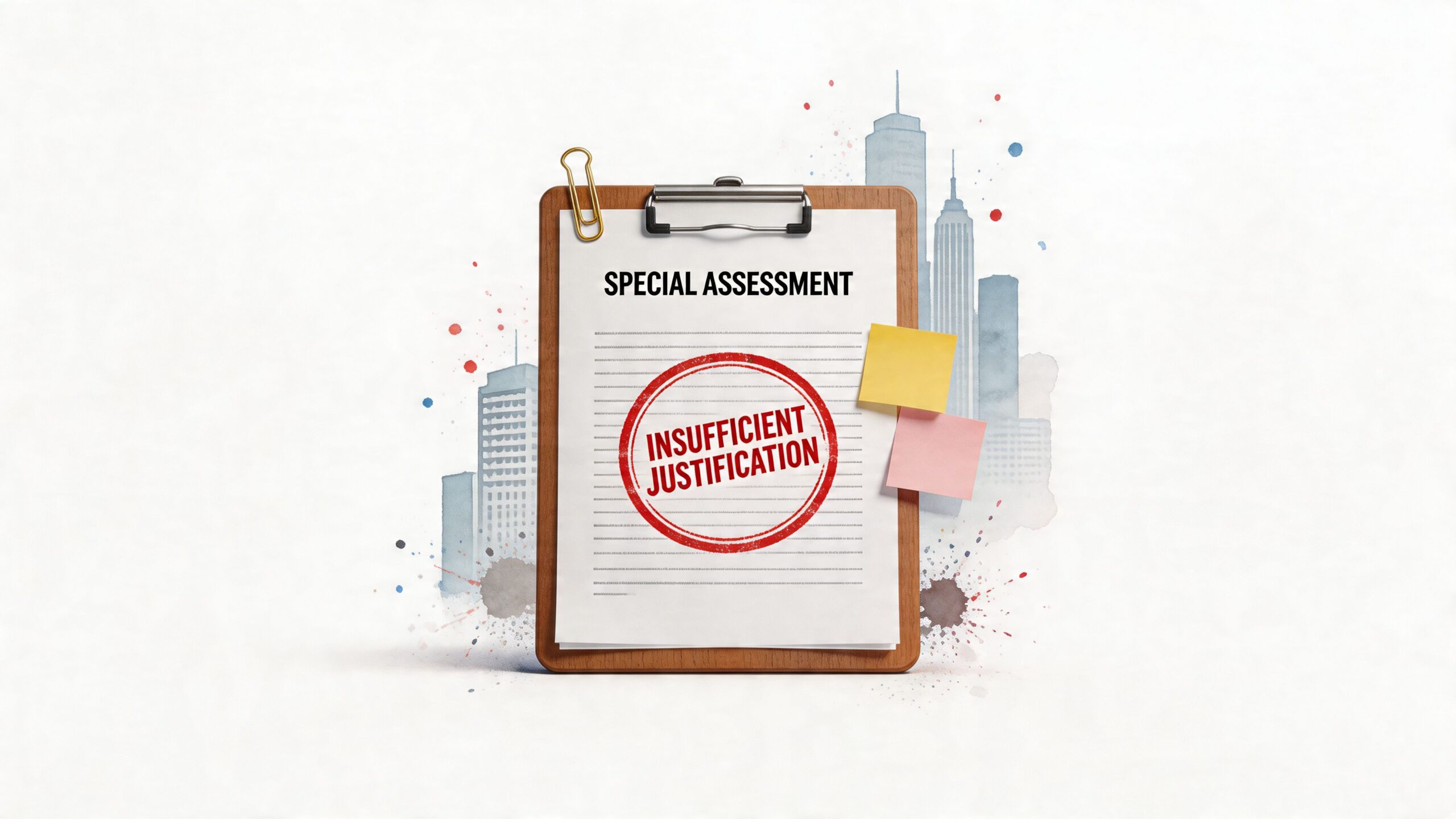
A special assessment can be justified. A black-box special assessment isn’t. In communities where residents receive a payment demand without detailed scope, bidding records, or clear meeting minutes, the board has already created a governance problem.
That’s especially true when conflicts of interest are even rumored. Homeowners don’t need proof of criminal conduct to lose confidence. They only need to see that decisions were made in a closed circle and defended with vague answers.
Boards should treat procurement as a fiduciary process, not a convenience exercise.
- Require disclosures: Any board member with a family, business, or financial tie to a vendor should disclose it and step back from the vote.
- Use competitive bidding: For meaningful contracts, boards should compare multiple proposals that address the same scope.
- Document the why: Meeting minutes should show why one vendor was selected over another, not just that a motion passed.
Two perspectives that matter
From the homeowner side, the right response is organized scrutiny, not rumor. Ask for the governing documents, open meeting records, contract summaries, and project justifications. Ask early, before the association moves from proposal stage to collections.
From the board side, the right response is over-documentation. If the work is defensible, prove it in writing. If there’s a conflict, disclose it before someone else uncovers it. If management is running bidding, the manager should preserve a clear procurement trail that can be reviewed without drama.
Homeowners can live with bad news. They rarely tolerate unexplained bad news.
What doesn’t work is telling residents to “trust the board” while withholding the backup. Trust in association governance is earned through records, not slogans.
3. The Wilshire Condominium Unauthorized Special Assessment Lawsuit (California, 2018)
Procedure sounds boring until a board skips it and ends up in court.
This is one of the clearest lessons in hoa horror stories involving special assessments. Even when a repair need is real, a board can still lose if it ignores notice requirements, cost disclosure rules, voting procedures, or required review steps. Boards sometimes act as if urgency excuses shortcuts. It doesn’t.

Process failures create preventable lawsuits
When owners receive a major assessment without proper notice, detailed estimates, or the documentation required by state law, the board has handed opponents a procedural opening. That’s not just a legal issue. It’s also an avoidable legitimacy problem. Residents start asking whether the board rushed the project because it failed to plan properly, failed to communicate, or both.
A sound board treats every major assessment like a file that may later be reviewed by counsel, a judge, or a skeptical buyer doing due diligence. That means the record must be complete.
- Confirm statutory notice requirements: The board and manager should know exactly what the governing documents and state law require before any notice goes out.
- Attach real project support: Owners should receive written estimates, scope details, and any relevant professional reports.
- Clarify owner impact: A notice should explain what the special assessment funds, why reserves aren’t covering it, and how payment timing works.
How to prevent this type of fight
For homeowners, the best protection starts before purchase. One major content gap in the HOA space is buyer education. Too many people buy into an association without reviewing the declaration, budget, reserve posture, rules, and recent meeting activity, even though that due diligence could prevent many future disputes (buyer due diligence gap in HOA horror story coverage). If you already own, don’t wait for a collections notice to start reading the documents.
For boards, the answer is simple but not easy. Slow down. Let counsel review high-risk notices. Let management verify the timeline. Let the project file show the sequence from problem identification to owner communication to vote to implementation.
When a board follows the rules carefully, owners may still disagree with the decision. But they have far less ground to challenge the process.
4. The Century Village Reserve Study Fraud Case (Florida, 2012)
Not every association failure comes from an overbearing board. Sometimes the board is being misled by the very professionals it hired.
That’s what makes reserve and vendor fraud so dangerous. On paper, the association can look stable right up until the day reality catches up. Owners see normal invoices and routine updates. Meanwhile, the underlying assumptions about repair timing, useful life, or replacement cost may be badly distorted.
Why reserve studies need independent scrutiny
A reserve study isn’t just a spreadsheet. It’s a planning tool that shapes dues, project timing, and owner expectations. If the inputs are manipulated, the entire budget structure starts leaning in the wrong direction.
Boards should never treat a reserve study as untouchable just because it came from a consultant. They should read the assumptions, ask why useful-life estimates changed, and compare recommendations against actual site conditions. If the pavement is visibly failing or the roofing is nearing the end of service life, a rosy report deserves more questions, not less.
A good HOA reserve study should help the board make hard decisions earlier, not postpone them.
Controls that actually help
Professional skepticism matters. A competent management company can coordinate vendors, but it should never become the only gatekeeper of technical truth.
- Preserve vendor independence: Boards should control consultant engagement and avoid arrangements that blur lines between management and technical evaluation.
- Review credentials carefully: Engineers, reserve specialists, and inspectors should have qualifications that match the property type and scope.
- Compare field reality to the report: Walk the property with the study in hand. If the report says one thing and the buildings say another, investigate.
Boardroom advice: Trust documents that survive questions, not documents that discourage them.
For homeowners, ask to see whether the board updates reserve assumptions when major components age or fail. For boards, rotate critical vendors when needed and document why a provider was selected. Fraud often survives in environments where the same small group controls information flow for too long.
5. The Ocean Ridge Condominium Board Autocracy Crisis (Florida, 2016)
Some communities don’t collapse because they lack rules. They collapse because one person effectively becomes the rules.
An entrenched board president can dominate a community for years if the rest of the board disengages, homeowners stop attending meetings, and records become difficult to access. By the time owners realize how much authority has been concentrated in one office, financial and governance damage may already be substantial.
Signs a board has become too centralized
Autocratic governance usually leaves tracks. Meeting agendas get thinner while decisions get bigger. Minutes become vague. Questions are deflected instead of answered. Owners hear that issues were “handled” but never see the vote, contract, or reasoning.
This isn’t always fraud. Sometimes it’s a volunteer leader who started as a problem-solver and gradually stopped accepting accountability. The result is the same. The association becomes fragile because too much knowledge, influence, and control sit with one person.
The healthiest boards create friction on purpose. Not conflict for its own sake, but process friction.
- Separate duties: One volunteer shouldn’t control approvals, records, and financial review.
- Keep meetings open as required: Owners don’t need to run the board, but they should be able to observe lawful decision-making.
- Build succession: If a board can’t function without one dominant personality, governance has already weakened.
What works better than a strongman model
Professional management helps most when it supports the board as a whole, not just the loudest director. Managers should send packets to all directors, memorialize votes accurately, and insist that approvals follow policy. They should also know when to advise the board that a governance audit, records review, or counsel involvement is warranted.
Homeowners also have a role. Attend meetings. Request records through the proper channels. Encourage qualified neighbors to run for the board. Passive ownership creates openings for unchecked control.
One of the biggest blind spots in public coverage of hoa horror stories is that it focuses on weird rule enforcement but often misses the governance machinery behind bad decisions. There’s a real need for more discussion about how poor structures, weak controls, and unmanaged conflicts produce community crises in the first place (governance failure mechanics in HOA horror story coverage).
6. The Parkwood Village Assessment Without Notice Crisis (Georgia, 2019)
This is the kind of story that turns ordinary frustration into open revolt. A community project may be worthwhile, but if residents first learn about the cost through collections activity instead of formal notice, the board has already lost the room.
In Georgia communities, this issue comes up more often than it should. A self-managed board takes action, assumes everyone understands the need, and moves too fast on documentation and notice. Then owners push back, lawyers get involved, and a project that might have passed with proper communication becomes a community-wide dispute.
Notice is not a technicality
When a board imposes a major charge without giving owners time to understand the project, review the numbers, and ask questions, it creates both legal exposure and avoidable resentment. Residents start focusing less on whether the work is needed and more on whether they were treated fairly.
That reaction is understandable. Homeowners budget for association life based on regular assessments and known obligations. Surprise billing feels less like governance and more like ambush.
Better process for Georgia boards
The practical fix is disciplined administration. The board should coordinate with certified community association managers, legal counsel when needed, and accounting professionals before any notice is issued.
- Send complete notices: Include project scope, cost estimates, payment terms, and timing.
- Hold owner meetings before the due date: Let residents ask about necessity, alternatives, and scheduling.
- Create a clear record: Preserve agendas, ballots if applicable, minutes, and delivery records.
A board can ask owners for more money. It cannot ask them to be comfortable with confusion.
For homeowners, ask to review the governing documents and any project file tied to a special assessment. If you’re buying into an association, spend real time on due diligence before closing. Many future disputes can be avoided when buyers understand the rules, reserve posture, and project pipeline in advance.
For boards, a management partner with local experience earns its value. Access Management Group has served associations since the 1970s, and that kind of longevity matters when a community needs disciplined communication, reliable process, and software-backed recordkeeping instead of improvisation.
7. The Marina Towers Reserve Fund Misallocation Scandal (Illinois, 2017)
Reserve misuse is one of the most corrosive problems an association can face because it often hides behind normal operations.
When boards or managers treat reserve funds as a convenient backstop for operating shortfalls, the books may appear manageable in the short term. The long-term consequence is harsher. A major repair arrives, the reserve account can’t do what owners assumed it would do, and the community discovers that prior “solutions” were really accounting evasions.
Why fund segregation matters
Operating funds and reserve funds serve different purposes. Mixing them, formally or informally, makes it harder for directors and owners to understand the true financial condition of the association. It also makes abuse easier to conceal.
That’s why this issue keeps appearing in cautionary discussions of hoa horror stories. Financial statements can look orderly while still masking a broken structure underneath. If reserve balances are being used to smooth annual budget pressure, the board is borrowing stability from the future.
The controls every association should insist on
The strongest safeguard is boring, consistent accounting discipline. That includes separate ledgers, timely reconciliations, board packet review, and annual independent audits. It also includes directors who understand that “we’ll put it back later” is not a reserve policy.
In the Las Vegas HOA scandal, a fraud scheme involving more than 40 individuals siphoned more than $58 million from reserve funds across multiple associations through rigged elections and kickback-driven contracting, showing just how much damage weak controls can enable (Las Vegas HOA fraud case study). Most communities won’t face something that extreme, but the underlying lesson applies everywhere. Weak oversight invites expensive surprises.
- Segregate funds clearly: The board should be able to see reserve activity separately from operating activity at all times.
- Review unusual transfers: Any movement affecting reserve balances should receive formal board authorization and documentation.
- Insist on independent eyes: Annual audits and outside financial review help catch drift before it becomes scandal.
Homeowners should ask direct questions about reserves, deferred maintenance, and recent transfers. Boards should welcome those questions. A community that can explain its financial controls calmly is usually a community that’s less likely to become the next cautionary tale.
7 HOA Horror Stories: Case Comparison
| Case | Implementation complexity | Resource requirements | Expected outcomes | Ideal use cases | Key advantages |
|---|---|---|---|---|---|
| The Brittany Pointe Condominium Association Financial Collapse (VA, 2009) | High, requires reserve rebuilding, audits, board training and possible litigation | Large capital injections, professional reserve studies, annual audits, financial management advisors | Restored reserves, stabilized budgets, improved property values over time | Aging condos with inadequate reserves or opaque finances | Protects homeowner equity and prevents catastrophic shortfalls |
| The Towers of Parkway Excessive Assessment Disputes (NJ, 2015) | Medium–High, governance reforms and procurement oversight needed | Legal counsel, procurement policy implementation, independent oversight, possible management change | Transparent contracting, reduced conflict-of-interest risk, improved vendor competition | Large associations with frequent contractor spending or suspected conflicts | Ensures fair bidding and lowers litigation and fraud risk |
| The Wilshire Condominium Unauthorized Special Assessment Lawsuit (CA, 2018) | Medium, procedural and statutory compliance fixes; possible policy updates | Legal review for state compliance, revised notice templates, staff training | Legally enforceable assessments, fewer invalidation suits, clearer resident communication | HOAs in states with strict notice/vote statutes before assessments | Avoids costly litigation and ensures assessments meet statutory requirements |
| The Century Village Reserve Study Fraud Case (FL, 2012) | Very high, forensic investigations, vendor accountability and criminal proceedings possible | Multiple independent reserve studies, forensic accountants, prolonged legal resources, large remediation funds | Accurate long‑term capital planning, prosecution/deterrence of fraud, restored oversight | Large communities with long‑term deferred maintenance or vendor ties | Prevents systemic fraud and ensures truthful reserve planning |
| The Ocean Ridge Condominium Board Autocracy Crisis (FL, 2016) | High, governance overhaul, elections, audits and structural controls required | Legal/organizational support, management transition, audits, resident organizing resources | Restored democratic governance, stronger controls, improved transparency and trust | Communities with single‑leader dominance or opaque decision‑making | Restores resident control and reduces embezzlement risk |
| The Parkwood Village Assessment Without Notice Crisis (GA, 2019) | Medium, policy/procedure changes and manager engagement needed | Professional management, statutory guidance, project documentation and communication tools | Statute‑compliant assessments, better resident buy‑in, fewer rescinded measures | Small to mid‑size HOAs planning capital projects requiring special assessments | Ensures lawful procedure and improves resident acceptance |
| The Marina Towers Reserve Fund Misallocation Scandal (IL, 2017) | High, accounting system changes, audits, and governance accountability required | Accounting software, CPA audits, finance committee, possible special assessments | Segregated reserves, restored fiscal compliance, reduced emergency assessments | High‑rise or large associations with large reserve balances or commingling risk | Protects reserve integrity and enhances financial transparency |
From Horror Story to Success Story: A Blueprint for a Healthy HOA
The common thread in these stories isn’t always bad intent. More often, it’s a lack of expertise, weak process, poor communication, or misplaced confidence in informal decision-making. That matters because most association problems don’t arrive as movie-villain moments. They arrive as unnoticed gaps. Missing records. Unread reserve reports. Unchallenged vendor relationships. Meetings where nobody asks one more question.
Boards can reduce those risks dramatically by focusing on a few fundamentals. First, financial clarity has to come before political comfort. If dues need to rise to support reserve funding, boards should explain the reason plainly and early. Hiding the problem usually produces a larger special assessment later, and that almost always causes more anger than a well-supported annual increase would have caused.
Second, process protects everyone. Homeowners often think procedure is just bureaucracy. It isn’t. Proper notice, open meetings where required, documented votes, conflict disclosures, competitive bidding, and independent review are what keep an association from becoming personality-driven or vendor-driven. Those controls help honest boards stay honest and help residents trust what they’re being told.
Third, both sides need to do their homework. Homeowners should review governing documents, budgets, meeting minutes, and reserve posture before buying and after moving in. Boards should train new directors, avoid concentrating authority in one person, and bring in outside expertise before a problem becomes a legal one. Communities also benefit from practical support beyond governance alone, especially when common areas, visitor access, and incident response need attention through robust HOA security services.
The broader truth is encouraging. Positive experiences are common among residents living in association-governed communities, and that should remind boards and homeowners of something important. Healthy associations aren’t rare. They’re built. They’re built through transparency, steady accounting, lawful enforcement, realistic reserve planning, and professional management that serves the whole community rather than a single faction.
For boards in Georgia and beyond, partnering with an experienced firm like Access Management Group isn’t just about avoiding headlines. It’s about creating a community where owners know what’s happening, directors have the tools to govern responsibly, and major decisions are handled with discipline instead of panic. That’s how a board stops reacting to horror stories and starts writing a better one for its own neighborhood.
If your board wants stronger financial controls, clearer homeowner communication, and a management partner that knows how to prevent small issues from becoming expensive disputes, talk with Access Management Group. Our team works with homeowners, board members, and association leaders to protect, preserve, and enhance their communities with experienced guidance, reliable systems, and practical support.