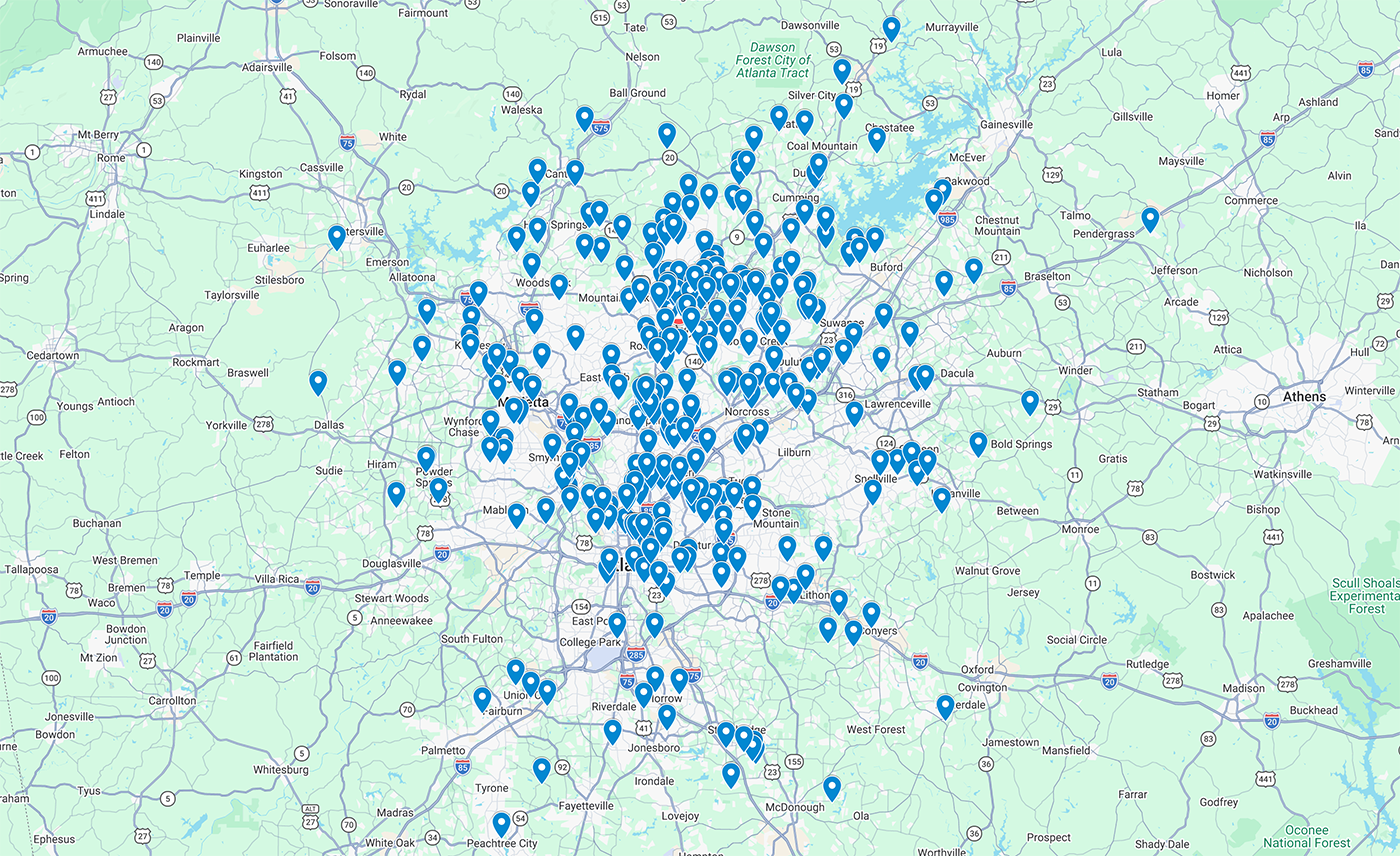
A homeowner receives a violation notice, a board member questions whether the association can enforce it, and the treasurer is trying to collect assessments without creating a larger legal problem. Those situations are common because Georgia homeowners association laws don't operate through one universal statute. The correct answer depends on the community's recorded declaration, whether it elected a statutory regime, the association's governing documents, and the timing of the action.
Georgia's legal environment is also changing. Senate Bill 406, signed by Governor Kemp on May 12, 2026, created the Georgia Property Owners' Bill of Rights Act. Most provisions take effect on January 1, 2027, while the provision concerning attorney's-fees prerequisites and judicial review of reasonableness applies to actions filed on July 1, 2026. The changes make registration, collection procedures, dispute handling, and board documentation practical priorities, not merely legal topics. (FMG's analysis of Senate Bill 406)
Introduction to Georgia HOA Legal Framework
Georgia associations generally fit within two primary statutory frameworks, but neither automatically answers every question for every community. The Georgia Property Owners' Association Act, found at O.C.G.A. §§ 44-3-220 through 44-3-235, is an opt-in regime for subdivisions. The Georgia Condominium Act, found at O.C.G.A. §§ 44-3-70 through 44-3-117, applies to condominiums when the declaration submits the property to that regime. Communities outside those elections generally rely on recorded covenants and applicable corporate law rather than a single default HOA statute. (Georgia Condominium Act overview)
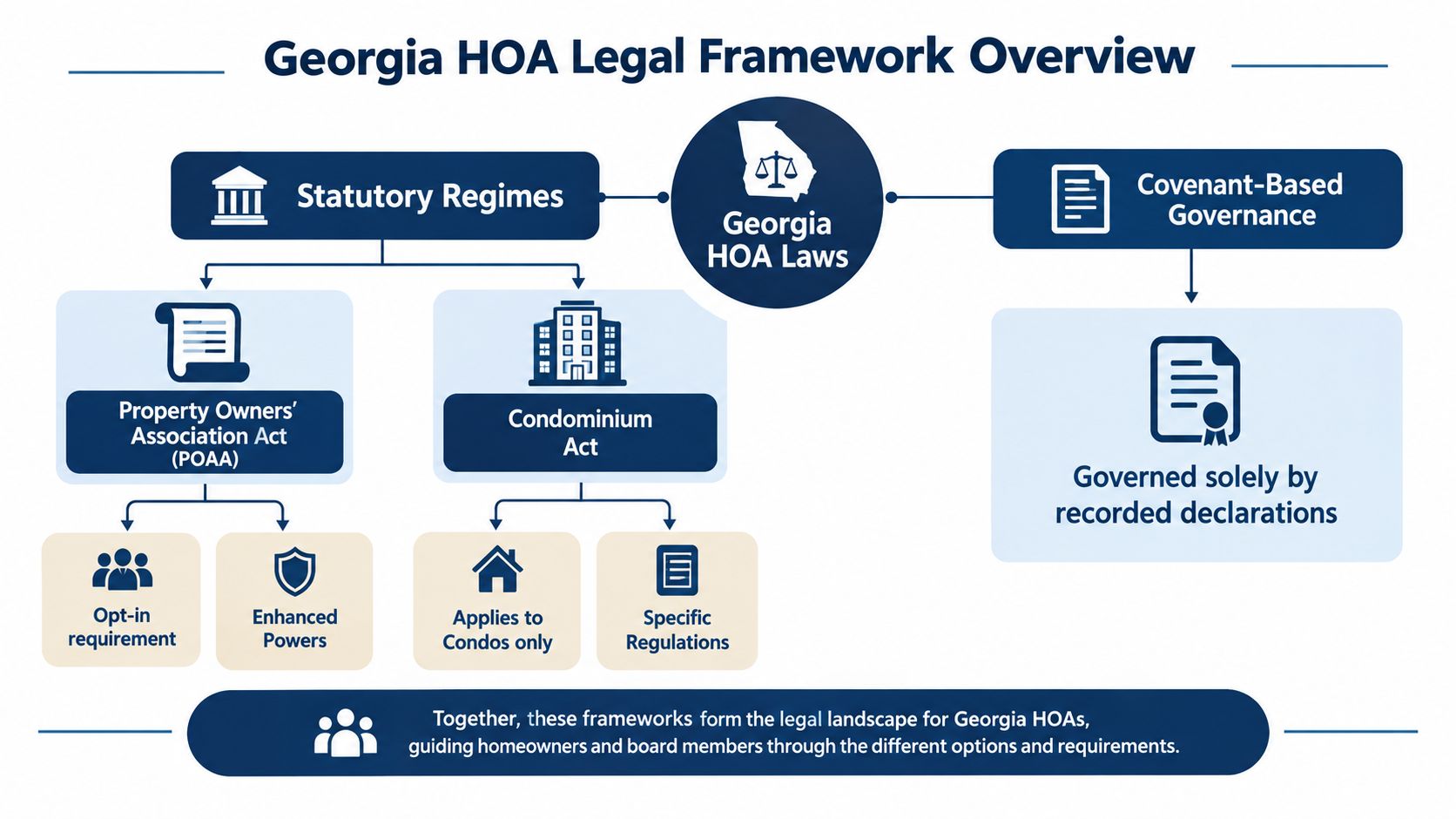
That distinction affects daily decisions. A board may believe it has statutory authority to impose a fine, record a lien, or pursue a collection remedy, while the declaration may never have elected the Property Owners' Association Act. In that situation, the association's authority must come from its recorded covenants, articles, bylaws, and other applicable Georgia law. (Georgia HOA law framework)
The Property Owners' Association Act spans 17 statutory sections and has served as a central planned-community statute in Georgia for decades. Its importance comes from the powers it can provide after a valid election, not from automatic application to every neighborhood. The Georgia Nonprofit Corporation Act or Business Corporation Act may also govern the association's corporate operations when the statutory property regime doesn't control.
For homeowners, the first question is therefore not merely, “Can my HOA do this?” It's, “What legal documents and statutory election authorize the action?” For boards and presidents, that answer should be documented before enforcement begins.
Practical rule: Confirm the governing regime before relying on a statutory remedy. A polished collection policy cannot create authority that the declaration never granted.
The 2026 Bill of Rights Act adds another compliance layer. Associations will need to treat registration, owner communications, collection workflows, and dispute files as connected parts of governance. A board that understands its legal foundation can preserve legitimate enforcement power while reducing avoidable disputes.
Election to Property Owners Association Act
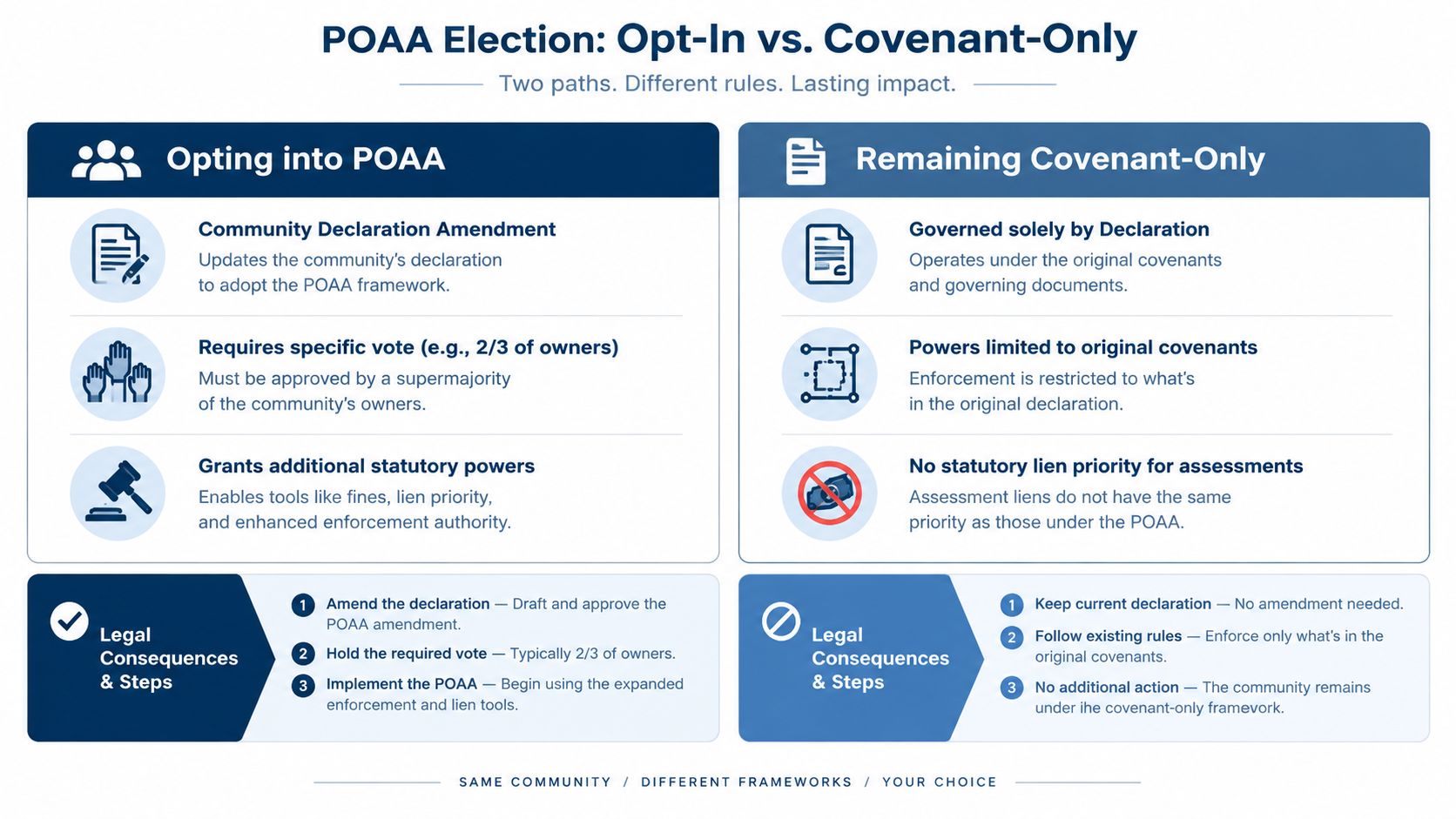
The POAA is an affirmative election statute. A community doesn't become subject to it merely because it calls itself an HOA, operates as a nonprofit, or collects regular dues. The community's recorded declaration, or a properly recorded amendment, must submit the property to the Act. (Georgia Property Owners' Association Act discussion)
That makes the declaration the starting point for a compliance review. Pull the recorded declaration and amendments from the appropriate county land records, then search for language expressly submitting the property to the Georgia Property Owners' Association Act. Don't rely only on a management agreement, an old board resolution, or a website description of the community.
What the election changes
A valid POAA election can provide a broader statutory enforcement structure. It can support assessment obligations, statutory lien rights, and authority connected to fines and collection, provided the association also follows the Act and its own governing documents. The election doesn't eliminate the need for notice, fair procedures, accurate account records, or consistent enforcement.
A covenant-only association has a different starting point. Its powers depend primarily on the recorded declaration, bylaws, articles, rules, and applicable corporate and property law. If the covenants authorize assessments but say nothing about a particular fine, lien, or enforcement procedure, the board shouldn't assume that the missing power exists by implication.
The practical comparison looks like this:
| Question | POAA community | Covenant-only community |
|---|---|---|
| Source of authority | Recorded declaration plus the Act | Recorded documents and applicable law |
| Statutory remedies | Available when the election and procedural requirements are satisfied | Must be supported by the governing documents or other law |
| Enforcement review | Check both POAA requirements and association documents | Check the exact covenant language and corporate authority |
| Amendment strategy | May preserve statutory powers through a recorded election | May require document amendments and careful owner approval |
How boards should verify status
A board considering an amendment should first obtain legal review of the current declaration, voting provisions, title records, and proposed language. The required approval threshold comes from the governing documents and the applicable legal process. One research summary describes an owner vote of two-thirds for POAA submission, but the association should verify the requirement against the controlling statute and documents before scheduling a vote. (Georgia HOA legal overview)
After approval, the association should record the declaration or amendment in the county land records, preserve the recorded instrument with the corporate records, and update owner-facing materials. The board should also revise collection and violation procedures so they accurately reflect the community's authority.
Opting in can strengthen the association's legal toolkit, but it also increases the importance of procedural discipline. The best result isn't maximum enforcement. It's a framework that lets the board act predictably, explain its authority, and correct mistakes before they become litigation.
Statutory Board Duties and Governance Requirements
A board's authority is only as useful as its decision-making process. Directors should act within the declaration, bylaws, applicable statutory regime, and corporate documents, while keeping the association's common interests ahead of individual preferences.
The practical duty is to make informed, documented decisions. That means reviewing budgets, contracts, maintenance needs, violations, and collection accounts with enough care to explain why the board acted as it did.
A working governance routine
At each regular board meeting, directors should be able to identify:
- Financial position: Review income, expenses, delinquency reports, bank activity, and upcoming obligations.
- Property condition: Track inspections, deferred repairs, insurance matters, and common-area maintenance.
- Enforcement status: Confirm that violation notices, hearings, fines, and collection referrals follow the same written process.
- Conflicts: Disclose personal or financial interests before discussing a vendor, owner account, or contract.
- Records: Approve minutes and preserve supporting materials so the association can reconstruct its reasoning.
Budget adoption should connect projected expenses to the assessment structure. A budget that ignores recurring maintenance, insurance, or known repairs creates pressure for emergency action later. Reserve planning should likewise reflect the property's actual condition rather than a convenient assumption.
Covenant enforcement requires consistency. The board should use a written violation process, identify the governing provision, provide the required notice, allow the owner any hearing or cure opportunity required by the documents, and record the final decision. Selective enforcement can undermine an otherwise valid rule.
Assessment authority and board records
For assessments, sums lawfully assessed by the association become the lot owner's personal obligation and create a lien in favor of the association. That lien ranks ahead of other liens except ad valorem tax liens. (Georgia Code section 44-5-60)
That remedy makes accurate ledgers essential. The account should distinguish regular assessments, special assessments, late charges, fines, attorney fees, credits, and payments. A board shouldn't approve a lien or collection referral based on a single unexplained balance.
For a detailed discussion of governance changes and board preparation, directors can review Georgia Senate Bill 406 and the new era of HOA governance. The useful takeaway is operational: policies should tell managers exactly what documents to send, when to send them, who approves escalation, and how the board records the decision.
Meeting Protocols and Notice Timelines
Meeting procedure protects both the board and the membership. A decision reached at a poorly noticed meeting may generate more controversy than the underlying issue, especially when owners believe they didn't have a fair opportunity to participate.
Start with the governing documents. The declaration, bylaws, POAA provisions, condominium documents, and applicable corporate law may address notice, quorum, voting, proxies, adjournment, and meeting access. The board secretary should maintain a meeting calendar that identifies the type of meeting and the notice rule that applies.
Build the notice before the agenda
Annual meetings, special meetings, board meetings, and member votes may require different procedures. The notice should state the meeting date, time, location or access method, purpose, voting matters, and any proxy or ballot instructions. If owners must vote on an amendment, election, assessment, or other significant matter, the notice should describe the action clearly enough for an informed vote.
Electronic delivery can be convenient, but the association should confirm that the owner has authorized the delivery method and that the governing documents permit it. Mailing remains important when an electronic address is unavailable, disputed, or not authorized for formal notice.
A simple internal timeline helps:
- Identify the meeting type. Don't use an annual-meeting template for a special vote.
- Check the controlling documents. Confirm the notice period, delivery method, quorum, and voting standard.
- Prepare the agenda and attachments. Include proposed amendments, budgets, ballots, or resolutions when owners need them.
- Send and document notice. Preserve mailing records, electronic delivery records, and returned notices.
- Confirm quorum and proxies. Have the secretary verify eligibility before votes are counted.
- Prepare minutes promptly. Record motions, votes, recusals, approvals, and adjournment without editorial commentary.
Quorum and proxy administration
Quorum is the minimum participation required for valid action, but the exact standard usually comes from the governing documents and applicable statute. The chair should announce the quorum count at the beginning of the meeting and again if the meeting is adjourned or participation changes.
Proxy voting can help a community reach participation requirements, but improperly completed proxies create disputes. Owners and board members should review Georgia HOA proxy voting rules before relying on proxy forms for a membership meeting.
The secretary should keep the signed proxies, ballots, attendance list, and final tally with the minutes. If an owner challenges the vote, the association should be able to show how eligibility was determined and how the result was calculated.
A meeting record should allow a person who wasn't present to understand what action the board or membership took, what authority supported it, and how the vote was counted.
Records Access and Financial Reporting Obligations
Good records answer questions before they become accusations. Homeowners need a practical way to review how the association spends money and enforces its documents. Boards need records that demonstrate consistent administration and support the decisions they make.
The association should maintain an organized file system for declarations, amendments, bylaws, rules, minutes, notices, ballots, proxies, contracts, insurance documents, bank records, budgets, invoices, owner ledgers, violation files, and collection correspondence. Digital storage works well when access is controlled, backups exist, and records remain searchable.
Handling an owner request
An owner's request should identify the records sought and provide a reasonable way to deliver them. A manager or secretary should acknowledge receipt, determine whether the request is covered by the governing documents or applicable law, and identify any records that require review before production.
The association should avoid informal answers such as “the board looked at it” when the owner is asking for supporting records. Instead, the response should state what will be produced, what is unavailable, what requires redaction, and when the owner can expect the materials.
A useful request workflow is:
- Log the request: Record the date received, requesting owner, documents sought, and person assigned.
- Locate the files: Search both corporate records and management-system records.
- Review privacy concerns: Redact personal financial information or other protected material when appropriate.
- Deliver consistently: Use a secure electronic folder, inspection appointment, or another documented method.
- Close the request: Preserve the response and production record with the association files.
Financial reporting that owners can understand
Financial statements should connect the budget to actual results. Owners should be able to see assessment income, operating expenses, reserve activity, unpaid balances, and major commitments without decoding unexplained account labels.
Boards should reconcile bank accounts, review vendor invoices, separate association and personal funds, and preserve approval records for significant expenditures. The treasurer should also track whether restricted or reserve funds are being used for their intended purpose.
Payroll creates a separate compliance responsibility when an association employs staff or pays workers through a management arrangement. For practical guidance on withholding, reporting, and employer responsibilities, boards can consult HireAccountants' payroll tax compliance advice.
Records access works best when the association treats transparency as a routine service rather than a defensive response. A clear policy, consistent response process, and complete financial file reduce friction for owners and give directors a stronger record when decisions are questioned.
Assessment Collection and Lien Enforcement Procedures
Collection is where statutory authority and daily administration meet. A board may have a valid assessment, but an avoidable mistake in account coding, notice, authorization, or lien handling can weaken the association's position and increase the owner's balance.
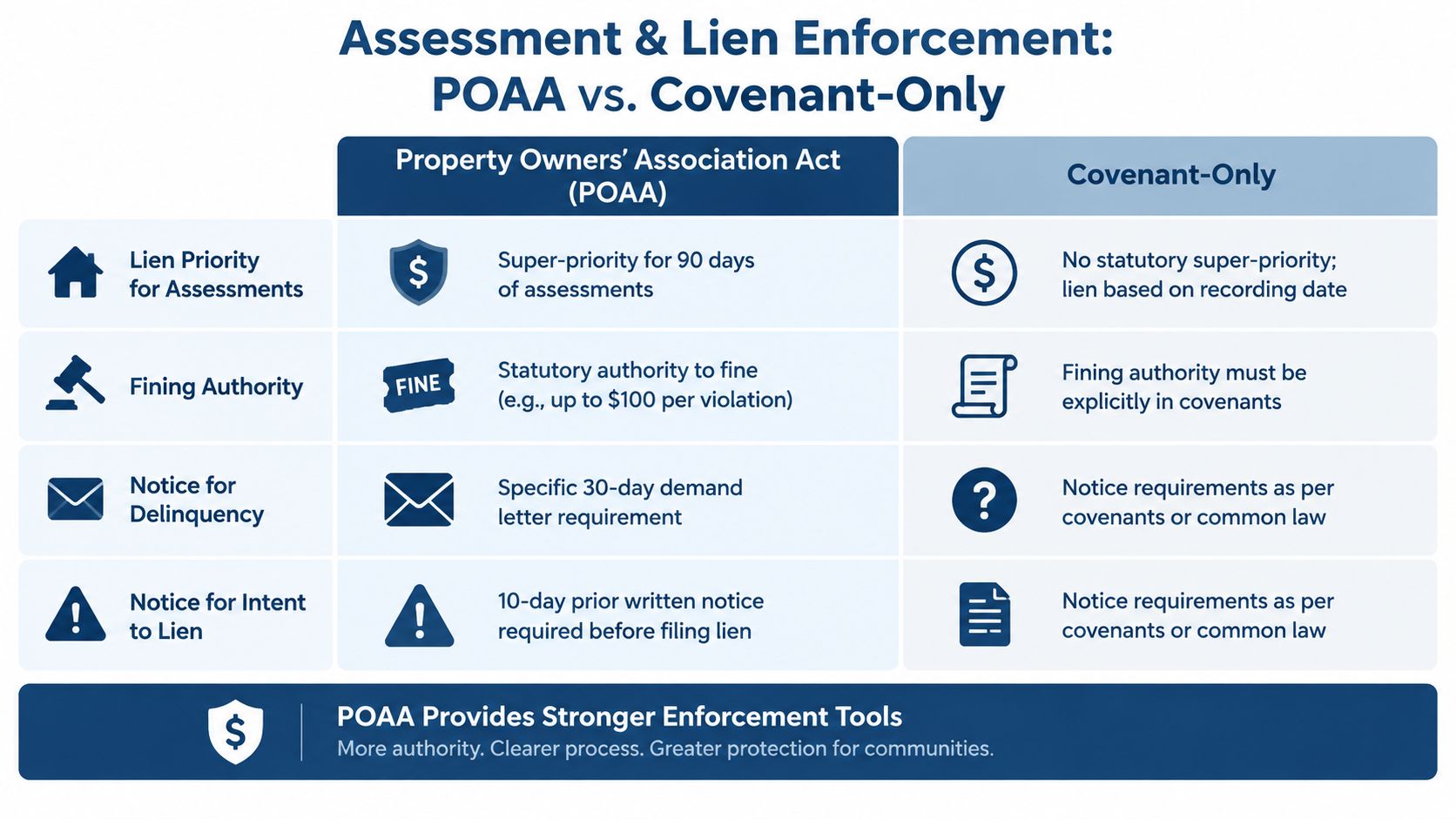
The first step is to identify the community's authority. Under the POAA, the association's ability to impose assessments, enforce fines, and collect through liens depends on a proper statutory election through the recorded declaration or an amendment. If that election is missing, the association must derive its remedies from its covenants and entity documents rather than POAA-specific powers. (Georgia HOA enforcement authority)
Separate the debt categories
A delinquent account shouldn't be treated as one undifferentiated number. The ledger should separately show:
- Regular assessments: Charges adopted under the budget and governing documents.
- Special assessments: Charges approved for a defined community need.
- Fines: Amounts imposed for documented covenant or rule violations.
- Late charges: Amounts authorized by the declaration, bylaws, or applicable law.
- Attorney fees and costs: Charges that should be added only when authorized and properly supported.
This separation matters because foreclosure reforms focus on unpaid assessments, not every amount appearing on an owner's statement. Recent reform discussions identify a $4,000 threshold for assessments, along with a separate rule when dues remain unpaid for more than 12 months and exceed $2,000. Boards should have counsel confirm how the current law applies to the specific account before authorizing foreclosure. (Georgia HOA law changes and collection limits)
The older POAA collection framework provides that judicial foreclosure of a lien for assessments or other charges may proceed when the amount exceeds $2,000. The same statutory framework provides that the association's lien arises automatically after POA submission, so a separate county-courthouse lien filing isn't required to create that statutory lien. (Georgia judicial foreclosure threshold)
Use a graduated collection process
A sound workflow begins before legal escalation:
- Send the account statement. Show the charge categories, payment history, credits, and current balance.
- Verify the governing authority. Confirm the assessment, fine, fee, and collection-cost provisions.
- Send the required demand notice. Use the notice period required by the applicable statute and governing documents.
- Offer an accurate payoff amount. Explain how payment will be applied and whether a payment arrangement is available.
- Escalate consistently. Refer accounts according to a written policy, not personal preference.
- Review the file before lien or foreclosure action. Confirm the declaration, notices, ledger, board authorization, ownership, and service information.
- Update the board appropriately. Use delinquency reports that protect owner privacy while giving directors enough information to authorize action.
A lien is not a substitute for a clean file. The association should preserve the declaration, recorded election, assessment authorization, ledger, notices, proof of delivery, payment history, and board resolution. The owner should receive a statement that makes it possible to identify the source of the balance.
Protect the association's credibility
Aggressive collection can preserve cash flow, but it can also create disputes when fines, fees, and assessments are blended together. The more serious the remedy, the more important it is to show that the board followed the same process for comparable accounts and gave the owner a meaningful opportunity to correct the balance.
Homeowners should act early. Ask for a complete ledger, request the governing-document provision supporting each charge, challenge errors in writing, and obtain legal advice before ignoring a lien or foreclosure notice. Boards should respond to legitimate disputes without treating every question as an attempt to avoid payment.
The new reform direction doesn't eliminate collection rights for bona fide assessment delinquencies. It pushes associations toward greater transparency, registration, and procedural compliance while upholding the means for recovering genuine unpaid assessments.
For boards that need a practical explanation of lien administration, Georgia HOA lien procedures and enforcement can serve as a useful management reference. The document review and legal decision still belong with qualified Georgia counsel.
Dispute Resolution under the New Bill of Rights Act
Senate Bill 406 changes the risk profile for Georgia associations. Governor Kemp signed the Georgia Property Owners' Bill of Rights Act on May 12, 2026. Most provisions take effect on January 1, 2027, while Section 7, involving attorney's-fees prerequisites and judicial review of reasonableness, applies to actions filed on July 1, 2026. (Bill of Rights Act effective dates)
Boards should prepare before an owner dispute arrives. The association's complaint process, violation hearing procedure, collection policy, registration records, and document-retention practices should work together.
A practical dispute pathway
Start with the governing documents. Identify the rule, declaration provision, board power, notice requirement, and hearing opportunity involved. If the dispute concerns a fine or fee, separate that amount from assessments and explain the calculation.
Create a complete administrative file. Keep the original complaint, owner correspondence, notices, photographs or inspection records, meeting minutes, hearing materials, payment history, and board decision. The file should show facts and process, not personal commentary.
Give the owner a clear response. State whether the association accepts, rejects, or partially accepts the complaint. Explain the corrective action, deadline, appeal route, or payment information that applies.
Review attorney-fee decisions carefully. Because Section 7 addresses prerequisites and judicial review of reasonableness, boards should avoid treating attorney fees as automatic. Counsel should review the governing authority, the timing of the action, the work performed, and the required procedural steps.
Prepare for external review. The new framework makes registration and procedural compliance central issues. An association that fails to register may be prohibited from collecting fines, issuing liens, or initiating foreclosure proceedings. That consequence makes the registration calendar a board-level responsibility, not merely an administrative detail.
A board can protect its authority without escalating every disagreement. Neutral hearing procedures, plain-language notices, and documented decisions often resolve issues more effectively than threatening correspondence. When the facts are disputed or the remedy could affect title to property, involve Georgia counsel early.
Quick Reference Compliance Checklist
Compliance should live on the association's calendar, not in one director's memory. The board president, secretary, treasurer, manager, and counsel should know who owns each task and where the supporting record is stored.
Use this short review during a board meeting:
- Confirm the legal regime: Verify whether the declaration elects the POAA, submits a condominium to the Georgia Condominium Act, or relies on covenant-based governance.
- Check recorded documents: Preserve the declaration, amendments, bylaws, articles, rules, and recorded statutory election.
- Calendar effective dates: Prepare for the Bill of Rights Act's general effective date of January 1, 2027, and the Section 7 effective date of July 1, 2026, for applicable actions. (Senate Bill 406 implementation summary)
- Maintain financial controls: Reconcile accounts, review budgets, document approvals, and keep owner ledgers understandable.
- Separate account charges: Distinguish assessments, fines, late charges, and attorney fees before sending collection notices.
- Protect meeting records: Follow the governing notice and quorum rules, preserve proxies and ballots, and approve accurate minutes.
- Track owner requests: Log records requests, review responsive documents, protect private information, and document delivery.
- Review enforcement files: Confirm authority, notice, hearing rights, cure opportunities, and consistent treatment.
- Prepare registration procedures: Add registration and renewal responsibilities to the compliance calendar before the new framework applies.
- Use practical tax controls: Associations with employees or payroll obligations should review HireAccountants' payroll tax compliance advice and coordinate with their tax professional.
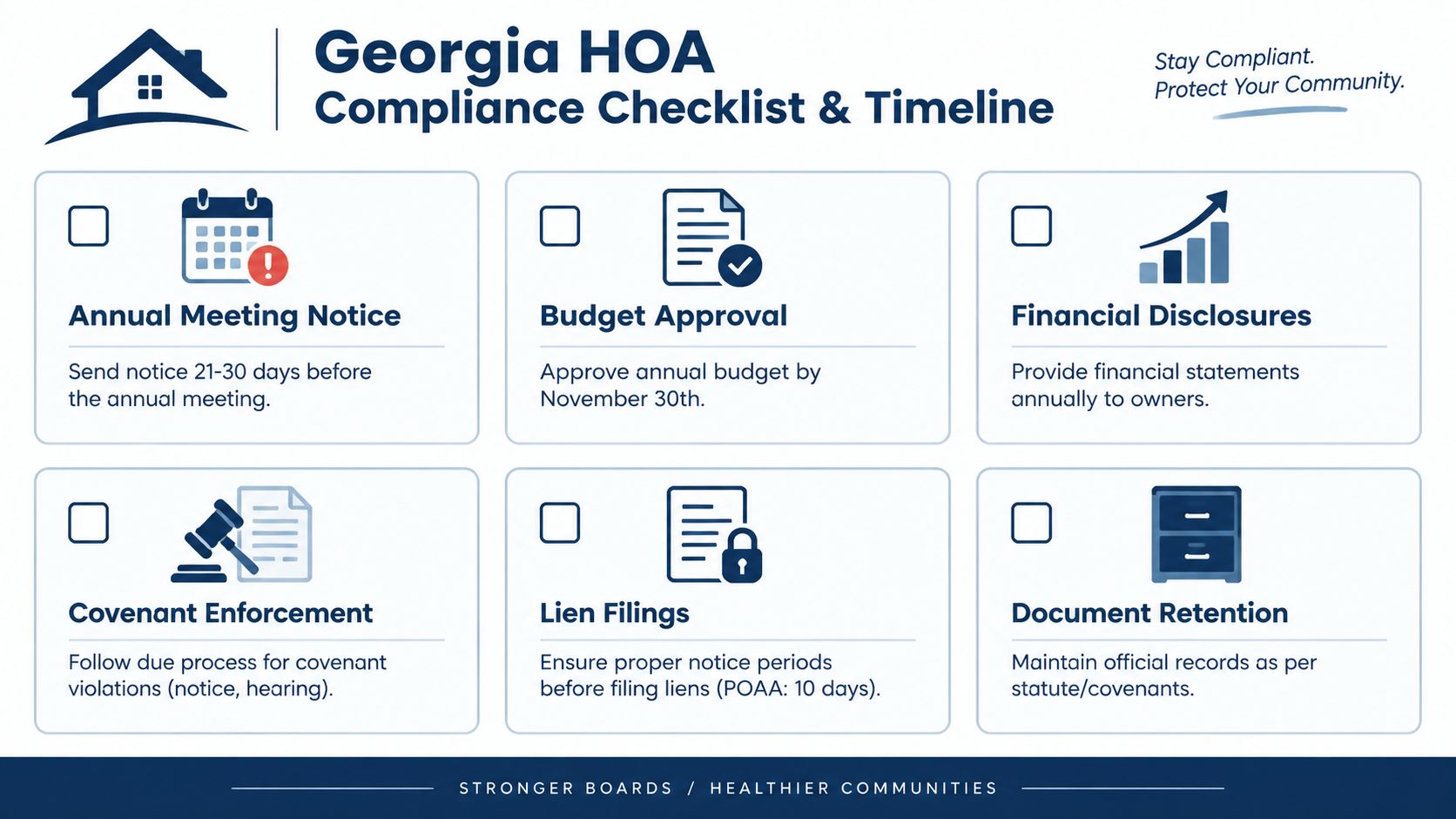
A checklist won't replace legal advice, but it will reveal where the association lacks a document, deadline, approval, or assigned owner. That visibility helps boards address risk while the issue is still manageable.
Access Management Group helps Georgia HOAs and COAs organize governance, financial administration, owner communications, and day-to-day compliance around their governing documents and statutory responsibilities. Visit Access Management Group to discuss a practical management approach for your community's 2026 preparation and ongoing association operations.