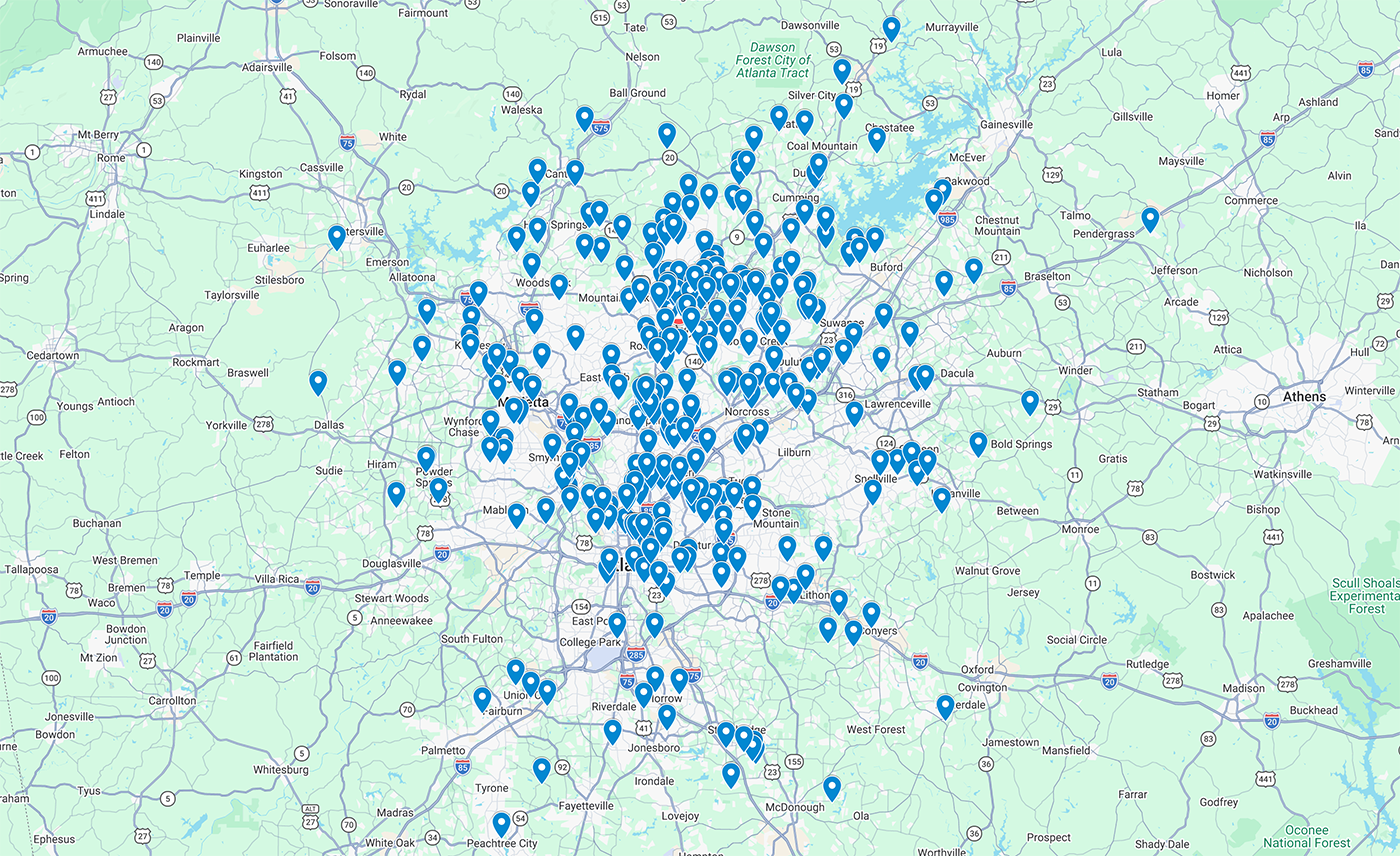
What should matter more in a new Alpharetta subdivision: the model home, or the way the community will run after the builder leaves?
Buyers usually start with location, square footage, and finishes. Those are reasonable filters. But in new construction communities, the long-term experience often comes down to governance, reserve planning, maintenance obligations, and how cleanly the association shifts from developer control to resident leadership.
That second layer gets overlooked. It should not.
This guide reviews seven Alpharetta communities from two angles. First, whether each neighborhood fits the way you want to live. Second, what future HOA or COA leaders should watch early, from budget pressure and vendor standards to amenity upkeep and rule enforcement. If you are still getting familiar with association basics, it helps to start with a plain-English look at what an HOA is and how it functions.
A good new subdivision does more than offer attractive homes. It sets up a community that can stay financially sound, well maintained, and reasonable to live in once the sales center is gone.
1. Toll Brothers at Lakeview
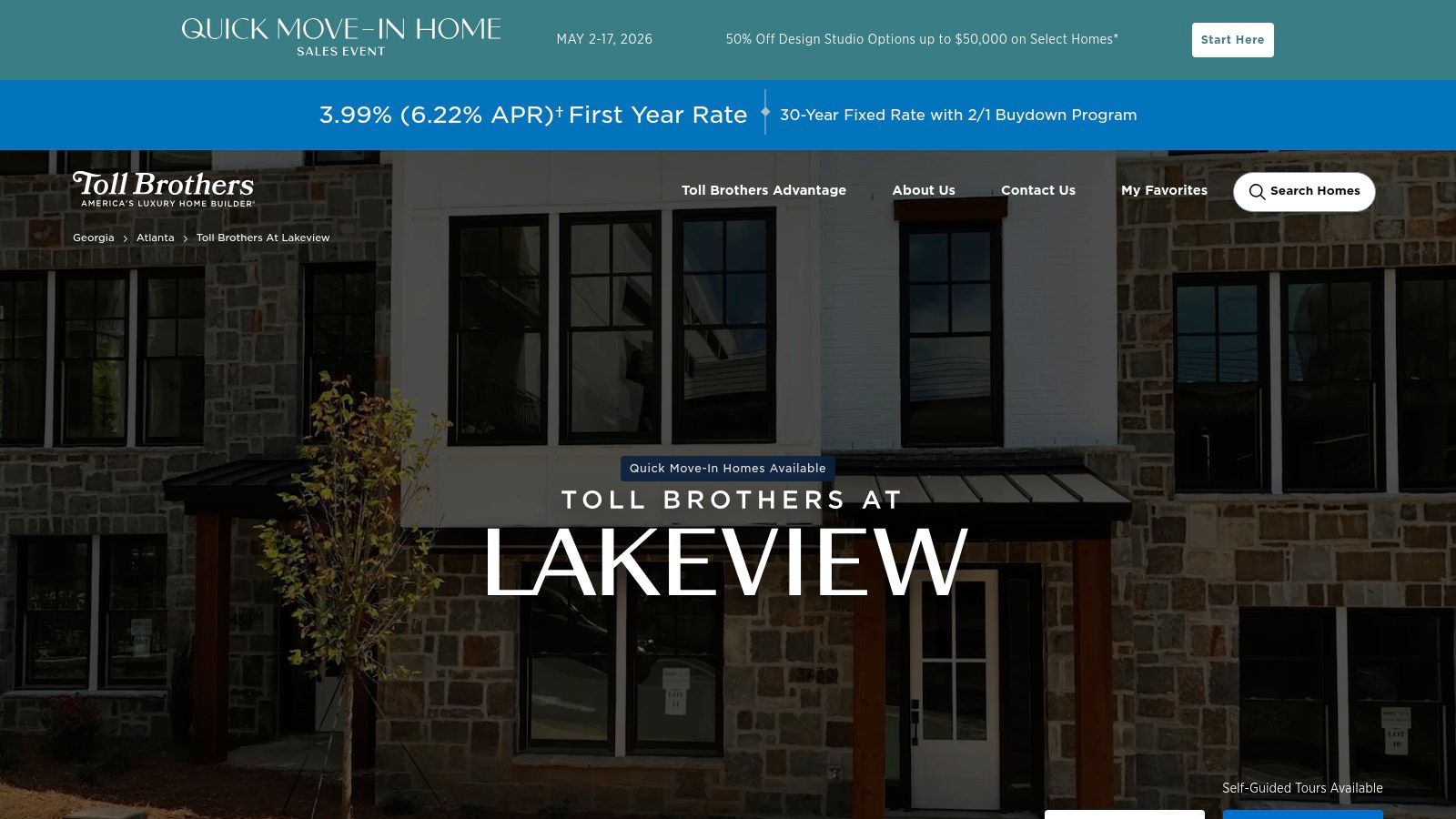
Toll Brothers at Lakeview stands out because it leans fully into walkable, mixed-use living. These are luxury townhomes with rooftop terraces in the new Lakeview district, positioned close to downtown Alpharetta, Avalon, the Alpha Loop, and GA-400. For buyers who want less yard work and more access to dining, trails, and future retail, that formula is compelling.
The trade-off is simple. You’re paying for location, community design, and convenience, not for a large private lot. For many buyers, that’s the right trade.
What works well here
Lakeview fits buyers who want a lock-and-leave setup but still care about finish quality and neighborhood identity. Quick move-in inventory and self-guided tours also make this community easier to shop if you need a tighter timeline.
- Best fit for lifestyle buyers: Rooftop terraces, two-car garages, and urban proximity support buyers who expect entertaining space without detached-home upkeep.
- Better than average for walkability: The site’s planned lake, trails, and Alpha Loop connection add value that isn’t limited to the individual unit.
- Less ideal for yard-focused households: Buyers coming from a traditional single-family setup may feel the private outdoor space is limited.
For a future board, the key issue isn’t aesthetics. It’s governance. Mixed-use districts often create blurred expectations around parking, commercial adjacency, noise, signage, and maintenance boundaries.
Practical rule: Before owners ever debate landscaping or parking, the community needs a clear definition of what the HOA actually stands for in practice, including which costs belong to residents, which belong to the developer, and which may eventually be shared with adjacent uses.
Management watchouts
In communities like Lakeview, boards should pay close attention during turnover. If trails, lake features, streetscape elements, or future commercial edges are involved, the governing documents need clear responsibility lines. If that language is vague, owners usually discover the problem only after the first disputed repair bill.
This kind of neighborhood can be excellent for resale appeal because the surrounding district supports the homes. It can also become frustrating fast if the association inherits amenities or obligations that weren’t budgeted cleanly from day one.
2. The Gathering Alpharetta
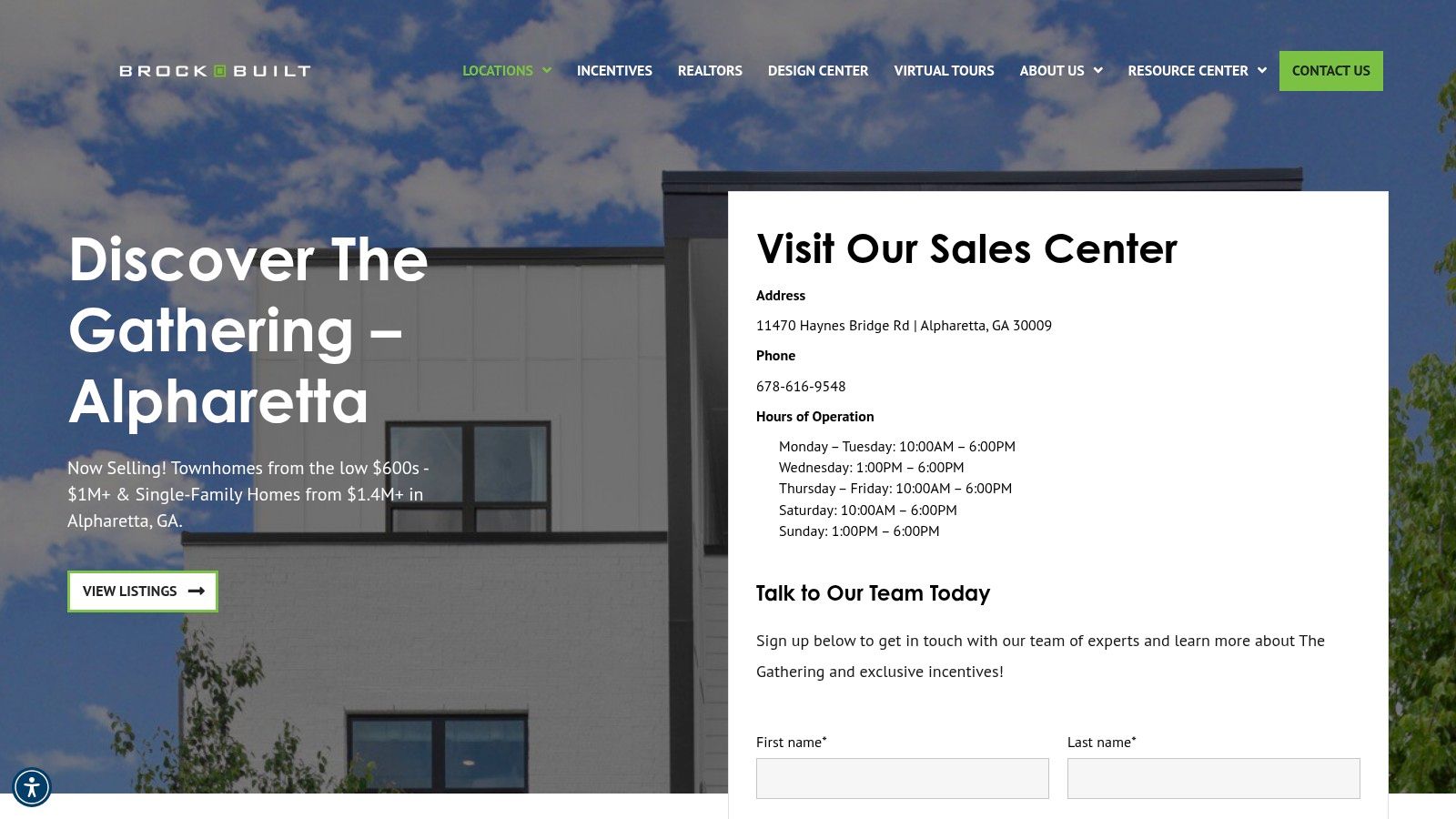
The Gathering Alpharetta by Brock Built stands out because it asks buyers to think beyond floor plans. With townhomes and single-family homes in one community, plus green space, a pond, a community garden, and an exercise loop, the appeal is easy to understand. The harder question is whether the association structure will support that mix well over time.
For buyers, the advantage is flexibility. A household that wants less exterior work can focus on the townhome product, while a buyer who wants more square footage and a detached layout can stay in the same neighborhood. That broader buyer pool can help resale interest, especially in a city where location and lifestyle still carry weight.
For future board members, mixed product type is the main story.
A neighborhood like this needs documents that spell out maintenance duties with precision. If the declaration is vague about roofs, shared walls, private lots, garden areas, or common greens, the first serious budget discussion usually turns into an argument about fairness instead of a discussion about numbers. Buyers who may serve on the board later should review the governing documents for an HOA before assuming every owner has the same obligations.
What to review before turnover
Many polished sales presentations stop short at this point. The operating details matter more than the rendering once owners inherit the association.
- Maintenance allocation: Confirm exactly which components are association-maintained and which stay with the owner. Mixed communities often create confusion here first.
- Assessment structure: Check whether all owners pay the same assessments or whether costs are split by product type, benefit area, or service level.
- Architectural control: Different home styles require standards that are clear enough to be fair and consistent.
- Amendment thresholds: Communities with varied housing types often need document changes after turnover, and hard-to-reach approval thresholds can stall necessary updates.
I also look closely at management readiness in communities like The Gathering. Early boards do better when they have guidance from one of the best HOA management companies for mixed-use and master-planned communities, especially during the handoff from developer control to owner control. That period sets the tone for collections, rule enforcement, vendor oversight, and reserve planning.
Construction traffic and phased build-out will annoy some residents early on. The longer-term issue is governance discipline. If the association creates clear cost boundaries and enforces standards evenly, The Gathering can feel cohesive despite its different housing types. If not, owners tend to separate into product-based camps, and that tension shows up in budgets, design disputes, and expectations about what the HOA should cover.
3. Ecco Park
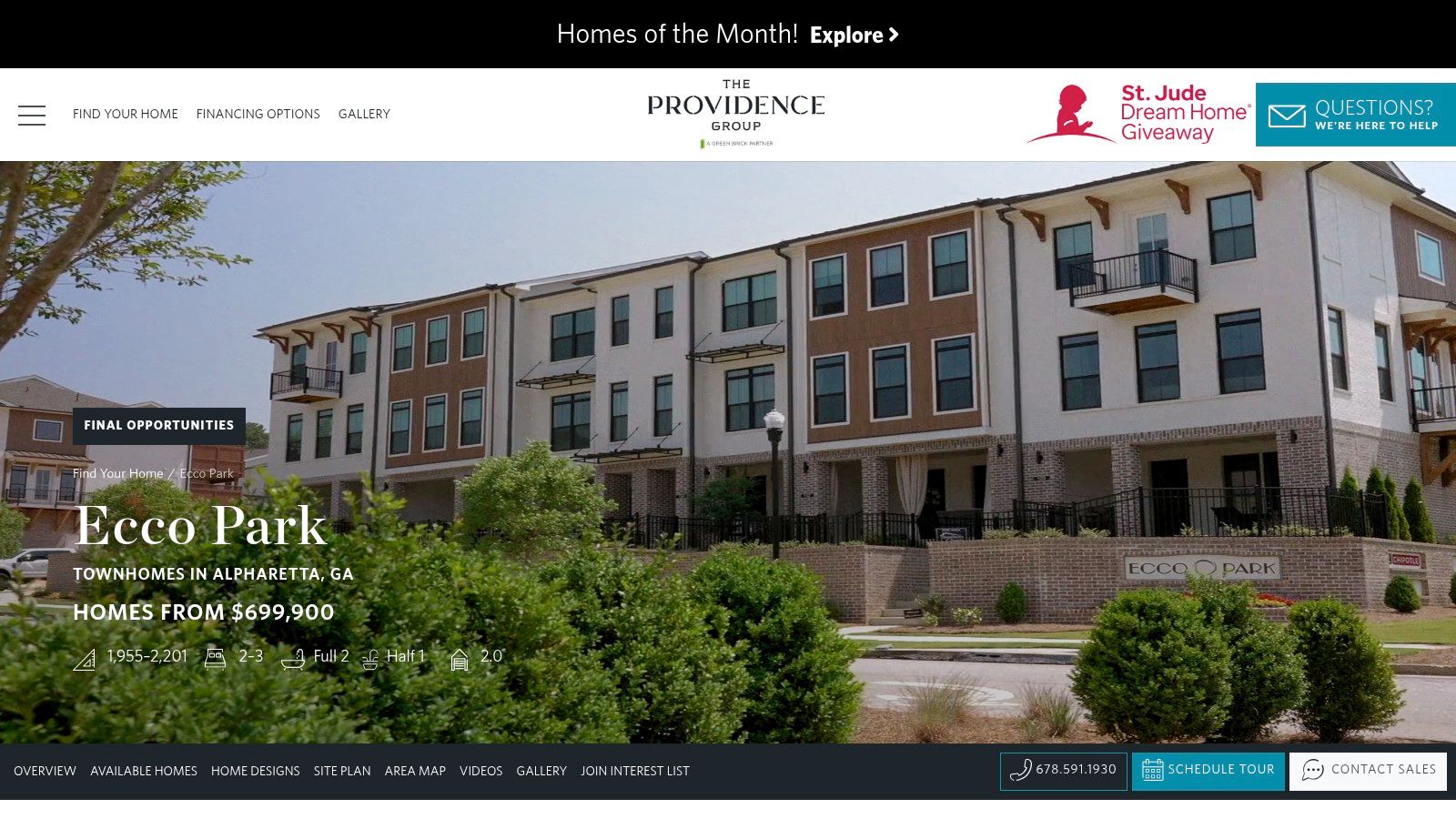
Ecco Park feels more boutique than expansive, and that’s part of its appeal. It’s positioned as a townhome community with walkability to the North Point redevelopment area, plus a low-maintenance setup that should appeal to owners who travel often or don’t want exterior chores on weekends.
The design emphasis leans toward curated finishes, energy-conscious features, and manageable shared spaces like pocket parks and an internal walking trail. That combination usually attracts buyers who want convenience without giving up a sense of design.
The strongest fit
This is a good option for buyers who know they want a townhome and don’t need detached-home alternatives. The HOA-covered landscaping also matches the expectations of owners who prefer predictable exterior standards.
There’s another practical point. Final opportunities can be attractive for buyers who want to see the actual community shape before purchasing, rather than trying to imagine it from an early sales map.
Community management view
A townhome-only neighborhood is often simpler to govern than a mixed-product subdivision. Simpler doesn’t mean automatic. Boards still need consistent maintenance standards, reserve planning, and fair enforcement around exterior modifications.
Alpharetta’s broader housing market showed a median home sale price of $799,000 with 876 active listings and 114 new listings as of April 2026. In that kind of active environment, communities like Ecco Park compete less on raw novelty and more on cleanliness, consistency, and how easy they are to live in after the builder is gone.
- Advantage for administration: One housing type usually means fewer document conflicts and fewer category-specific maintenance disputes.
- Watch the remaining inventory: Limited supply can narrow buyer choice and may reduce room to negotiate upgrades.
- Prioritize management quality: In a low-maintenance community, owners notice quickly when landscaping, vendor response, or architectural review slips.
Boards in compact townhome communities should compare HOA management company options based on responsiveness and financial discipline, not just on who promises the lowest monthly fee. A low-maintenance community still needs active oversight. In some ways, the smaller common footprint just makes service failures more visible.
4. IveyBrooke
IveyBrooke is one of the more pragmatic choices on this list. It doesn’t rely on a big mixed-use identity or a headline amenity package. Instead, it offers a new townhome option in Alpharetta with larger floor plans, garage flexibility, and a location that works well for buyers who want access to local schools, downtown corridors, and GA-400.
That matters because not every buyer wants the highest-profile address. Some want a cleaner price-to-space equation and a community that feels more straightforward to live in.
Why IveyBrooke makes sense
The bedroom range gives this community broader appeal than many townhome developments. It can work for downsizers who still want room for guests, as well as move-up buyers who need more functional space but don’t want detached-home maintenance.
The posted entry pricing is also notable in context. In a market where new construction often sits at a premium, a community that offers a lower starting point can open the door to buyers who want new construction in Alpharetta without stretching into the upper luxury bracket.
A practical buyer question here isn’t “Is this the flashiest community?” It’s “Will this home still fit my daily life after the excitement of closing wears off?”
HOA implications
From a management standpoint, communities like IveyBrooke usually benefit from operational clarity. Townhome neighborhoods with modest common elements are often easier to budget than mixed-use or heavily amenitized subdivisions.
Still, boards should pay attention to two issues early:
- Construction-phase communication: Owners in early closings need realistic notices about parking, deliveries, contractor traffic, and punch-list timing.
- Exterior consistency: Townhome communities look their best when sign rules, grounds maintenance standards, and owner modifications are addressed promptly and evenly.
- Reserve discipline: Even when amenities are limited, the association still needs a plan for surfaces, roofs, structures, and shared infrastructure.
If you’re comparing new subdivisions in Alpharetta GA and want a community that may be easier to govern once homeowners assume control, IveyBrooke deserves a close look. It doesn’t try to do everything, and that’s often an advantage.
5. Byers Park
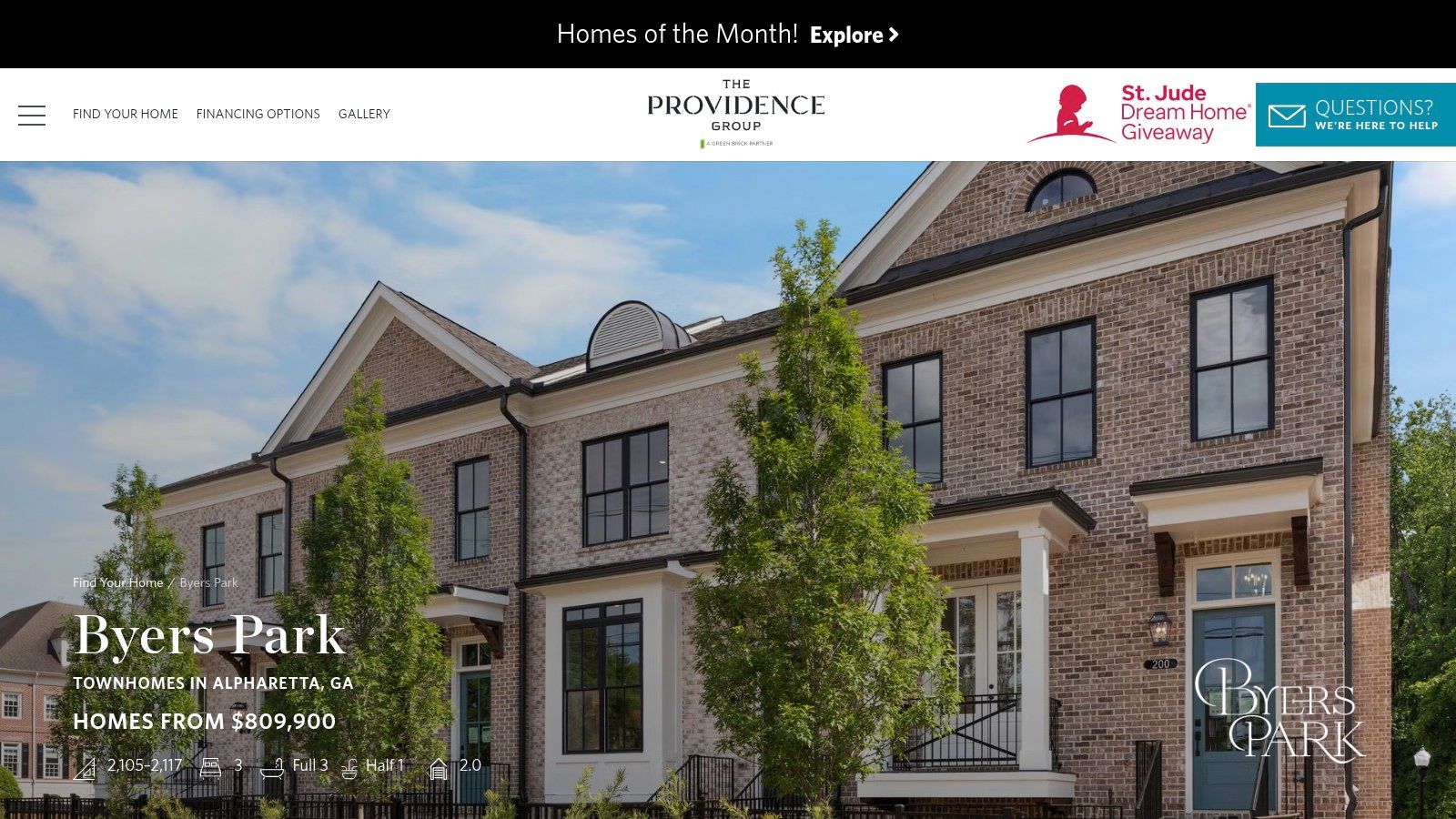
Byers Park targets the buyer who wants premium townhome living near North Point, Avalon, shopping, dining, and major roads without stepping into a much larger master-planned setting. Its appeal is easy to understand. The homes are larger than many in-town townhomes, the finishes are premium, and the boutique scale can make the neighborhood feel more cohesive.
That boutique feel comes with trade-offs. Limited plan variety means the community is less flexible for households with very different space needs, and higher entry pricing narrows the buyer pool.
Where this community shines
Byers Park works best for buyers who already know they want a high-end townhome and prefer a smaller neighborhood atmosphere. The two-car garages and larger three-bedroom layouts make it a realistic option for owners who need more than a simple lock-and-leave unit.
In Alpharetta’s February 2026 market, homes sold after an average of 85 days and the market was rated somewhat competitive at 54 out of 100. For a premium community like Byers Park, that kind of backdrop reinforces the need for realistic expectations. Strong location helps, but luxury buyers tend to be selective, and associations in upscale townhome communities need to maintain standards carefully.
Board-level considerations
A smaller upscale townhome community can run very well if the board focuses on consistency instead of overregulation.
- Protect finish quality: Premium communities lose value perception quickly when exterior maintenance slips.
- Set guest parking rules early: Boutique layouts often have tighter circulation and less forgiveness for informal parking habits.
- Vet service contracts thoroughly: In a smaller community, one weak landscaping or maintenance vendor becomes obvious fast.
Premium pricing raises owner expectations. Boards should assume residents will notice both the quality of maintenance and the quality of communication.
Byers Park isn’t for bargain hunters. It is for buyers who want a refined townhome product in a location with strong everyday convenience, and for boards willing to keep operations polished enough to match the homes.
6. Park Walke
What does a buyer gain by paying a premium for location, and what does a future board inherit in return?
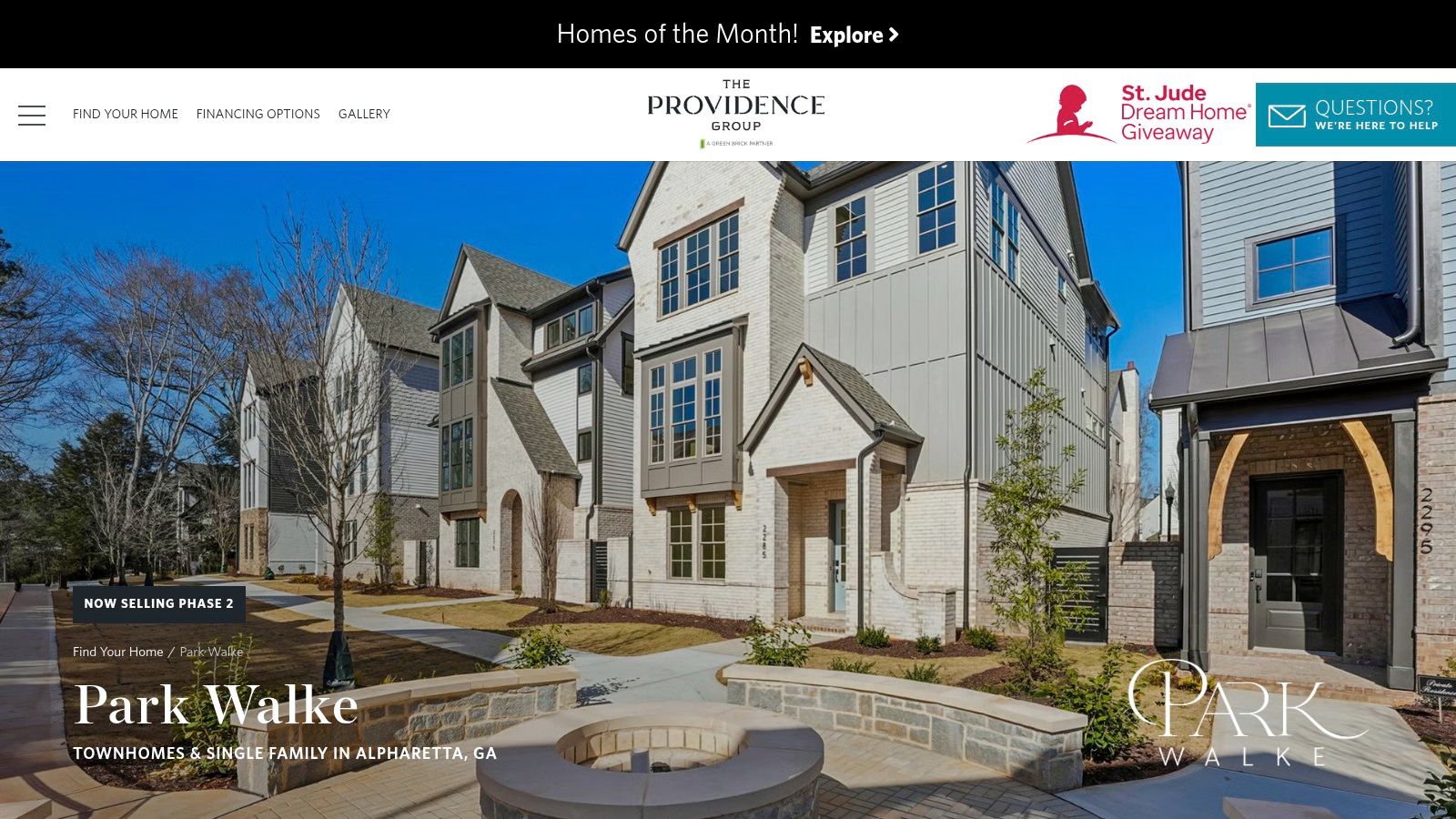
Park Walke answers that question clearly. It is a downtown-adjacent community with walkability, new construction, and a mix of townhomes and single-family homes. For buyers, that combination can be highly appealing. For an HOA, it usually means more operational detail from day one.
This is not the kind of neighborhood where the association can rely on vague assumptions. Different home types often come with different maintenance lines, different owner expectations, and different opinions about parking, guest use, and exterior changes. In a visible infill setting, those issues surface fast because residents interact with the streetscape every day and notice inconsistencies quickly.
Best for buyers who put daily convenience first
Park Walke will make sense for households that want to walk to downtown Alpharetta and the Alpha Loop and are comfortable with the trade-offs that come with that choice. Those trade-offs can include tighter guest parking, less privacy than a farther-out subdivision, and pricing that reflects address and access as much as square footage.
That premium is significant.
From a management standpoint, this is the kind of community where governing documents need to be unusually clear. I would want future board members to confirm three things early. Who maintains each exterior element, how architectural decisions are reviewed, and what parking rules apply during weekends and downtown event traffic. If those answers are fuzzy, resident frustration usually follows.
What future board members should watch
Mixed-product communities can perform very well, but they need sharper administration than a straightforward single-family HOA.
- Map maintenance responsibility in detail: Rooflines, exterior walls, stoops, limited common elements, and garden beds should all be assigned clearly in the documents and owner materials.
- Set design standards early: In a high-visibility neighborhood, inconsistent ARC decisions create conflict and weaken the polished look buyers paid for.
- Write parking rules for real use patterns: Visitor parking, vendor access, delivery vehicles, and overflow during nearby events need practical rules, not generic restrictions.
Park Walke has strong long-term potential because the location is hard to replicate. The management standard needs to match it. Buyers should see a desirable address. Future board members should see a community that will reward clear policies, disciplined budgeting, and steady communication.
7. Wills Overlook
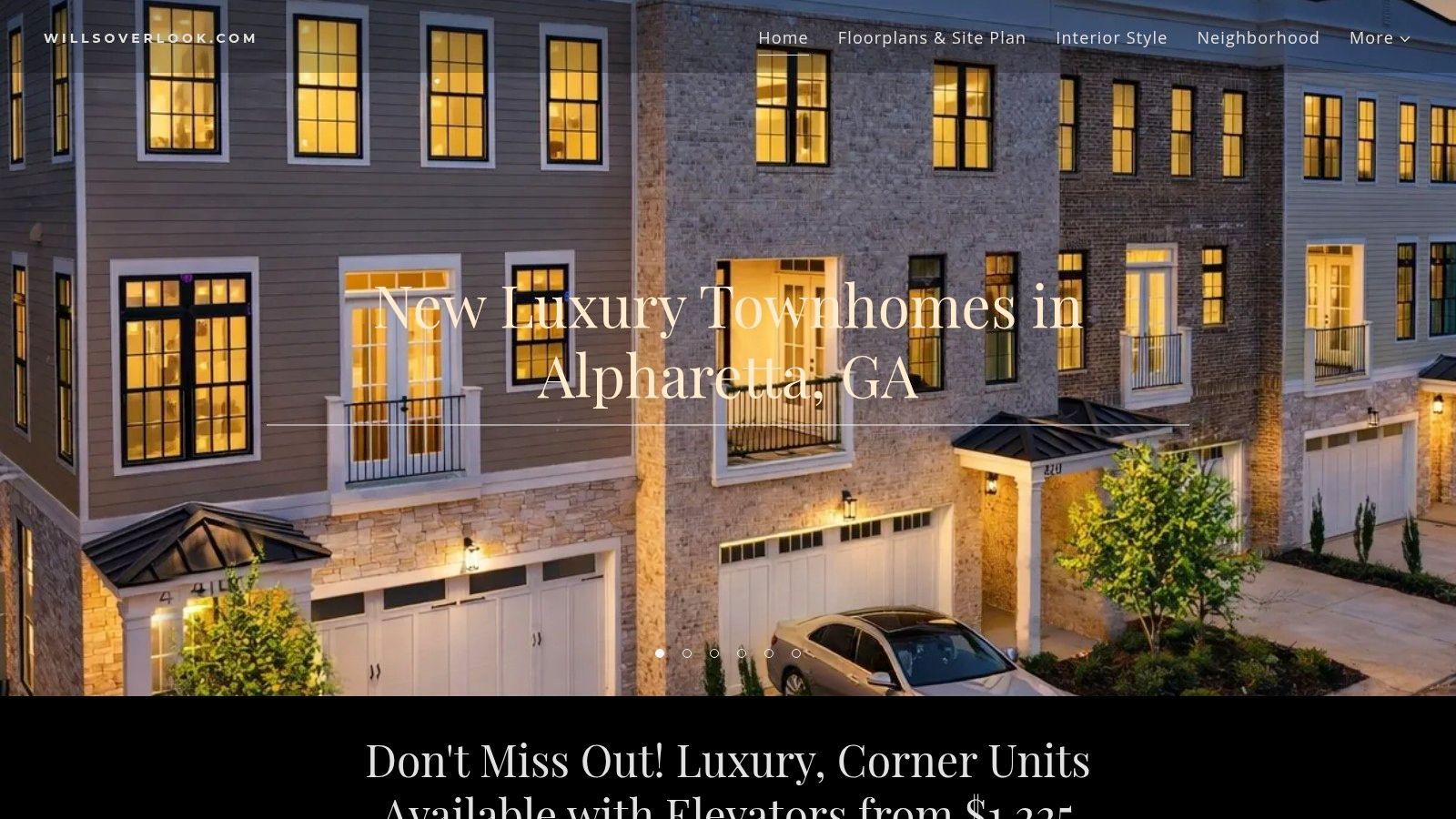
Wills Overlook has a very different personality from the larger developments on this list. With just 16 homes total, it offers something many new subdivisions in Alpharetta GA don’t. A boutique scale with park adjacency and a more intimate governance environment.
The homes are luxury townhomes with balconies, designer interiors, and an elevator option on some corner units. That elevator option adds practical value for buyers thinking about accessibility or aging in place, not just aesthetics.
Small community, real benefits
A park-side setting near Wills Park and close access to downtown Alpharetta gives this enclave a strong lifestyle position. Buyers who want a quieter, more close-knit setting may find it more appealing than a larger, busier project.
Small communities also tend to make owner participation more visible. Neighbors know one another faster, and board decisions feel less abstract because the same handful of owners will live with the results.
The management reality
Small associations can be pleasant to live in. They can also be unforgiving if the budget isn’t built carefully. Fewer homes means shared expenses don’t have as many contributors, and there may be fewer amenities to spread costs across.
Search results around Alpharetta’s active new-construction communities highlight a broader issue that matters here and in many newer neighborhoods: transition planning. With 391 communities and 126 to 176 new-construction listings active in Alpharetta, many are in ongoing build-out or turnover phases, and owners often inherit responsibilities before they fully understand infrastructure status, reserve needs, insurance gaps, or unresolved builder items.
“The smaller the community, the less room there is for deferred decisions.”
For Wills Overlook, that means the first homeowner board should be especially disciplined about turnover records, vendor contracts, insurance review, and reserve planning. A boutique community can feel effortless when managed well. When managed casually, every issue lands harder because there are only so many owners to absorb the consequences.
Comparison of 7 New Alpharetta Subdivisions
Which of these new Alpharetta communities is likely to hold up best once the builder is gone and owners are running the association? For buyers, that answer affects daily life and resale. For future board members, it affects budget pressure, rule enforcement, vendor oversight, and how quickly small problems turn into expensive ones.
This comparison works best as a practical screen, not a winner-take-all ranking. A walkable mixed-use project asks more from an HOA than a boutique townhome enclave. A small, polished community may feel simpler, but it can carry higher per-home costs and less room for budget mistakes.
| Project | Governance and management difficulty | What the association will need | Likely ownership experience | Best fit | Management watch-outs |
|---|---|---|---|---|---|
| Toll Brothers at Lakeview | High. Amenity oversight and mixed-use coordination add moving parts | Legal review, vendor supervision, amenity budgeting, clear shared-area responsibility maps | Upscale, walkable townhome living with strong lifestyle appeal | Buyers who want access to trails, lake features, and a more urban setting | Confirm who maintains what, how shared spaces are insured, and how commercial adjacency affects rules and noise expectations |
| The Gathering Alpharetta | Medium to high. Phased delivery and varied product types require steady communication | Amenity scheduling, parking policies, construction messaging, turnover tracking | Active neighborhood feel with broad appeal across household types | Buyers who want options in home size and a community with visible activity | Early boards should set event, parking, and use policies before informal habits become hard to correct |
| Ecco Park | Low to medium. Smaller scale helps, but exterior standards still matter | Landscape contracts, reserve planning, maintenance calendars, energy-feature upkeep | Low-maintenance townhome ownership near North Point with modern finishes | Lock-and-leave owners and buyers who value efficiency and convenience | Keep maintenance responsibilities precise so owners understand what the HOA covers and what stays with the unit |
| IveyBrooke | Medium. Early-stage policy setting will shape owner expectations quickly | Realistic budgeting, reserve study timing, owner education, consistent rule enforcement | Accessible new-construction townhome living for several buyer profiles | Move-up buyers, downsizers, and owners new to association living | The first board should avoid underbudgeting dues just to keep fees attractive in the sales period |
| Byers Park | Medium. Smaller upscale communities usually expect tighter standards and faster response times | Higher-end vendor relationships, well-funded reserves, insurance review, design control procedures | Boutique, higher-finish townhome experience with strong curb appeal | Buyers who want a more polished product near North Point | Premium finishes can raise replacement costs. Reserve assumptions and insurance limits need to reflect that reality |
| Park Walke | High. Infill conditions, product variety, and public-facing edges create policy complexity | Parking administration, architectural review, service-level definitions, resident communication systems | Luxury, walkable living with good long-term appeal if rules stay consistent | Buyers who want downtown proximity and more housing variety | Mixed product communities need very clear maintenance boundaries so one home type is not subsidizing another |
| Wills Overlook | Low to medium. Fewer homes simplify some decisions, but each cost hits owners harder | Reserve discipline, possible professional management, contract review, elevator service planning where applicable | Quiet luxury setting with strong neighbor visibility and close community feel | Buyers who want boutique scale and park adjacency | In a small association, one deferred repair or weak contract can affect every owner quickly |
A buyer can read this table one way. A future board member should read it another way.
Toll Brothers at Lakeview and Park Walke sit on the more demanding end of the spectrum because shared spaces, walkability features, and mixed-use or mixed-product conditions usually create more maintenance lines, more policy questions, and more owner expectations. These communities can perform very well. They just need boards that like detail, documentation, and consistent enforcement.
Ecco Park and Wills Overlook look easier on paper, but they come with a different risk. Smaller associations have fewer layers and fewer contributors to absorb surprise costs. If the budget is light, reserves are delayed, or maintenance duties are vague, the impact shows up fast.
The middle group, The Gathering Alpharetta, IveyBrooke, and Byers Park, will likely succeed or struggle based on board discipline early in the life of the association. In my experience, that means getting three things right first. Budget transparently, define maintenance boundaries in plain language, and teach owners how the community operates before frustration turns into conflict.
From New House to Lasting Community The Importance of Proactive Governance
What turns a new Alpharetta subdivision into a place owners still feel good about five years from now?
Usually, it comes down to governance sooner than buyers expect. A new home can hide a lot of unfinished association work. Maintenance standards may still be forming. Vendor contracts may still reflect developer priorities. Owners may not yet know where the association ends and homeowner responsibility begins. I have seen attractive new communities lose goodwill fast because those basics were not settled early.
That point matters in Alpharetta because buyers here tend to expect high service levels, strong property standards, and clear financial stewardship. As noted earlier, this market includes a wide mix of product types, price points, and buyer expectations. A small detached-home enclave does not need the same operating model as a walkable townhome community with more shared elements. Boards that treat every subdivision the same usually create avoidable friction.
The practical question for a buyer is simple. What will this community be like after the builder is gone?
Future board members should ask a different set of questions before closing:
- Are the governing documents readable and specific? Owners should be able to tell who maintains roofs, grounds, private drives, walls, drainage features, and exterior finishes without calling an attorney every time a problem comes up.
- How expensive are the shared assets to maintain? Entry features, pocket parks, stormwater facilities, fencing, retaining walls, private streets, elevators, and dense streetscapes all add recurring cost and oversight.
- Is the developer turnover being handled carefully? The association needs organized records, warranty information, reserve planning, contract files, and a realistic starting budget before homeowners take control.
- Will owners notice service gaps quickly? In boutique and higher-end communities, delayed grounds work, weak communication, and uneven rule enforcement become visible almost immediately.
Each subdivision on this list has a different governance pressure point. In a small association, one underfunded repair can force a sharp assessment increase because there are fewer owners to share the cost. In a denser townhome setting, parking, architectural consistency, and maintenance boundaries usually create more day-to-day questions. In a community with stronger lifestyle branding, resident expectations can outrun the budget if the board does not set priorities early and communicate them plainly.
Good boards do not need to do everything themselves. They do need clear records, clean financial reporting, realistic reserve planning, and a management partner who can organize turnover, coordinate vendors, support consistent enforcement, and keep residents informed without creating unnecessary process.
That is how a new subdivision holds its value as a community, not just as a sales story.
If your Alpharetta community is preparing for developer turnover, refining its governing practices, or looking for stronger day-to-day support, Access Management Group is built for that work. Since the 1970’s, the company has served condominium and homeowner associations with experienced community association managers, specialized accounting support, and systems designed to protect, preserve, and enhance real estate investments for homeowners, boards, and association presidents.