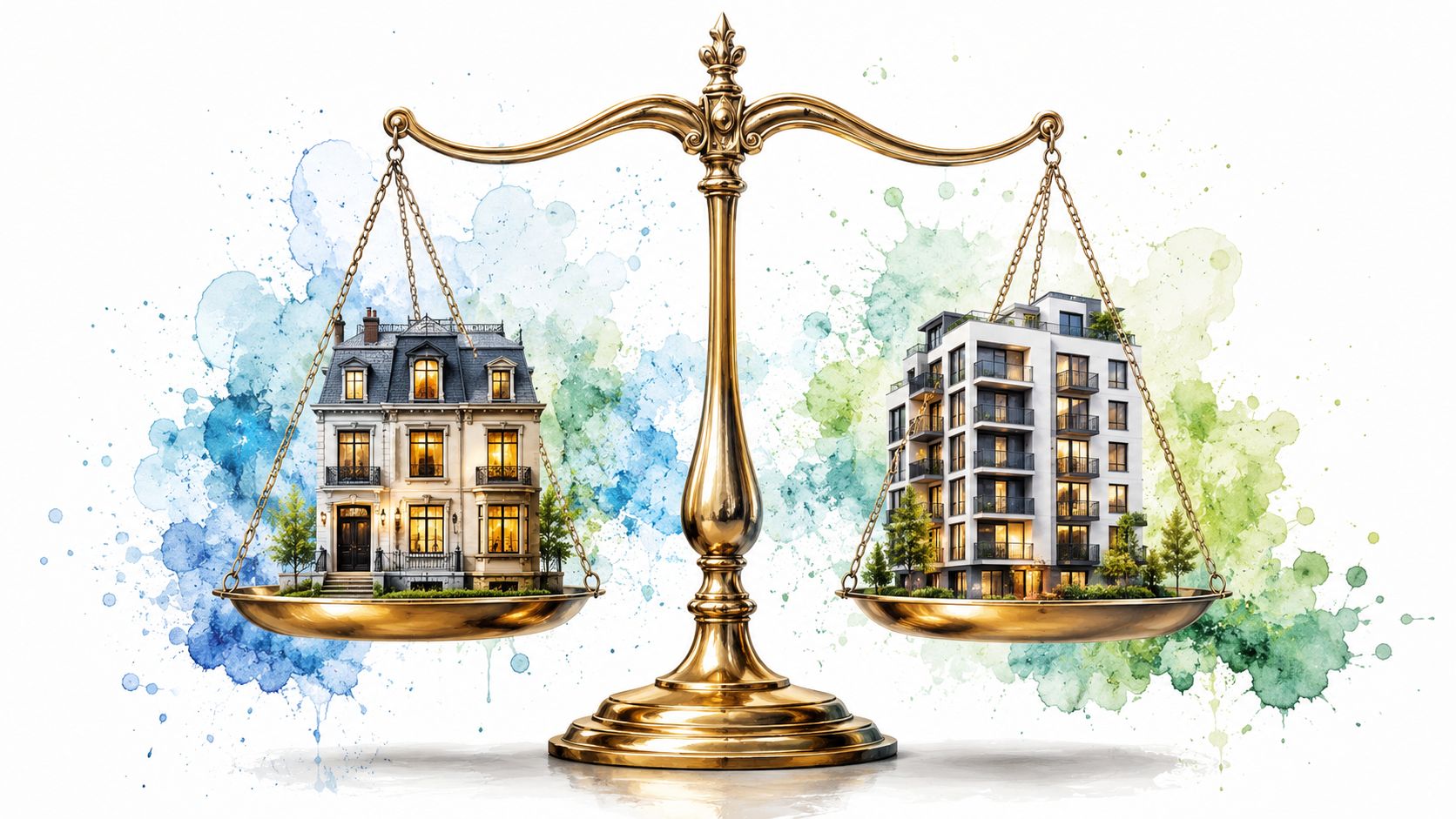
The phone rings five minutes before the board meeting. A homeowner says the upstairs ceiling is stained, water is running near the wall, and the roof might be failing. Half the room assumes the association pays. The other half thinks the owner should call a contractor. That confusion is exactly why the difference between townhouse and apartment is a governance issue, not just a housing preference.
| Governance Factor | Townhouse | Apartment |
|---|---|---|
| Ownership structure | Often closer to a house-like model with private entry and side walls shared with neighbors | Unit inside a larger building with shared entrances and more vertical density |
| Exterior maintenance responsibility | Can be split between the association and the owner, depending on the governing documents | Commonly handled by the association for the building envelope and shared areas |
| Board focus | Exterior appearance, parking, landscaping, and private-yet-shared boundaries | Building systems, access control, amenities, and common-area operations |
| Insurance questions | More likely to raise gray areas around roofs, siding, and unit boundaries | More likely to center on master policy scope and interior coverage layers |
| Resale message | Privacy, land ownership feel, and lower density often matter more | Convenience, affordability, and amenities often matter more |
A board president who understands that table makes better budget choices, asks sharper questions, and avoids expensive guesswork. If you want a practical repair-cost reference to compare against your own vendor bids, the HIBCO ROOF LLC repair cost guide is a useful place to start when a leak turns into a budget discussion. For boards that need a broader maintenance framework, the association's internal planning usually starts with maintenance and construction coordination.
A Board Member's First Question When the Roof Leaks
The meeting is already moving too fast when someone says, “Is this ours or theirs?” That's the primary difference between a townhouse and an apartment for a board. The structure decides where responsibility shifts, which policy applies, and which budget line gets hit before anyone even opens the governing documents.
The building shape changes the question
A townhouse is typically a multi-story dwelling with a private entrance and shared walls on one or two sides, while an apartment is usually a unit inside a larger building with shared entrances and vertical separation between units (FS Residential). In a townhouse community, that means the board may deal with some exterior items while the owner handles others. In an apartment-style COA, the association usually has far more control over the building shell and shared infrastructure.
That's why one leak can trigger two very different processes. In one community, the board may need to check whether the roof over that specific unit falls under common elements or limited common elements. In another, the board may already know the building envelope is a shared responsibility and can move straight to vendor calls and claims documentation.
Practical rule: if you can't tell who owns the component, the board can't safely approve the work yet.
Why this matters beyond the repair itself
A roof leak affects more than drywall. It touches reserves, insurance, communication with the homeowner, and the board's credibility. It also shapes resale conversations later, because buyers notice whether a community handles exterior responsibility cleanly or leaves owners guessing.
That governance reality is why HOA and COA boards need more than a rough idea of housing type. They need a working definition they can apply when a repair request lands on the agenda. If the board gets that first question wrong, every follow-up decision gets harder.
What Defines Each Housing Type and Why It Matters
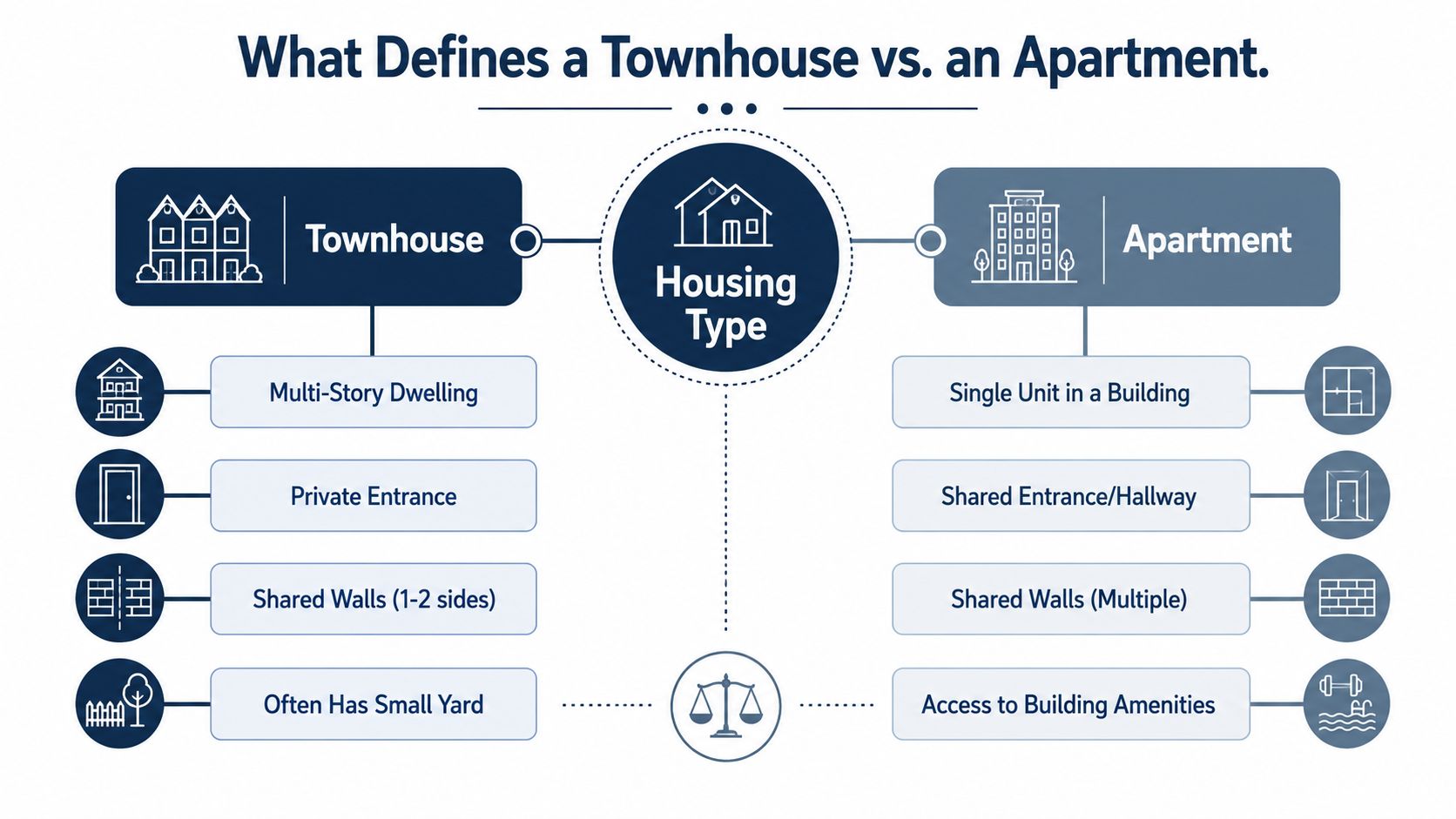
A townhouse board and an apartment COA do not manage the same property, even if the units look similar from the street. The differences start with the building form, and they decide who controls the roof, the exterior walls, the entrances, and the shared systems. That is why boards need a clean definition before they approve work, answer an owner complaint, or start a reserve discussion.
A townhouse is usually a multi-level dwelling with a private entrance and shared walls. An apartment is usually a unit in a larger building with shared common entrances and vertical separation from other homes (ABS, FS Residential). A board should care about that difference because the physical layout usually sets the default rules for ownership, maintenance, and access. It also helps explain why one community can treat an exterior issue as a unit-level matter, while another has to treat it as a building-level responsibility.
Townhouses often sit between a detached home and a denser multifamily building. That puts the board in a gray area on boundary questions. The board may need to sort out what is private, what is limited common, and what belongs to the association before anyone signs a repair contract. Apartment buildings usually create fewer of those boundary questions, because the association already controls more of the shared structure and common infrastructure.
The practical difference is simple. Townhouse boards spend more time deciding where one owner's responsibility ends and the association's begins. Apartment COA boards spend more time managing common systems, vendor coordination, and building-wide standards. Neither setup is better by default. They just put different decisions in the board's hands.
Ownership feel shapes the pressure on the board.
Townhouses often feel closer to a house because owners may have a private entrance, more direct exterior access, and more control over the immediate area around the unit. Apartments usually feel more centered on shared space, which brings more rules around entry, noise, hallways, and building operations. That difference changes what owners bring to the board, and it changes what the board can fix.
Townhouse owners usually raise questions about curb appeal, exterior finishes, and private outdoor space. Apartment owners usually raise questions about hallway conditions, elevators, security, and amenity access. Those are not lifestyle preferences the board can vote away. They are governance issues tied to the property type already in place.
For a plain-English comparison of structure and ownership patterns, single-family vs. multi-family home is a useful reference when the board wants to keep the discussion tied to building form instead of sales talk. Boards also need to understand what property maintenance costs can look like across different structures, because that affects reserves, vendor planning, and owner expectations.
Side-by-Side Comparison at a Glance
| Governance Factor | Townhouse | Apartment |
|---|---|---|
| Ownership structure | Often closer to an individual-home model with shared walls and a private entrance | Usually a unit within a larger shared building |
| Exterior maintenance | May be split, with the board handling some exterior components and the owner handling others | Typically centered on common building systems and shared areas |
| Common-area burden | Usually lighter than a larger building, but still real | Usually heavier because the building has more shared circulation and equipment |
| Board visibility | Board often has closer contact with owners and more site-specific issues | Board often manages more formalized systems, vendors, and common areas |
| Insurance focus | Boundary questions matter, especially around roof, walls, and exterior elements | Master policy scope and building-wide coverage matter more |
| Rental rules | Often influenced by neighborhood character and owner-occupancy goals | Often shaped by building policy, lender expectations, and occupancy mix |
| Resale message | Privacy, space, and house-like feel tend to matter | Convenience, amenities, and lower entry cost tend to matter |
| Buyer expectations | More interest in exterior control and private use areas | More interest in building services and managed living |
The table is the fast answer, but it only works if the board reads it correctly. Townhouse governance usually means the association is dealing with a more layered set of boundaries, especially where exterior components touch private use. Apartment governance usually means more centralized responsibility for the building as a whole.
That's why fee complaints can be misleading. A higher fee does not automatically mean the board is overcharging. It may mean the community carries more shared services, more insurance exposure, or more building systems through the association budget.
The same goes for resale. The visible form of the property affects what buyers assume, but the governing documents decide what they inherit. Boards that know the difference can explain it without sounding defensive.
Maintenance and Repair Responsibilities Explained
In a townhouse community, maintenance is often a mixed bag. The association may handle shared walls, roofing for connected structures, landscaping, and exterior painting, while the homeowner handles interiors, private yards, patios, and sometimes the roof over the unit. In an apartment-style COA, the association typically owns and maintains the building envelope, common areas, building systems, and, depending on the documents, even some interior equipment.
Where the line usually gets blurry
The blur happens around components that serve one unit but sit inside a shared structure. A townhouse owner may think a leak is the board's problem because the stain is on the ceiling. The board may think the owner should handle it because the damage started inside the unit. The documents decide that issue, not the hallway conversation.
That's why a board needs a reliable maintenance map, not just a vendor list. A reserve study should track the items the association controls, and the operating budget should reflect the recurring costs tied to those items. If the board is unsure how to frame those costs, a plain-language reference like what property maintenance costs can help directors think in categories before they think in invoices.
Board caution: don't approve emergency work before you know whether it belongs in reserves, operating expenses, or an owner reimbursement process.
Two common repair scenarios
A leaking roof in a townhouse community usually starts with a boundary question. Is the roof a common element, a limited common element, or part of the owner's unit? The answer determines who calls the roofer, who approves the scope, and who ultimately pays.
A failed HVAC chiller in a mid-rise apartment building is usually simpler. The building system belongs to the association, so the board focuses on service contracts, emergency response, and reserve replacement planning. That's a very different job from chasing down a private repair inside an owner's patio enclosure.
For boards that want to reduce confusion, the question is always the same. What part of the property serves one home, and what part serves the entire community? Once the board answers that, maintenance stops being guesswork.
HOA and COA Governance Differences Boards Should Know
The board's job changes with the building
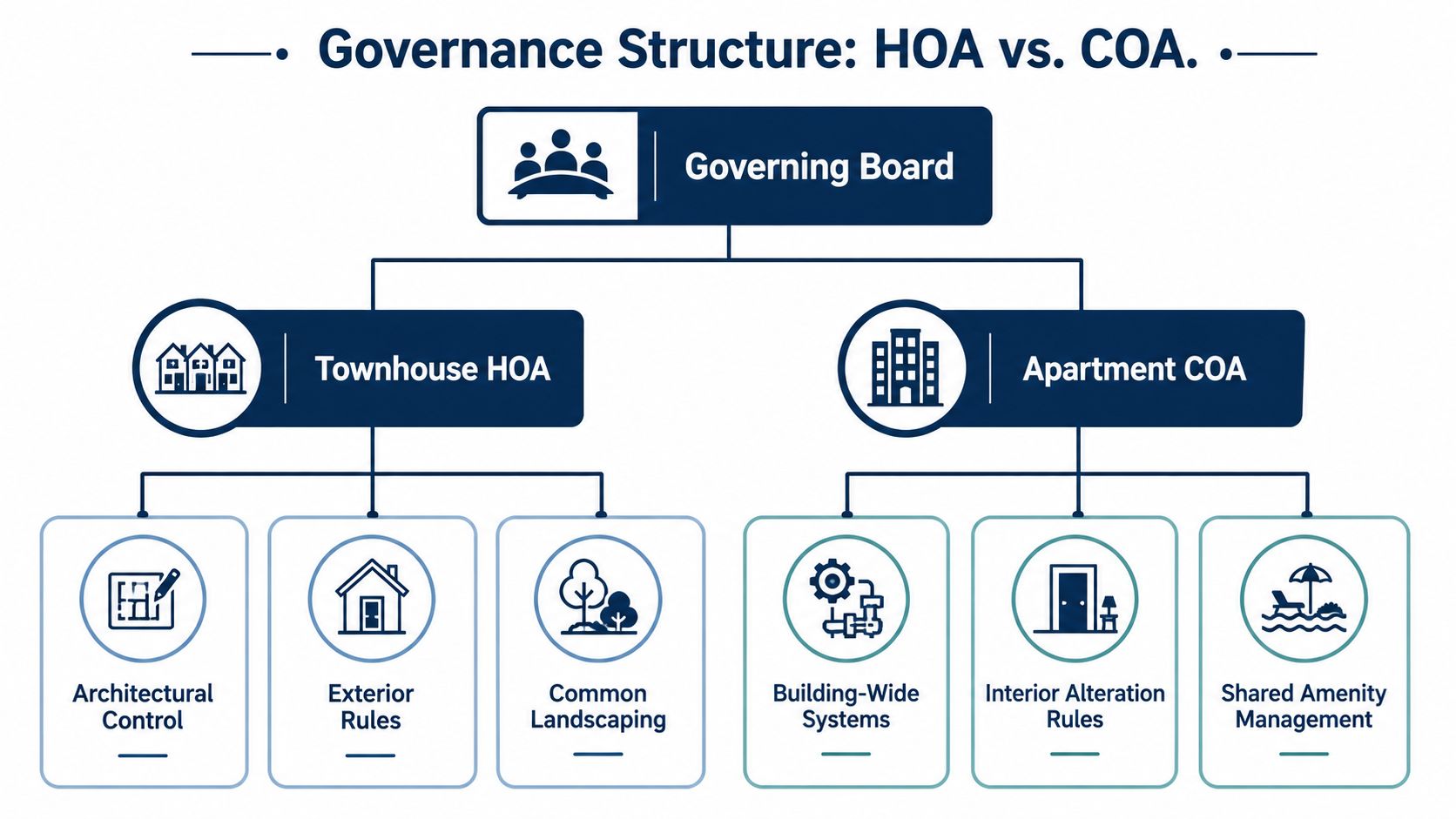
A townhouse HOA usually governs a smaller, more neighborhood-like environment. That often means closer relationships with owners, more direct conversations about exterior standards, and stronger focus on visual consistency. Apartment COAs tend to operate with heavier shared infrastructure, more formal vendor management, and stricter access control because more residents move through common spaces every day.
That difference shapes meeting culture. Townhouse boards often deal with parking, fences, exterior décor, and yard maintenance because those issues are visible from the street and tied to curb appeal. Apartment boards often deal with entry systems, elevators, amenity rules, and building security because those items affect everyone at once.
What boards can and cannot regulate
A board can usually regulate appearance, conduct, and shared property use within the authority of the governing documents. It cannot rewrite ownership boundaries just because a rule is inconvenient. If a townhouse owner wants more privacy, the board may be able to limit exterior changes. If an apartment owner wants a different hallway policy, the board may have room to enforce building rules but not to ignore the documents.
The strongest boards understand the difference between policy and control. Policy manages shared behavior. Control defines property limits. Mixing those up creates disputes that are expensive to unwind.
Apartment-style COAs also tend to face more complex enforcement because the building has more daily traffic and more shared amenities. A gym, pool, or elevator needs consistent rules, and those rules need support from insurance and vendor contracts. Townhouse associations may have fewer amenities, but that doesn't make governance easier. It just shifts the pressure toward exterior standards and owner-facing upkeep.
Good governance starts with a simple question: What kind of community are we running? Once the board answers that question, enforcement becomes more defensible.
Fees, Reserves, Insurance, and Rental Rules
For a board, money decisions are where the townhouse and apartment split becomes hard to ignore. Fees, reserves, insurance, and rental policy all follow the same basic question: what does the association own, what does it have to maintain, and what risk does it have to carry for the owners?
Townhouse communities often collect fees for exterior maintenance, landscaping, and shared infrastructure. Apartment COAs usually collect fees for building structure, master utilities, security or concierge services, and amenity upkeep. That is not a style preference. It reflects the physical parts the association is responsible for and the documents that define those obligations.
Fee levels can be misleading on their own. A higher fee may mean the board is covering more work for the owners. A lower fee can also hide a future problem if the building systems are aging and the reserve account is thin. Boards should read the budget before they argue about the number, because the fee tells you very little without the expense categories behind it.
For a plain breakdown of what associations commonly absorb, what does HOA cover is a useful internal reference when the board wants to check whether its expense categories are complete.
Insurance and loss assessment
Insurance follows ownership structure. A townhouse association may need tighter wording around roofs, siding, and other exterior elements. An apartment COA usually depends on a master policy for the building and expects owners to carry interior coverage for personal property and certain improvements.
The board also needs to know where the master policy ends and where the owner's policy begins. That issue becomes sharper after a major loss, because loss assessment exposure can shift quickly if the declaration and insurance forms do not line up. For directors trying to understand that exposure before a claim shows up, the post-Surfside risk protection guide is a practical place to start.
Insurance rule of thumb: if the board cannot explain the master policy in plain English, the owners usually cannot either.
Reserve planning matters for the same reason. A townhouse community may need to reserve for exterior components and shared systems. An apartment building often has a heavier reserve burden because the board is responsible for larger building-wide assets and more complicated replacement cycles. In either case, the board should be matching reserve studies to the actual property structure, not guessing from the fee amount.
Rental rules and market position
Rental rules usually reflect what the board is trying to protect. Townhouse communities may place more weight on owner-occupancy, exterior consistency, and visible standards. Apartment communities may focus more on rental registration, access control, and keeping a workable balance between residents and tenants.
Rental policy also affects how the market views the community. A board that treats rental approvals, insurance compliance, and maintenance obligations casually sends the wrong signal to buyers. A board that sets clear rules and enforces them consistently protects the property's long-term position and gives lenders less reason to worry about avoidable risk.
Resale Value, Buyer Perception, and Long-Term Impact
Buyers don't just buy square footage. They buy the story the community tells about ownership, maintenance, and daily life. Townhouses often attract people who want privacy, a house-like feel, and some connection to land. Apartments often attract buyers who want convenience, managed common areas, and a lower entry point.
How the board affects that story
A board's rules can either support that natural appeal or work against it. Tight, consistent exterior standards help townhouse communities preserve the look buyers expect. Clear access, amenity, and building-service policies help apartment communities feel orderly and well run. Sloppy enforcement weakens both.
Rental policy matters too. Too much turnover can make a community feel less stable. Too little flexibility can shrink the buyer pool. The board has to strike a balance that fits the building type and the ownership goals in the governing documents.
What lenders and appraisers notice
Lenders and appraisers look at more than finishes. They look at how the community is governed, whether the association maintains common property responsibly, and whether the documents create avoidable risk. A townhouse community with strong exterior upkeep can look more durable to a buyer who values autonomy. An apartment community with strong building systems can look more reliable to a buyer who values convenience.
The biggest mistake boards make is assuming that value comes only from market conditions. Governance shapes market perception every day. Good rule enforcement, timely repairs, and clear owner communication make a community easier to sell. Weak governance makes even a nice property feel uncertain.
Practical Checklist for HOA and COA Board Members
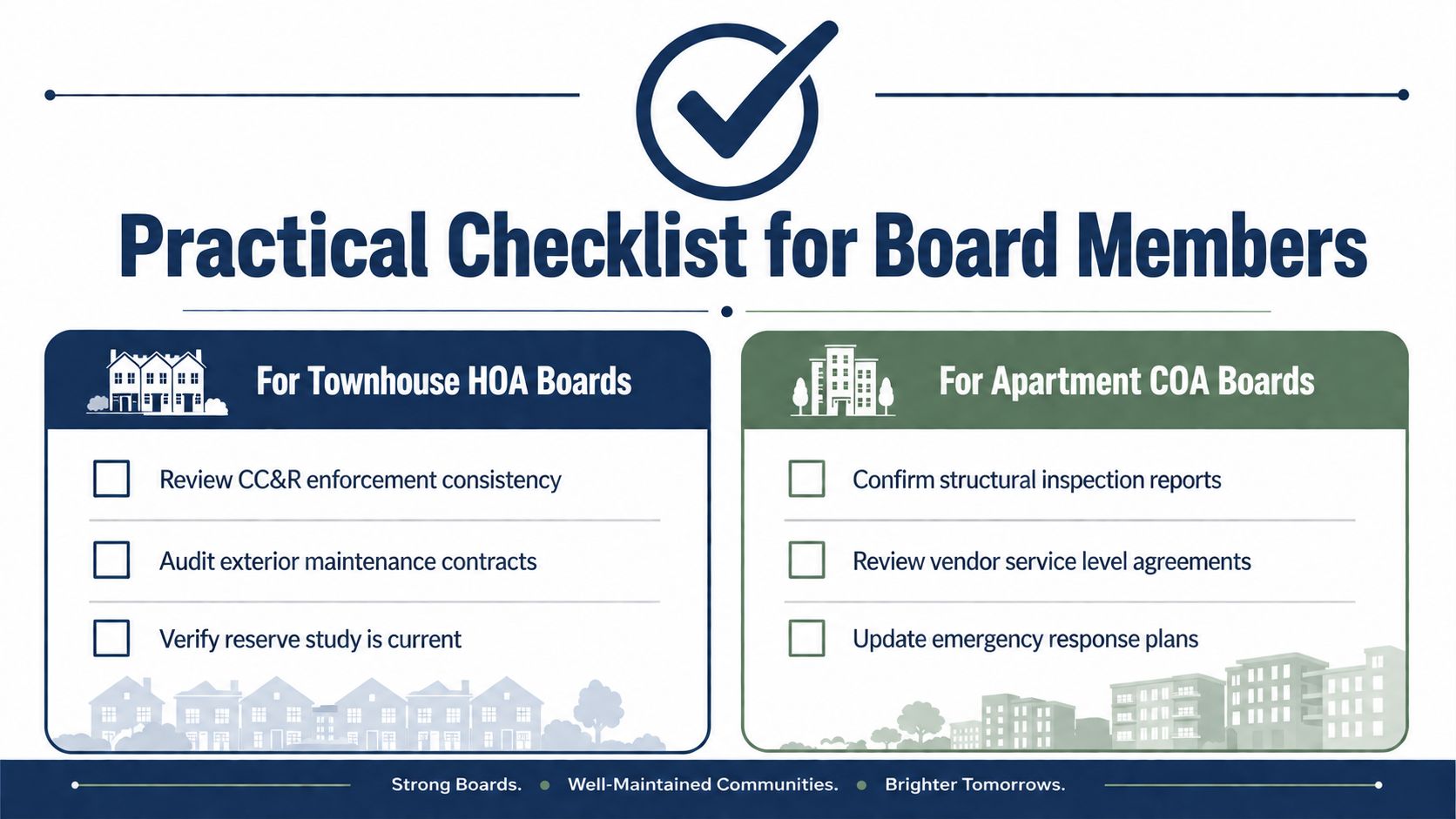
What to review this quarter
- Governing documents: Read the sections on maintenance responsibility, limited common elements, and architectural control.
- Reserve study: Confirm it matches the actual building type and includes the right replacement items.
- Master insurance policy: Ask what is covered, what is excluded, and where owner responsibility begins.
- Rental records: Check whether all rentals are registered and whether occupancy rules are being followed.
What townhouse boards should focus on
- Exterior coordination: Keep standards tight for roofs, siding, painting, and visible repairs.
- Shared boundary clarity: Make sure owners know what they maintain and what the association maintains.
- Curb appeal rules: Enforce exterior changes, landscaping, and parking rules consistently.
What apartment COA boards should focus on
- Structural inspection reports: Review them before the next budget cycle, not after a failure.
- Vendor agreements: Make sure service levels are clear for elevators, security, janitorial, and utilities.
- Emergency plans: Update response steps for building access, system failures, and resident communication.
Ask your management company one direct question at the next review. What parts of this community create the most owner confusion, and what document or policy fixes that confusion? That answer will tell you more than a long report ever will.
Access Management Group works with boards that need clean answers on maintenance, governance, and daily association operations, especially when the line between owner responsibility and association responsibility gets muddy. If your community needs better clarity on the difference between townhouse and apartment management, visit Access Management Group and see how a steady management partner can help your board protect the property and make the next meeting easier to run.