What should your board ask first when hiring a property manager: “Are they pleasant and responsive?” or “Can they protect the association's money, enforce standards consistently, and keep the board out of preventable risk?”
Boards that hire on personality usually pay for it later. A manager affects reserves, vendor oversight, owner communication, rule enforcement, meeting preparation, and the quality of board decisions. If that manager cannot produce clear reporting, follow process, and document actions properly, the board is left reacting instead of governing.
The job has changed. Property managers are now expected to run disciplined operations, track performance, explain financial and operational issues clearly, and support the board with usable information. Boards should judge candidates the same way: by evidence, habits, and results.
That includes financial fluency, legal awareness, communication discipline, operational control, and the ability to use association systems well. Boards that want a baseline for financial reporting expectations can review the core elements of HOA accounting and financial reporting.
Use the eight skills below as a board-level evaluation toolkit. For each area, test what the manager knows, how the manager behaves under pressure, which red flags appear in the interview, and which KPIs prove competence after hire. That is how an HOA board hires with discipline and manages performance in a way that protects property values.
1. Financial Management and Accounting
How will your board know whether a manager is protecting the association's money or processing transactions?
Financial management is the first skill to test because weak controls show up everywhere else. A capable manager builds a realistic budget, tracks actuals against plan, keeps payables and receivables current, supports reserve decisions, and gives the board reports it can act on. If the manager cannot explain cash position, assessment income, major variances, and reserve pressure in plain English, the board is governing with incomplete information.
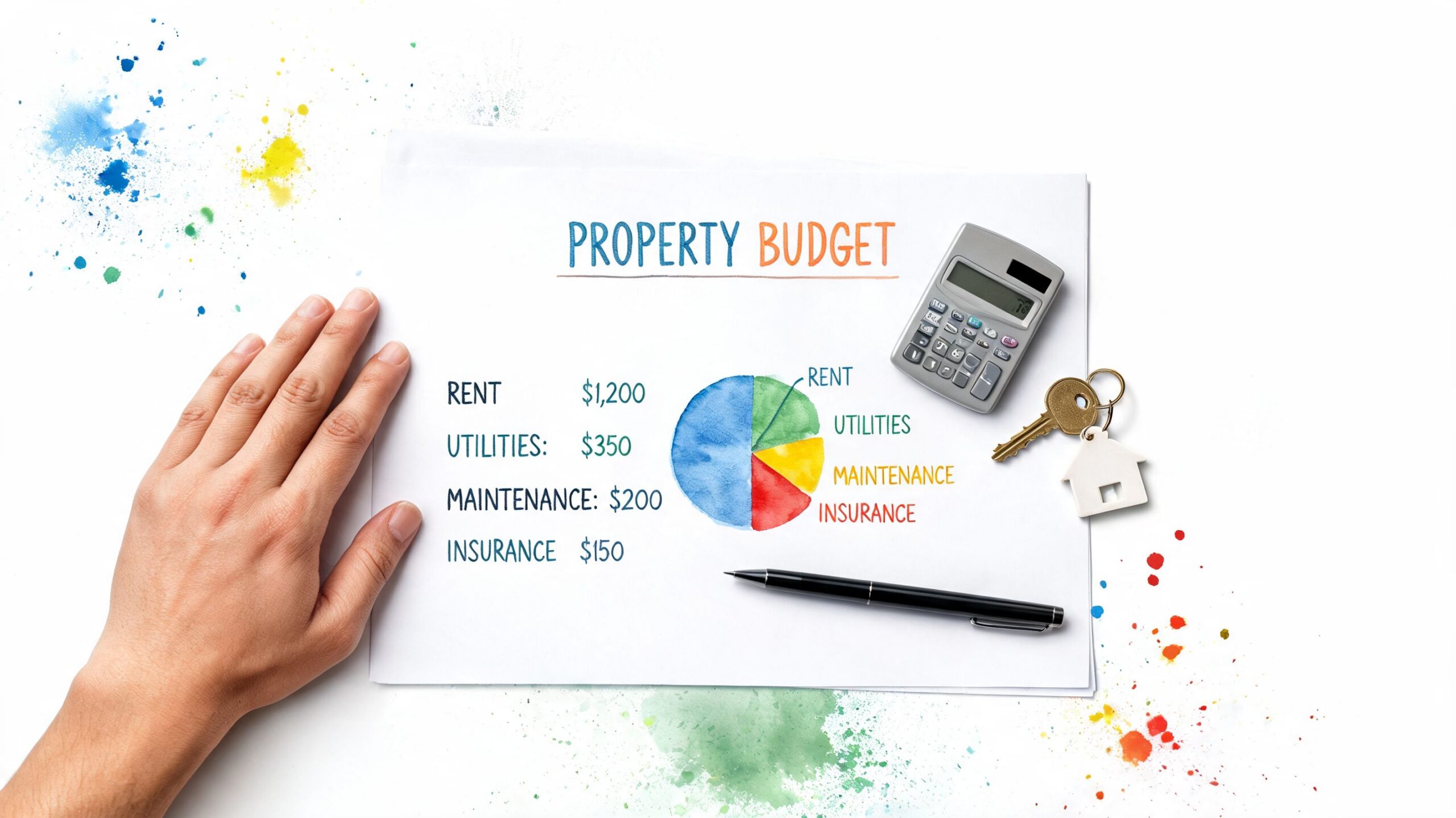
Your standard should be simple. Monthly financials should arrive on time, reconcile cleanly, and answer the questions directors will ask before they ask them. If your board wants a baseline for report structure and fund tracking, review these HOA accounting and financial reporting standards.
What competent financial management looks like
A strong manager does more than hand over a packet before the meeting. The manager flags unusual spending early, explains whether a variance is timing-related or a true overrun, separates operating issues from reserve issues, and documents approvals so the board has a clear audit trail. This is the discipline that protects property values and reduces owner distrust.
Boards should also watch how the manager handles vendor invoices tied to operating budgets. Even routine contracts can create budget drift if scope, billing frequency, and approval limits are vague. For example, lessons from finding a reliable landscaper in Prescott Valley apply directly to HOA oversight. Clear scope, insurance verification, and documented expectations reduce billing disputes and surprise costs.
What to test in the interview
Ask questions that force process, judgment, and accountability.
- Budget development: “Walk us through how you build an annual HOA budget, including assumptions for utilities, insurance, contracts, and reserves.”
- Variance control: “A line item is 12 percent over budget halfway through the year. What do you check first, and how do you present your recommendation to the board?”
- Internal controls: “What is your process for invoice approval, bank reconciliations, coding, and separation of duties?”
- Reserve judgment: “How do you use a reserve study when advising the board on timing, cash flow, and special assessment risk?”
- Board reporting: “Show us the monthly financial package you would want this board to review.”
Listen for specifics. Good candidates describe approval workflows, reconciliation timing, delinquency reporting, reserve funding logic, and how they turn raw numbers into board decisions.
Red flags boards should not ignore
Vague answers are a warning sign.
Watch for managers who rely on the treasurer to interpret every report, dismiss reserve funding concerns, gloss over late reconciliations, or cannot explain the difference between operating shortfalls and capital expenses. Another red flag is defensiveness when asked about coding errors, write-offs, or aged receivables. If a candidate cannot explain financial controls clearly in an interview, that weakness will show up in your books.
KPIs that prove competence after hire
Use measurable standards, not impressions.
- Monthly close timeliness: Financial statements delivered by the agreed deadline each month.
- Variance clarity: Material overages are identified promptly with cause, impact, and recommended action.
- Receivables accuracy: Aging reports are current and tied to collection activity.
- Payables control: Approved invoices are processed on time and matched to contract terms or board approvals.
- Reconciliation discipline: Bank and balance sheet accounts are reconciled consistently with exceptions documented.
- Reserve visibility: The board receives advance warning on funding gaps, major upcoming projects, and cash flow pressure.
Boards that evaluate this skill well hire better and supervise better. Financial discipline is not a back-office detail. It is one of the clearest indicators of whether a property manager can protect association assets and support sound board decisions.
2. Vendor and Contractor Management
Most boards don't lose money because they hired no vendor. They lose money because they hired the wrong vendor, approved unclear scope, or failed to supervise the work.
Vendor management is a core part of property manager skills because repair and maintenance is the fastest-growing operational segment in the U.S. property management services market, with Grand View Research projecting a 6.0% CAGR, while the overall market is estimated at USD 122.02 billion in 2025 and projected to reach USD 184.25 billion by 2033 (Grand View Research U.S. property management services market). That growth puts pressure on managers to coordinate maintenance, control workflows, and supervise outside contractors well.
For an HOA board, this means one thing. Your manager must know how to source, compare, document, negotiate, and monitor vendors without letting convenience replace due diligence.
What competent vendor oversight looks like
A capable manager will insist on written scope, proof of insurance, licensing review where applicable, site verification, change-order control, and closeout documentation before final payment. They should also know which projects need multiple bids and when a specialist, engineer, or attorney should review the work.
If your community is evaluating recurring grounds maintenance work, even a simple consumer guide on finding a reliable landscaper in Prescott Valley reinforces the right habits: verify reputation, define scope, and compare providers carefully. Boards should expect that level of discipline across every vendor category, not just grounds care.
Interview questions and warning signs
Ask for examples, not opinions.
- Bid process: “How do you structure bid comparisons so the board isn't choosing between mismatched proposals?”
- Dispute handling: “Tell us about a time a contractor missed scope or timeline. What did you do next?”
- Emergency response: “How do you authorize urgent work while maintaining board accountability?”
- Performance review: “What documentation do you keep on vendor quality, response time, and repeat issues?”
Good vendor management isn't about getting the cheapest bid. It's about getting the right scope, the right documentation, and the right accountability.
Red flags include overreliance on one preferred contractor, resistance to competitive bids, casual handling of certificates of insurance, and weak documentation on completed work. If the manager can't explain how they verify quality before payment, assume the board will end up doing that job itself.
3. Regulatory Compliance and Legal Knowledge
What does one weak compliance decision cost an HOA? Usually more than the board expects. A manager who misreads authority, skips procedure, or applies rules inconsistently exposes the association to disputes, delayed enforcement, and avoidable legal expense.
This skill goes beyond general familiarity with rules. A competent manager knows the declaration, bylaws, board-adopted rules, architectural standards, meeting requirements, records retention practices, and the limits of management authority. They also know when the answer turns on state law, fair housing requirements, building code, or counsel's advice. Certifications can help, but boards should hire for judgment, process discipline, and document control.

Governance fluency matters
A strong manager can find the controlling document fast, explain the hierarchy clearly, and outline the next procedural step without freelancing. That protects the board from inconsistent enforcement and from decisions that feel reasonable in the moment but fail under scrutiny later.
Boards should test for working knowledge, not confidence. Ask the manager how they track rule changes, document hearings, preserve records, and separate board policy from management execution. If they cannot explain that operating system, they are relying on habit.
For associations that need better document discipline, this guide to HOA governing documents is a useful baseline. Good managers start with written authority and documented process. They do not substitute personal preference for the association's actual governing framework.
Compliance also affects daily operations that boards often treat as administrative details. Rental restrictions, hearing notices, record requests, move-in procedures, and after-hours incident handling all carry legal consequences when handled poorly. An answering service for property managers can support response coverage, but the manager still must know what can be communicated, what must be documented, and what needs legal review before any notice goes out.
If your community handles leased units, deposits, or owner-tenant disputes, state-specific rules can change the board's options quickly. Even a reference on security deposit laws for CT tenants makes the larger point. Compliance is jurisdiction-specific, and capable managers know when a common practice is no longer a safe practice.
Board interview questions
Use scenario-based questions and press for the exact process.
- Enforcement consistency: “A director wants to waive a violation because the owner is well known in the community. What do you do?”
- Document hierarchy: “If a board rule conflicts with the declaration, how do you advise the board and document the decision?”
- Fair process: “Walk us through your notice, hearing, and recordkeeping steps before fines or suspension of privileges.”
- Escalation judgment: “Give an example of an issue you stopped and sent to association counsel before the board acted.”
Red flags are easy to spot. “We've always done it this way” is one. So is any manager who gives casual legal conclusions, cannot explain document hierarchy, or treats compliance as a memory test instead of a documented process.
Measure this skill after hiring, too. Track hearing notice accuracy, turnaround time on records requests, violation reversal rates, legal escalations caused by procedural errors, and the percentage of board actions backed by clear citation to governing documents. If the manager performs well here, the board gets consistency, defensibility, and lower risk. That protects property values.
4. Communication and Stakeholder Relations
What usually triggers homeowner frustration first. A bad policy decision, or poor communication about it?
In most associations, communication failures do more immediate damage. Residents can accept an unpopular decision if they get a clear explanation, a timeline, and a consistent point of contact. They lose confidence fast when updates are late, instructions are vague, and the board has no record of what was said, when, and to whom.
Strong managers treat communication as a control system. They tailor the message to the audience, keep written records, and set response standards the board can monitor. Homeowners need plain-language notices. Directors need concise recommendations and status updates. Vendors need exact scopes, deadlines, and site-access instructions. For boards coordinating projects with residents, contractors, and timelines, disciplined communication becomes even more important during maintenance and construction oversight.
Workload is part of the problem. As noted earlier, manager turnover pressure is real, and communication usually breaks down first when a manager operates from an overstuffed inbox instead of a documented system. Boards should screen for process, not personality.
What boards should expect
A capable manager creates predictable communication rhythms. Monthly reports arrive on time. Meeting follow-up goes out in writing. Owner notices explain the issue, the action required, the deadline, and the contact method for questions. Open items stay on a tracked list until they are closed.
Availability matters, but structure matters more. If your board wants to improve responsiveness after hours or during peak call volume, reviewing solutions such as an answering service for property managers can help frame the discussion. The standard should be clear intake, proper triage, and documented follow-up.
Evaluation toolkit
Ask for samples. Then test judgment.
- Board packet quality: “Show us a recent manager report. How do you separate decisions requiring board action from general updates?”
- Complaint handling: “An owner sends an angry email and copies the full board. What do you send, to whom, and how fast?”
- Bad-news delivery: “Draft the notice you would send for a project delay, water shutoff, or amenity closure.”
- Channel discipline: “Which requests belong in the portal, by email, by phone, or as an emergency call? How do you train owners to use the right channel?”
- Documentation habits: “How do you log resident complaints, board directives, and vendor follow-up so nothing depends on memory?”
A manager who cannot produce clean written examples will create confusion under pressure.
Watch for red flags. Long verbal explanations with little written follow-up. Emotional or argumentative resident correspondence. No service standards for response times. No distinction between urgent issues and routine questions. No backup coverage during vacations, meetings, or emergencies.
Measure this skill after hiring. Track average response time by issue type, board packet delivery timeliness, owner notice error rates, open-item aging, complaint resolution time, and the percentage of resident inquiries closed with documented follow-up. Those KPIs show whether the manager is reducing noise, protecting the board's credibility, and keeping community operations orderly. That discipline supports trust and protects property values.
5. Maintenance and Operations Management
Residents judge the association every day by what they can see, smell, hear, and use.
Maintenance and operations management is where strategy meets the sidewalk. Hallways, roofs, gates, elevators, drainage, lighting, amenities, irrigation, and life-safety systems all depend on disciplined oversight. Boards need a manager who can move from preventive planning to work-order execution without losing track of documentation, priorities, or resident impact.
The operational bar is rising because property management is becoming more software-dependent. MarketsandMarkets projects the global property management software market will grow from USD 26.49 billion in 2024 to USD 42.78 billion by 2030, an 8.3% CAGR, driven by cloud-based and AI-integrated systems that support automation, predictive maintenance, mobile workflows, and analytics (MarketsandMarkets property management software market projection). Boards should hire managers who can use those tools to improve maintenance execution, not just log tickets.
What strong operations management looks like
Strong managers maintain preventive calendars, inspect common areas routinely, prioritize work by risk and resident impact, and keep a documented history of repairs by asset. They know the difference between a nuisance issue and an early warning sign of capital failure.
Associations that need support on project coordination, preventive review, and ongoing property oversight should understand what full-service maintenance and construction support for associations includes. That operational structure is what boards should expect from any serious management partner.
Questions that reveal competence
- Preventive discipline: “Show us how you build and maintain a preventive maintenance calendar.”
- Work-order triage: “How do you prioritize multiple requests when everything feels urgent to residents?”
- Capital coordination: “What records do you keep to help the board plan replacements instead of reacting to breakdowns?”
- Emergency process: “Who gets called first, what gets documented, and how does the board get updated?”
Look for practical answers involving inspections, vendor scheduling, asset history, mobile documentation, and escalation rules. Red flags include a purely reactive approach, no inspection routine, and no distinction between routine maintenance and reserve-funded capital work.
6. Collections and Accounts Management
Collections isn't just a finance function. It's an equity function.
When one owner doesn't pay, the rest of the community subsidizes the shortfall through deferred work, reduced service, or increased financial pressure. A good manager handles collections with consistency, documentation, and respect for the board's policy. A weak manager creates selective enforcement, confusion, and avoidable cash-flow strain.
Boards should insist on process. Billing must go out on time. Delinquency notices must follow the association's approved schedule. Payment plans, if allowed, must be documented and consistently administered. The manager should also know when an account belongs in legal status and when owner communication can still resolve it.
The interview should sound like this
Don't ask whether the manager is comfortable with collections. Ask how the system works.
- Policy application: “How do you apply the board's collection policy uniformly across all owners?”
- Reporting: “What delinquency reports do you provide, and how often?”
- Owner contact: “How do you handle hardship conversations without weakening the association's position?”
- Escalation: “When do you recommend turning a file over to association counsel?”
The best answers balance fairness with firmness. The manager should speak clearly about documentation, notice sequence, owner ledger accuracy, and communication boundaries.
KPIs the board should watch
- Assessment posting accuracy: Charges, payments, and fees are applied correctly.
- Aging transparency: The board can see current, late, and escalated accounts without guesswork.
- Follow-through: The manager acts when an account hits the next stage. Files don't stall.
- Consistency: Similar delinquency cases receive similar treatment.
A common failure point is disorganization between accounting and owner communication. If the manager can't explain who sends notices, who updates ledgers, who authorizes payment plans, and when legal review starts, collections will drift. Boards should stop that before it starts.
7. Strategic Planning and Governance
A board that only reacts becomes the servant of its own backlog.
Strategic planning is one of the most underrated property manager skills in HOA and COA management. The manager should help the board connect budgets, reserve obligations, rule enforcement, maintenance priorities, and homeowner expectations into a coherent operating plan. That includes meeting preparation, policy drafting support, calendar planning, and disciplined follow-up.
This matters even more in associations because generic advice about “financial acumen” often misses the actual challenge. Boards need managers who can help interpret reserve studies, explain special assessments, and translate increased maintenance and repair costs into defensible board decisions (discussion of the gap between bookkeeping and governance-grade financial strategy). That's not clerical work. That's governance support.
What boards should demand
A strong manager arrives at meetings with organized recommendations, not loose updates. They know which decisions need board action, which belong in policy, which should wait for legal review, and which can be handled operationally.
They also help preserve role boundaries. Directors govern. Managers execute and advise. When either side blurs that line, the association becomes inconsistent.
Boards should hire a manager who can say, “That decision belongs to the board, and here's the information you need to make it.”
Smart interview prompts
- Agenda discipline: “How do you structure a board meeting so decisions are made and documented efficiently?”
- Policy support: “How do you help a board turn recurring issues into written policy?”
- Reserve alignment: “How do you connect operating decisions to long-term capital planning?”
- Board education: “How do you onboard new directors so governance stays consistent after elections?”
Red flags include managers who dominate decisions that belong to directors, or managers who provide no recommendation at all. Your board needs informed support, not passivity and not control.
8. Problem-Solving and Decision-Making
Every community eventually faces situations with no easy answer. Water intrusion. Neighbor conflict. Vendor failure. Security complaints. Sudden capital deterioration. Special project resistance.
The manager's value shows up in how they think under pressure.
The convergence of several modern property manager skills means the role now demands technology awareness, data hygiene, workflow automation, vendor-system integration, cybersecurity awareness, and practical judgment about AI tools and recordkeeping. Recent industry discussion notes that AI adoption is accelerating in property management for resident communication, leasing workflows, and maintenance triage, while integration and data-security concerns remain real barriers (analysis of emerging manager competencies in AI, proptech, and cybersecurity). Boards shouldn't accept “tech-savvy” as a complete answer anymore.
A good problem solver does four things
First, they gather facts before recommending action. Second, they identify the governing documents, contracts, or policies that shape the response. Third, they bring options with tradeoffs. Fourth, they document the decision path.
Ask questions that reveal thinking, not charm.
- Fact gathering: “Tell us about a complex issue where the first complaint wasn't the actual problem.”
- Risk framing: “How do you present options when every option has cost, delay, or owner pushback?”
- Technology judgment: “How do you evaluate software or AI tools without exposing the association to sloppy records or security gaps?”
- After-action discipline: “How do you document major incidents so the board can learn from them?”
What to watch for
Good managers stay calm, break issues into parts, and know when specialist input is necessary. They don't improvise policy in the heat of conflict.
Red flags include immediate conclusions before facts are gathered, overconfidence on legal or technical questions, poor written incident records, and no awareness of cybersecurity implications in owner data, payment systems, or integrated vendor tools. In a modern association, bad judgment travels fast through software, email, and resident portals.
Property Manager Skills: 8-Point Comparison
| Service / Skill | Implementation complexity | Resource requirements | Expected outcomes | Ideal use cases | Key advantages |
|---|---|---|---|---|---|
| Financial Management and Accounting | High, detailed, ongoing processes | Trained accountants, accounting software, audit-ready records, time | Accurate budgets, regulatory compliance, funded reserves | Associations needing strict fiscal control or multi-year planning | Transparency, fraud prevention, informed fiscal decisions |
| Vendor and Contractor Management | Medium–High, procurement and oversight | Vendor database, bidding processes, contractual/legal review, inspection time | Quality work, cost control, timely project delivery | Communities with frequent maintenance or large capital projects | Competitive pricing, vendor accountability, reliable service |
| Regulatory Compliance and Legal Knowledge | High, complex and evolving laws | Legal counsel, continuous training, document management systems | Legal compliance, reduced litigation risk, protected board liability | Associations facing regulatory complexity or disputes | Risk mitigation, consistent enforcement, legal protection |
| Communication and Stakeholder Relations | Medium, ongoing engagement | Communication platforms, dedicated staff time, multilingual materials | Improved resident engagement, fewer disputes, clearer decisions | Diverse communities, contentious issues, large homeowner bases | Increased trust, transparency, faster consensus |
| Maintenance and Operations Management | High, coordination across systems | Work order systems, vendors/staff, inspection schedules, budget | Well-maintained assets, fewer emergencies, improved safety | Properties with extensive common areas or complex systems | Extended asset life, reduced major repair costs, safety |
| Collections and Accounts Management | Medium, procedural and sensitive | Billing software, legal support, consistent enforcement processes | Steady cash flow, reduced delinquencies, fair treatment | Associations with payment compliance challenges | Financial stability, equitable enforcement, reduced bad debt |
| Strategic Planning and Governance | High, long-term, board-driven | Board time, facilitators/advisors, performance metrics, documentation | Clear strategic direction, governance consistency, accountability | Boards needing vision, policy development, or major change | Long-term sustainability, improved board effectiveness |
| Problem-Solving and Decision-Making | Medium, analytical and consultative | Data collection, stakeholder input, specialist consultation as needed | Practical solutions, prevented escalation, measured outcomes | Recurring operational issues, crises, policy conflicts | Proactive resolutions, better-informed decisions, reduced disputes |
Your Partner in Community Excellence
What separates a manager who protects property values from one who creates expensive board headaches? The board's ability to evaluate skill with evidence, not impressions.
Use these eight skill areas as a hiring and oversight scorecard. In interviews, ask for specific examples, not polished generalities. Require sample board packets, delinquency reports, violation notices, maintenance logs, and vendor bid summaries. Then press on execution: Who owns each step, what gets documented, when does the board get updates, and which KPI proves the process is working?
Tie every skill to a measurable result. Financial management should show up in accurate monthly reporting, clean reconciliations, and clear reserve visibility. Vendor management should produce competitive bids, controlled scopes, and documented closeout. Compliance knowledge should reduce procedural errors and inconsistent enforcement. Communication should shorten response times and cut repeat homeowner complaints. Maintenance should lower emergency work and improve completion times. Collections should improve delinquency trends and consistency. Governance support should give the board better agendas, better minutes, and better decisions. Problem-solving should produce options, timelines, and records the board can defend.
This is also the standard for performance management after the contract is signed. Boards should use behavioral interview questions before hiring and use the same categories as review criteria afterward. If a manager claims to be strong in operations, the work order backlog, inspection follow-through, and project completion rate should confirm it. If a manager claims to be strong in communication, meeting prep quality, homeowner response times, and escalation handling should confirm that too.
Watch for red flags. Vague answers. Missing documentation. Delayed reports. Repeated reliance on the board to chase routine tasks. Poor command of governing documents or collection procedures. Weak systems usually show up before a major failure.
The job has changed. Technology, automation, cybersecurity, and data reporting are now part of competent HOA management. A manager who cannot work effectively in that environment will create slow responses, weak records, resident frustration, and avoidable risk.
A strong management partner supports the board's fiduciary duty with better information, tighter execution, and consistent follow-through. The board still sets policy and makes decisions. The manager should make those decisions easier to make and easier to carry out.
For Georgia associations reviewing firms with long experience in community association management, Access Management Group is one company to consider, as noted earlier in this article.
Hire for proven capability. Review against clear KPIs. Act quickly on red flags. That is how boards get better service, fewer surprises, and stronger protection for the community every month after the contract is signed.